"Is Hard Work a Sin?"... Wage Earners Pay 12 Percentage Points More Tax Than Home Sellers
Effective Tax Rate for Top Earned Income Bracket Reaches 38%
Capital Gains Tax Stands at 26%
Analysis has revealed that the effective tax rate in the highest bracket for earned income tax exceeds that of capital gains tax by more than 10 percentage points. This raises concerns that the tax burden gap between income earned through labor and gains arising from asset price increases is becoming excessively wide, highlighting the need to enhance tax equity to prevent an undue disparity.

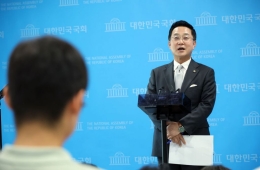
On August 23, Assemblyman Namjoon Kim of the Democratic Party of Korea, a member of the Strategy and Finance Committee and the Special Committee on Budget and Accounts of the National Assembly, announced these findings after analyzing data provided by the National Tax Service titled “Status of Reported Cases by Tax Base Bracket for Capital Gains Tax and Earned Income Tax.”
According to the 2024 fiscal year, in the tax base bracket exceeding KRW 1 billion where the top income tax rate of 45% applies, the effective tax rate for earned income was calculated to be 37.7%. This figure was determined based on the total salary of wage earners in this bracket (KRW 9.6358 trillion) and the determined tax amount (KRW 3.6295 trillion). In contrast, the effective tax rate for capital gains in the same bracket stood at only 26.2%, which is 12.4 percentage points lower than the effective rate for earned income. This was calculated by comparing the determined tax amount (KRW 8.3224 trillion) against net capital gains after deducting necessary expenses (KRW 31.7396 trillion).
Similarly, in the bracket where the 40% income tax rate is applied (for taxable income exceeding KRW 300 million up to KRW 500 million), the effective earned income tax rate was 28.2%, still higher than the 20.0% effective rate for capital gains in the same bracket.

Looking at the annual difference in effective tax rates for the highest brackets: In 2021, the effective tax rate for earned income was 11.5 percentage points higher than that for capital gains. In 2022, this gap slightly narrowed to 11.3 percentage points, but in 2023, it widened again to 12.4 percentage points. In 2024, although the gap decreased by about 1 percentage point from the previous year, a double-digit difference remained.
Capital gains tax is levied on profits resulting from the disposal of assets such as real estate and financial products. In 2024, out of a total income tax revenue of KRW 117.4 trillion, earned income tax accounted for KRW 61 trillion, representing more than half (52%), while capital gains tax amounted to KRW 16.7 trillion, only 14.2% of the total.
Hot Picks Today
 Trump Made 1,000 Stock Trades in a Month... Here Are the Stocks He Bought and Sold
- "I Thought I Could Receive Both"... Over 90% Choose This: Old-Age Pension or Survivor's Pension?
- "To This Extent for a Single Car?"... Genesis GV90 Inspected at Six Times Human Eyesight, Tested with 160km/h Winds
- "Another Wave Begins": 1 in 5 Suspected Patients Test Positive... 522,000 Cases in China, Sharp Surge in Korea in 3 Weeks
- "Even Koreans Don't Eat It Like This"... Foreigners Make Full Use of Cup Noodle Soup [K-holic]
Assemblyman Kim stressed, “If the disparity in tax burdens between income earned through hard work and gains from asset price increases becomes excessive, it is the responsibility of the National Assembly to address it.” He added, “The key to revising real estate taxes, including capital gains tax, lies in strengthening fairness in taxation among different types of income in order to achieve an equitable tax system.”
© The Asia Business Daily. All rights reserved. Unauthorized AI training and use prohibited.


![Apartment Prices Jump... Seoul's Top Villa Transaction District Faces 'Listing Drought' [Real Estate AtoZ]](https://cwcontent.asiae.co.kr/asiaresize/307/2026082309403689173_1787445636.png)

!["August Rate Hike or Hold? Unprecedented Split in Forecasts, Experts Evenly Divided [MPC Poll]①"](https://cwcontent.asiae.co.kr/asiaresize/307/2026071609371448140_1784162234.jpg)