Choi Jonghyun Academic Foundation: "In the Era of Agent AI, the Standard for Sovereignty Shifts from Possession to Operation"
Redesigning Around Access and Operational Sovereignty Beyond Securing Independent Models
"Korea Must Become a Participant, Not an Observer, in Shaping AI Norms"
There is a growing argument that the standard for AI sovereignty should shift from mere possession to operational capability. As AI evolves beyond simply answering questions to so-called "Agent AI"—which can make autonomous decisions and use external tools to carry out complex tasks—changes in external policies or supply chains can directly impact a nation's ability to operate AI systems.

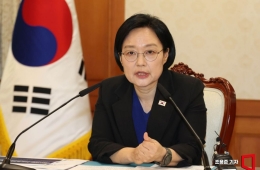
Participants are discussing at the roundtable titled "New National Security in the Agent AI Era: Global Technology Hegemony and Korea," jointly hosted by the Choi Jonghyun Academic Foundation and the Seoul National University Future Strategy Research Center on the 30th of last month. Photo by Choi Jonghyun Academic Foundation
View original imageThe Choi Jonghyun Academic Foundation (Chairman: Chey Tae-won, Chairman of SK Group) announced on the 23rd that it has published a report titled "From Possession to Operation: National Security and Sovereign AI 2.0 in the Era of Agent AI."
This report is based on discussions from the "Agent AI Era New National Security: Global Technological Hegemony and Korea" roundtable for experts, which was jointly hosted by the Choi Jonghyun Academic Foundation and the Seoul National University Future Strategy Research Center on the 30th of last month. The discussions that day were held through presentations and designated debates from three perspectives: technology and security, geopolitics and hegemony, and Korea's strategy, followed by a free-form discussion involving all participants.
The report proposes that the existing Sovereign AI strategy should be redesigned to focus not only on the independent development of AI models, but also on "access sovereignty" and "operational sovereignty." Access sovereignty refers to the ability to stably utilize the necessary AI technologies and services, while operational sovereignty is the ability to switch to alternative systems and maintain core functions, even if a particular model or cloud service is discontinued.
The report emphasizes that "Sovereign AI does not mean independently developing and possessing all technologies domestically," stating, "We must create a structure where, even though we are closely connected to external parties, those connections do not cause the nation’s core functions to become dependent." It argued that Korea should leverage its industrial strengths in memory semiconductors, advanced manufacturing, data centers, and physical AI to proactively participate in the global AI ecosystem, while managing structural dependence on specific countries or suppliers.
Summarizing the discussions, the report presented several core tasks for the Sovereign AI 2.0 strategy: redefining the concept of national security and Sovereign AI; setting units for selection and concentration; establishing principles for resource allocation at the national level; preparing strategies for industry leverage and AI investment returns; responding to AI diplomacy and international norms; building an execution-oriented AI policy framework; strengthening talent and data foundations; and providing strategic criteria for key national AI projects, among others.
The report concluded, "In the future competition for AI leadership, the key is not which nation builds the most advanced model," and added, "It is crucial to secure irreplaceable roles in certain domains, connect with the global ecosystem while maintaining strategic autonomy, and be actively involved in the construction of international order and technology norms." The report also warned, "There is a time limit to all of these decisions," and emphasized that Korea needs to expedite the establishment of its Sovereign AI 2.0 strategy.
Hot Picks Today
 "E-Land Secures Hoka Amid 'Second Round' Heat in Running Shoes: 'Raised New Balance to 1 Trillion, But Now What?... This Is What Today's Runners Wear'"
- "Even With Premiums Up to 300,000 Won"... Is the 6 Million-Viewer "Odyssey" Nearing Its Final Screenings?
- "These 6 'Alpha' Stocks to Watch Now Even as KOSPI Falls" [Weekend Money]
- "People Are Grabbing These on the Way to Work in 35-Degree Heat... The Surprising Convenience Store Favorite [The Way We Shop Now]"
- "This 300-Year-Old ‘Yellow Dessert’ Could Be the Next Café Hit: The Delicious Story Behind It [Delicious Stories]"
Kim Yooseok, CEO of the Choi Jonghyun Academic Foundation, stressed in the foreword, "These changes take on even greater significance for Korea, which possesses high technological capabilities but also has considerable external dependence." Kim said, "Sovereign AI 2.0 encapsulates the view that the concept of Sovereign AI must evolve from simply possessing technologies or models to issues of operational capability and norm design." He further stated, "For Korea to become an active participant, rather than a mere observer, in the process of normative formation, it must begin accumulating the necessary capabilities and experience from now on."
© The Asia Business Daily. All rights reserved. Unauthorized AI training and use prohibited.




![Apartment Prices Jump... Seoul's Top Villa Transaction District Faces 'Listing Drought' [Real Estate AtoZ]](https://cwcontent.asiae.co.kr/asiaresize/307/2026082309403689173_1787445636.png)
!["August Rate Hike or Hold? Unprecedented Split in Forecasts, Experts Evenly Divided [MPC Poll]①"](https://cwcontent.asiae.co.kr/asiaresize/307/2026082219064489079_1787393204.jpg)