Grant Reform in 54 Years: Next Year's Education Grants Set at 78.9 Trillion Won (Comprehensive)
Abolishing the 20.79% Domestic Tax Linkage
Higher and Lifelong Education: "Welcome" vs. Elementary and Secondary: "Threat to Public Education Funding"
Estimated Grants for Next Year: 78.9 Trillion Won
Reflecting Current Growth Rate and Changes in School-Age Population
New Fund Established to Address Imbalance Favoring Elementary and Secondary Education
Expanded Investment in Infants, Higher, and Lifelong Education
354 Organizations Hold Press Conference
Call for Maintaining the 20.79% Linkage Rate
The core of the local education finance grant reform lies in "flexibility in fiscal management" and "addressing the imbalance in education investment." While reflecting changes in the school-age population in fiscal calculations, the new plan aims to ensure that the total size of the grants does not decrease compared to the previous year. It also seeks to expand the focus of educational finance, which has traditionally been concentrated on elementary and secondary education, to include infants, high school, and lifelong education—ultimately achieving balanced investment throughout all life stages.

The reformed plan will be applied starting from next year's education finance. Under the new formula, which reflects the average annual current growth rate and the rate of change in the school-age population (35%) over the past three years, based on the previous year's grant, it is estimated that next year's education grants will total 78.9 trillion won. This represents a 3.3% increase compared to this year's supplementary budget grants, which stand at 76.4 trillion won.
Those in the elementary and secondary education sector point out that an increase in the 3% range merely covers the fixed cost of wage increases. However, the government explains that, based on the main budget, the increase will exceed 7 trillion won. When using the current year's main budget grants of 71.7 trillion won as a reference, next year's grants will increase by approximately 10.0%.
The government believes that even if the system that automatically allocates 20.79% of domestic tax revenue to elementary and secondary educational finance is abolished, it will still be able to secure stable funding for elementary and secondary education. This is because the law will stipulate a safeguard to compensate for any reduction in grants compared to the previous year under the new formula. The government plans to include in the revised Local Education Finance Grants Act a provision stating that "if the grants decrease compared to the previous year, the difference will be compensated so that the total amount does not decrease." Furthermore, because the new formula applies the average current growth rate of the past three years instead of one year’s tax revenue, the government expects that the grant structure will shift to a gradual increase, rather than fluctuating sharply with annual tax changes.
Another effect of this grant reform is that the tax revenue, which was previously automatically allocated to elementary and secondary education, can now be invested in other stages of education. Under the current system, 20.79% of domestic tax revenue is automatically distributed as grants—leading to criticism that educational finance is disproportionately concentrated on elementary and secondary education. The government points out that while the school-age population fell by 32.8% (2.88 million people) from 8.8 million in 2010 to 5.91 million projected for 2025, the grants mechanically increased with tax revenue, further exacerbating investment imbalances between educational stages. For example, Korea's investment in elementary and secondary education is 166% of the OECD average, while investment in higher education remains at only 69%.
Accordingly, with the grant reform, the government will establish a new "Future Response Fund" and set up an "Education and Talent Account" within the fund, which will allocate investments to infants, high school, and lifelong education. The resources will be the difference accrued through the grant reform, and the law will specify that these funds cannot be transferred to other accounts. The overarching plan is to ensure investment in education at every stage of life.
Universities, which have been experiencing fiscal difficulties, are expressing optimism about expanded investment. According to a survey conducted by the Korean Council for University Education (KCUE) from June 2 to July 10, 2026 of presidents from 144 universities nationwide ahead of the 2026 Summer University Presidents’ Seminar, the top concern among university presidents was "fiscal support programs" (79.9%). In particular, although there is a need to expand investment for Artificial Intelligence transformation (AX), more than half (55.5%) of universities are unable to pursue this due to insufficient funds. Furthermore, 89.4% of presidents responded that "substantial government support is necessary." KCUE Chairman Lee Kijeong emphasized, "As financing for higher education is a strategic investment for national competitiveness, it is essential to secure stable and structural resources, such as expanding government transfers to the special account for higher and lifelong education support."

In 2023, graduates were applauding at the vocational high school graduation ceremony held at the Jongno-gu Citizens' Hall in Seoul. Photo by Jinhyung Kang aymsdream@
View original imageInvestment in lifelong education is also expected to grow. According to the National Institute for Lifelong Education under the Ministry of Education, the number of people obtaining degrees via the Academic Credit Bank System and the self-directed degree system increased sharply from 55,921 in 2019 to 82,702 last year. The National Institute for Lifelong Education notes that although the school-age population is declining, the number of lifelong learners is increasing. However, the budget has steadily shrunk, falling to 50 billion won this year—just one-third of the 130 billion won allocated three years ago.
Wol Yong Kim, Director of the National Institute for Lifelong Education, stated, "While 20.79% of domestic tax revenue has been allocated to elementary and secondary education grants, less than 1% has been used for lifelong education." He continued, "As the importance of lifelong education grows, national investment and support remain insufficient." Kim added, "How people learn and grow after graduating from school is a pressing national challenge. We have asked the government to secure funds for lifelong education within the Future Response Fund."

On the other hand, stakeholders in the elementary and secondary education sector argue that simply maintaining the total grant amount at or above the previous year's level does not guarantee fiscal stability. They point out that the government’s safeguard only prevents the total grants from shrinking compared to the previous year, but does not ensure the incremental funding that could have been secured if the current system of linking 20.79% of domestic tax revenue to grants remained in place.
Moreover, the reallocated funds under the grant reform are unlikely to be redirected to elementary and secondary education via the Future Response Fund. The Ministry of Economy and Budget stated in a preliminary briefing the previous day, "The Education and Talent Account within the Future Response Fund will focus investments on infants, higher education, and lifelong education. Since elementary and secondary education essentially falls under the jurisdiction of regional education offices, the general principle is to use the grants for these levels." While exceptions will be made for projects deemed nationally urgent or requiring substantial fiscal support, no minimum support ratio or mandatory requirement has been established.
Educators further assert that a decrease in student numbers does not automatically lead to a corresponding drop in education expenses. The government factored only 35% of the school-age population change rate into the formula, considering that around 60% of grants are spent on staff salaries. Nevertheless, there are still many expenses that do not decrease proportionally to student numbers. For example, in rural and fishing communities, even as student numbers fall, schools must be maintained to ensure access to education. On the other hand, in newly developed cities, there is sustained demand for financing new school construction and alleviating overcrowded classrooms.
On this day, 354 organizations participating in the "Emergency Action to Respond to the Local Education Finance Grant Reform" held a press conference in front of the Government Complex Seoul, demanding the suspension of the grant reform. They argued, "Rather than providing sufficient explanation and opportunities for review by the education community and the public, it may appear that the government finalized the system internally and is now simply notifying stakeholders." Their demands included: ▲ maintaining the 20.79% linkage rate to domestic tax revenue ▲ forming an official forum for public debate that includes the education sector and related stakeholders ▲ halting unilateral and behind-closed-doors government agreements ▲ suspending the submission of the reform plan to the Cabinet and the legislative process without sufficient social discussion.
The Council of Education Superintendents of Korea also released a joint statement, stressing, "The current linkage rate of 20.79% to domestic tax revenue must be maintained to ensure stable management of future education and schools." The council noted, "Even as the school-age population declines, fundamental educational finance demands—such as staff salaries, school management funds, and facility safety and maintenance expenses—do not decrease at the same rate. Moreover, demand for new types of education, including AI and digital education, personalized instruction, securing basic academic achievement, childcare and safety, and closing education gaps, is actually increasing."
Hot Picks Today
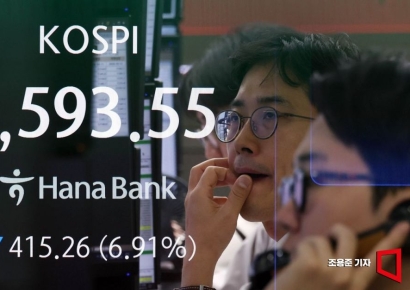 "I Invested KRW 10 Million, Only KRW 2 Million Is Left" ... 77% Plunge Sends Retail Investors Who Piled Into Samsung Electronics and SK hynix Leveraged ETFs Crying Out
- "There's a Drink Like This?"... Chinese Beverage With "Korean" in Its Name Rakes in 85 Million Won in Monthly Sales
- "No Need to Hire a Model"... The 25-Year-Old Woman Who Entered Social Media with a Face That Cost Just 1,500 Won [AI Content: The Bright and Dark Sides] 1
- "Samsung Electronics at 70,000 won, SK hynix at 200,000 won"... Why the gloomy outlook despite 'record-breaking earnings'?
- "The leggings are all see-through. It's so embarrassing to look at," complaints prompt Lululemon to fire development staff.
They also strongly countered the government's claim that "the total grant and per-student grant will continue to rise" as an intended effect of the reform. They argue that if the grants merely remain at the previous year's level, the real fiscal capacity could actually decline due to inflation, wage increases, and other rising costs. Also, the per-student grant could arithmetically rise just because of the falling student population. Regarding the government’s proposal to invest funds set aside from the grant reform into the Education and Talent Account within the Future Response Fund, the council contended, "As these resources are essentially being carved out of the stably secured local education budget for preschool, elementary, and secondary education, the stable funding requirements of these levels must be given top priority." The council plans to collaborate with 16 provincial and metropolitan education offices in future actions.
© The Asia Business Daily. All rights reserved. Unauthorized AI training and use prohibited.