[Issue] "Let's Help with Chuseok Shopping"... Jeonnam-Gwangju Livelihood Support Payments Up to 500,000 Won
Five Local Governments, Including Hampyeong and Goheung, Allocate Funds Before Chuseok
Support Payments Range from 100,000 to 500,000 Won per Resident
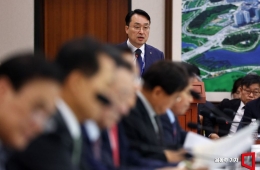
Ahead of Chuseok, local governments in the Jeonnam-Gwangju region are rushing to distribute livelihood recovery support payments funded by their own budgets, aiming to stabilize residents' daily lives and boost small local businesses.

According to the Jeonnam-Gwangju Consolidated Special City on August 21, out of the 27 cities, districts, and counties in the region, eight are either planning or considering the distribution of support payments around the Chuseok holiday. Among them, five—including Hampyeong, Goheung, Jangheung, Naju, and Yeongam—have secured budgets and plan to issue payments before Chuseok.
Hampyeong County, the first to finalize its plan, will provide the highest support of 500,000 won per person within its jurisdiction. Having secured 15.11 billion won through a supplementary budget, Hampyeong County will distribute prepaid cards to its residents—as of July 1, 2026, totaling about 29,300 people—including marriage immigrants and permanent residents, through town and township offices starting from September 7. The cards must be used by December 31.
Goheung County and Jangheung County will also provide 300,000 won per person in local gift certificates to all residents. Goheung County, which has about 59,000 residents, secured a 18 billion won fund through expenditure restructuring and included it in a supplementary budget. The county plans to complete the payments before the start of the Chuseok holiday.
Naju City has set aside approximately 23.8 billion won to provide 200,000 won in Naju Love Gift Certificates to each citizen and registered foreigner as of July 1, planning to distribute them before Chuseok, pending approval from the city council's supplementary budget review. Yeongam County will also distribute 100,000 won per person to residents before the holiday.
By contrast, some local governments that had considered payouts have delayed their timelines. Jangseong County was planning to provide 600,000 won per person, but the schedule remains undecided, and the county is considering distributing the payments in installments over two years starting in 2028. Muan County is expected to distribute 100,000 won at the end of the year, as no ordinance has been established yet, while Gwangyang City, which had promised 300,000 won per person, is now reconsidering the plan and restructuring its expenditures, opting for a phased approach.
The local governments expect that by distributing support payments as local gift certificates or prepaid cards that can only be used within the region, they will boost consumption at neighborhood shops and traditional markets during the Chuseok holiday.
However, concerns about fiscal burdens are mounting. To secure funding, local governments are drawing on disaster response reserves or consolidated fiscal stabilization funds, raising worries that their capacity to respond to future emergencies and make large investments may be diminished. In addition, since eligibility and payment amounts differ greatly depending on residents' locations—from zero to 500,000 won—issues of relative deprivation and equity have arisen among residents.
Hot Picks Today
 "Tried leveraged semiconductor stocks, watched 3.5 billion won shrink to 200 million won": Salaried investor in tears
- "Please Let Me Go Home"... Customers Trapped in Department Store Parking Lot for 5 Hours Vent Their Anger
- "I Should Enjoy It After Retirement": Prices Quadruple... Memberships Over 100 Million Won Popular, but Closures Mount
- “The Strong Drink This” Goes Viral on Social Media... What China's Millennials and Gen Z Are Hooked on After Ditching Coffee and Milk Tea
- "Come Live With Me on My Farm": Man Sells Everything and Travels 1,930 km, Trusting a Beautiful Woman
A local political official commented, "While support payments may provide a short-term boost to local businesses during the holiday season, their long-term fiscal sustainability should be carefully considered to maximize the policy's effectiveness, given the limited local finances."
© The Asia Business Daily. All rights reserved. Unauthorized AI training and use prohibited.