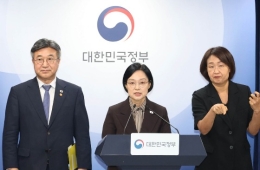
President Lee Urges Strategic Communication on 'Korean Peninsula Issues' in Meeting with China's Wang Yi (Comprehensive)
President Lee Meets Wang Yi at the Blue House
"Full Restoration of Korea-China Ties; Strengthening Horizontal and Mutually Beneficial Economic Cooperation"
Wang Yi: "Korea-China Relations on Stable Path... Korea Returns Relations to Normal Track
President Lee Jae-myung met with Wang Yi, a member of the Politburo of the Communist Party of China and Minister of Foreign Affairs, on the 20th, and asked that “close strategic communication be maintained on Korea-China relations and Korean Peninsula issues.” Following President Lee, Cho Hyun, Minister of Foreign Affairs, and Wi Sung-rak, chief of the National Security Office, also held a meeting and luncheon with Minister Wang to exchange opinions on ways to develop Korea-China relations and the situation on the Korean Peninsula.

President Lee Jae-myung is shaking hands with Wang Yi, Director of the Office of Foreign Affairs of the Central Committee of the Chinese Communist Party and Minister of Foreign Affairs, before their meeting at the Blue House on August 20, 2026. Photo by Yonhap News Agency
View original imageAccording to the Blue House, President Lee received Minister Wang, who was on an official visit to Korea, at the Blue House in the morning. President Lee requested that this kind of communication be continued with Korea’s diplomatic and security leadership, including Minister of Foreign Affairs Cho Hyun and National Security Office Chief Wi Sung-rak. Amidst the Korean government’s emphasis on serving as a “pace maker” to build trust and resume talks between North Korea and the United States, it is seen as a signal to activate close consultation channels with China over the situation on the Korean Peninsula.
Regarding Korea-China relations, President Lee stated, “Since meeting Chinese President Xi Jinping last year and again this year, we have made tangible progress towards the ‘full restoration of Korea-China relations.’” He also assessed positively that the two governments have been strengthening horizontal and mutually beneficial cooperation in the economic sector, and that goodwill and trust between the peoples of both countries have been further solidified.
In response, Minister Wang conveyed President Xi’s regards, saying, “Based on the joint consensus achieved through the mutual state visits of the two heads of state, relations between Korea and China continue to develop steadily.”
Minister Wang also expressed his intention to maintain this positive momentum in time for the 35th anniversary of Korea-China diplomatic ties next year. He stated, “I will actively play a role in faithfully implementing follow-up measures in each sector as agreed by our leaders.”
There was also mention of a possible third summit between the two leaders, coinciding with the Asia-Pacific Economic Cooperation (APEC) summit to be held in Shenzhen, China, in November. Minister Wang said, “I hope the Korean government, which successfully hosted last year’s Gyeongju APEC summit, will support and participate in this year’s Shenzhen APEC summit,” adding, “We will thoroughly prepare not only for the high-level bilateral exchange in Shenzhen, but also for other expected achievements.”
President Lee responded, “As last year’s APEC host, I wish for a successful Shenzhen APEC this year and will provide all necessary support.” He added, “Given that our leaders are meeting in sequence—Gyeongju last November, Beijing in January this year, and soon Shenzhen in November—I hope we will achieve substantial results that will benefit both peoples and further strengthen Korea-China relations.”
Wang Yi: "Korea restored relations to the right track through the correct choice"
On this day, the Chinese side presented more detailed remarks from President Lee and Minister Wang emphasizing strategic cooperation between the two countries. According to China's state-run Xinhua News Agency, President Lee said, “In the current international landscape, Korea and China need each other in terms of the economy, trade, and security. Strengthening strategic cooperation between Korea and China is in the fundamental interests of both countries and is also critical for maintaining peace and stability in the region.”
Xinhua News Agency also reported that President Lee stated, “Korea and China should be mutually dependent, beneficial, and complementary partners,” expressing his hope that the Korea-China strategic cooperative partnership will be further elevated through the APEC summit in Shenzhen this November.
The Chinese side also revealed a more forward-looking message on Korea-China relations from Minister Wang. Minister Wang assessed that since President Lee’s inauguration, Korea “made the right choice and put Korea-China relations back on the right track,” and expressed his hopes that the Korean government would continue its friendly policy toward China. He stated, “Embracing China means embracing the future, and partnering with China is partnering with opportunities,” and suggested that the two countries swiftly conclude negotiations on the second phase of the Korea-China Free Trade Agreement (FTA).
While the Blue House statement focused on strategic communication over the Korean Peninsula, “horizontal and mutually beneficial” Korea-China relations, and practical achievements at the Shenzhen APEC summit, the Chinese side actively praised the Lee administration’s China policy and called for further expansion of strategic cooperation in the future. In concluding the meeting, President Lee recalled his meeting with President Xi in January and asked Minister Wang to convey his special regards to the Chinese leader. In response, Minister Wang expressed his gratitude once again for the hospitality of President Lee and the Korean government.
Wi Sung-rak and Wang Yi hold meeting and luncheon...Wang Yi pledges “constructive role” on North Korea policy
President Lee’s request for “strategic communication on Korean Peninsula issues” was further developed in the afternoon meeting between National Security Office Chief Wi Sung-rak and Minister Wang. Chief Wi had a meeting and luncheon with Minister Wang to discuss Korea-China relations, the situation on the Korean Peninsula, and regional and international issues. Minister Wang currently serves as both China’s Minister of Foreign Affairs and Director of the Office of Foreign Affairs of the Central Committee of the Communist Party of China.
At the meeting, both sides reviewed the 34-year development of Korea-China relations since the establishment of diplomatic ties, reaffirming their commitment to evolving the relationship into a stable partnership that delivers tangible benefits to the daily lives of their peoples.
On Korean Peninsula affairs, the Korean government conveyed in detail the administration’s North Korea policy. Chief Wi explained to Minister Wang the blueprint for peaceful coexistence on the Korean Peninsula outlined by President Lee in his Liberation Day address and introduced a phased and pragmatic approach to denuclearization—starting with a halt to North Korea’s nuclear and missile activities and then advancing denuclearization in a gradual manner. Chief Wi personally briefed the highest-ranking Chinese foreign affairs and security official on the Seoul government’s efforts to resume North-South and North Korea-U.S. dialogue, and asked for China’s constructive cooperation during the process.
Minister Wang responded that “China’s policy on the Korean Peninsula maintains consistency and stability” and pledged to continue China’s constructive role in promoting peace and stability on the Korean Peninsula. Both sides agreed to continue their close communication on relevant Korean Peninsula developments. According to a separate statement from the Chinese side, Minister Wang also said that “the fundamental way to ease tensions on the Korean Peninsula is to address the root causes of the problem and for the United States to abandon its hostile policy toward North Korea.”
This meeting marked the resumption of high-level diplomatic and security dialogue channels between Korea and China for the first time in about five years. Talks between the chief of the National Security Office and the Director of the Office of Foreign Affairs of China’s Central Committee had been suspended since December 2021. Both sides welcomed the resumption of dialogue among their high-level diplomatic and security officials and agreed to operate the channel on a regular basis. Various direct consultation channels between their respective diplomatic and security authorities will also be utilized more actively.
Hot Picks Today
 "Unable to Continue Mother-Son Relationship": Kim Youngsik Loses First Trial in Annulment Lawsuit Against LG Chairman Kwangmo Koo
They also exchanged views on the rapidly changing regional and international situation. Both sides agreed that as regional countries are more politically and economically interconnected than ever before, it is necessary to respect each other’s positions and work together to expand common ground. Minister Wang officially invited Chief Wi to visit China. Chief Wi accepted the invitation, and both sides agreed to continue consultations on arranging a visit at a mutually convenient time.
© The Asia Business Daily. All rights reserved. Unauthorized AI training and use prohibited.