Kuntak Park's 'Independent Confiscation System' Passes National Assembly... Could Slush Funds Linked to Chun Doo-hwan and Roh Tae-woo Be Recovered?
Confiscation and Forfeiture of Criminal Proceeds Without Prosecution
Regardless of Offender's Death or Flight Abroad
Recovery Extended to Inherited, Gifted, or Undervalued Assets
Retroactive Application to Slush Funds From Crimes Undermining Constitutional Order
The so-called "independent confiscation system," which allows the confiscation and forfeiture of criminal proceeds even if the offender is deceased or has fled abroad, and thus cannot stand trial, will be implemented. Analysts say that this establishes a legal foundation for tracing and recovering illicit assets related to the slush fund allegations involving the families of former presidents Chun Doo-hwan and Roh Tae-woo.
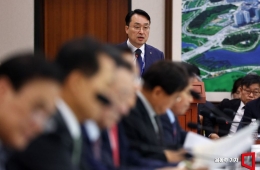
The amendment to the "Act on Regulation and Punishment of Criminal Proceeds Concealment," which was spearheaded by Assemblyman Kuntak Park (Gwangju Gwangsan-gap) of the Democratic Party of Korea, passed the National Assembly’s plenary session on August 20.

The core of this amendment is to allow confiscation and forfeiture of criminal proceeds separately from criminal trials, even in situations where indictments are difficult to pursue, such as when an offender has died, fled abroad, or cannot be located. Even if the identity of the offender is unknown, independent confiscation is possible as long as the related crime and assets to be confiscated can be specified.
Under the current law, confiscation is, in principle, ordered alongside a guilty verdict, which means that if an offender dies or flees abroad, there are limitations in recovering criminal proceeds.
In particular, there have been concerns that, when illegal assets are transferred to family members or third parties, recovery becomes virtually impossible, allowing criminal proceeds to be passed down.
The revised law aims to address these blind spots by enabling confiscation even when criminal proceeds are inherited, gifted, or transferred at significantly undervalued prices to family members or third parties. Even if the recipient was unaware of the asset’s criminal link, if it was acquired free of charge or at a bargain price, all or part of the property can be confiscated.
The scope of independent confiscation and forfeiture will also include crimes such as voice phishing, illegal internet gambling, and drug offenses, as well as crimes involving child and adolescent sexual exploitation materials and digital sex crimes.
The intention is to strip offenders of the proceeds of crime and thus eliminate the economic incentive for criminal activity.
Significantly, for crimes that undermine the constitutional order and for gains made through bribery, embezzlement, or breach of trust utilizing positions obtained via such crimes, proceeds can be confiscated even after the statute of limitations has expired. This provision will also apply retroactively to criminal proceeds generated prior to the law’s enforcement.
This has heightened interest in the potential recovery of alleged slush funds linked to the families of former presidents Chun Doo-hwan and Roh Tae-woo.
Recently, allegations amounting to hundreds of billions of won in slush funds have surfaced during the revelations of Chun Doo-hwan’s grandson Chun Woo-won and in the divorce proceedings of Roh Tae-woo’s daughter Roh So-young. However, under the previous legal framework, issues such as statutes of limitation and the deaths of the people involved made recovery difficult.
This amendment establishes an institutional avenue for tracking and reclaiming illegal assets confirmed to have originated from crimes against the constitutional order.
Measures to protect victims have also been strengthened. During the legislative review in the Legislation and Judiciary Committee, Assemblyman Park added grounds to ensure that criminal proceeds recognized as victims’ property could be returned to the victims themselves, rather than simply being absorbed into the national treasury.
Assemblyman Kuntak Park stated, "We must not give up on recovering criminal proceeds merely because the criminal has died or fled abroad. This amendment not only paves the way for reclaiming Chun Doo-hwan and Roh Tae-woo’s slush funds but also cuts off the financial sources for major crimes directly impacting people’s lives, including voice phishing, drugs, and digital sexual offenses."
Hot Picks Today
 "What Was I Thinking..." Gen Z Regrets Habitual Delivery Orders After Seeing the Bill, Falls Into "Delivery Guilt"
- "If You Don't Apply, My KRW 1.7 Million Will Be Gone"... Unclaimed National Pension Refunds Vanish After 'This Deadline'
- "When I get Home from Work, This Is All I Do, and It's Making Me Stupid"... Short-Form Craze Sparks 'Electronic Drug' Debate in China
- OK Savings Bank Data Breach Affects 518 Customers, More Than Doubling
- "King crab is 3,000 won per 500 grams; just eating it makes the trip worthwhile"... Chinese flock to North Korea on 'fake business trips'
Meanwhile, the amended law will take effect one year after its promulgation.
© The Asia Business Daily. All rights reserved. Unauthorized AI training and use prohibited.

!["Please Take Them Off!" They Made It All the Way to the Bed... Then "80% of Fecal Bacteria" Struck [Deep Scroll]](https://cwcontent.asiae.co.kr/asiaresize/307/2026101610053063338_1792112730.png)