2040 Maximum Power Demand to Hit 165GW...Mega-Projects to Add 26.8GW (Comprehensive)
5th Public Policy Forum on the 12th Basic Plan for Electricity
Impact of Semiconductor and AI Data Center Investments

Reflecting government mega-projects such as AI data centers and the Honam semiconductor cluster, it is projected that the maximum power demand in 2040 will increase by 26.6GW to 26.8GW compared to previous estimates. The increase will be sixfold in advanced industries and threefold in the AI data center sector.
According to the Ministry of Climate, Energy and Environment and the 12th Basic Plan for Electricity Supply and Demand General Committee, the maximum power demand for 2040, unveiled at the '5th Public Policy Forum for the 12th Basic Plan for Electricity' held at the National Assembly Members' Office Building on August 20, is forecasted to reach 158.4GW (baseline scenario) to 165GW (high-end scenario).
This represents an increase of 26.6GW to 26.8GW (20.2% to 19.4%) from the previously announced 131.8GW to 138.2GW at the third public forum in April. The General Committee had announced demand projections during the third forum, but revised these numbers for today's presentation after the government outlined three major mega-projects in June.
This upward revision is largely attributed to the updated GDP growth rate forecast (from KDI) and the inclusion of more concrete investment plans for the nation’s mega-projects.
According to the General Committee, in advanced semiconductor fields such as semiconductors, companies presented a total potential demand of 40GW due to factors like the early completion of the Yongin cluster, establishment of a new Honam cluster, and expansion of fabs in Pyeongtaek and Cheongju. Of this, the committee reflected 36.8GW of highly feasible demand in its projections.
Accordingly, the 2040 maximum power demand for advanced industries is projected to be between 24.6GW and 24.3GW, a significant increase from the previous estimate of 4.0GW to 3.7GW. As a result of the government's mega-projects, the maximum power demand in advanced industries alone is expected to increase sixfold.
The projected demand for AI data centers in 2040 is revised upward from the previous estimate of 4.0GW to 11.9GW (applying to both baseline and high-end scenarios). This means demand in the AI data center sector alone will increase threefold.
The General Committee explained that, driven by the mega-projects, investment plans totaling 20.8GW in contracted power have been proposed for 2040. Out of this, the 12th Basic Plan will first review the Phase 1 goal of 10.8GW, while the Phase 2 goal (10GW) will be reviewed in the upcoming plan.
The maximum power from electrification is projected to be between 17.0GW and 17.7GW, similar to the previous forecast of 17.2GW to 17.8GW.
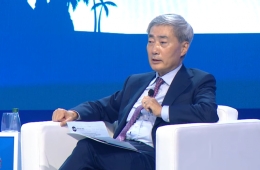
During the forum, there was debate over the appropriateness of the projected power demand for AI data centers. Im Jaemin, Secretary General of the Energy Transition Forum, stated, "It should be noted that data centers can become stranded assets if reinvestment is not made within three to five years," adding, "If we attract overseas data center companies to Korea, we must establish long-term investment and renewable energy use systems."
Han Kahui, head of the energy policy team at Climate Solutions, pointed out, "Many plans for AI data center power demand remain unconfirmed and lack transparency," and warned, "Reflecting unverified numbers could result in excessive facility investment."
There were also calls to fully account for the expansion of renewable energy in the demand forecast. Kim Kangwon, head of the renewable energy policy division at Korea Energy Agency, noted, "Self-generation capacity from renewables is estimated at about 5GW in 2025 and will continue to increase," stressing the need to accurately reflect this in demand projections.
Hot Picks Today
 "I Ate It Often Because It Tasted Good"... This Eating Habit Linked to 40% Higher Odds of Asymptomatic Cerebrovascular Damage
- "Booked a Cheap Flight, Only to Get Blindsided"... Travelers' Complaints "Explode" Over Extra Fees
- Woman in Her 70s Assaults Sister in Her 80s: “She Had an Affair with My Husband”
- “Dad Just Gave It to Us as a Gift”... Scratched a Lottery Ticket at a Family Gathering and Hit a 1 Billion Won Jackpot
- "We've gone this far to save on lunch"... Where office workers are flocking instead of restaurants
Kim Heejip, professor at Seoul National University Graduate School of Engineering, commented, "The U.S. and China are fiercely competing for AI supremacy," and emphasized, "We must plan in a balanced way to achieve carbon neutrality without weakening industrial competitiveness."
© The Asia Business Daily. All rights reserved. Unauthorized AI training and use prohibited.

!["Please, Just Take Them Off" - They Made It All the Way to Bed... Then Fecal Bacteria Struck [Deep Scroll]](https://cwcontent.asiae.co.kr/asiaresize/307/2026101610053063338_1792112730.png)