Even as “Daewang Whale” Falters, Investment in East Sea Gas Field Proceeds Smoothly
Oil Field Development Budget Slashed from 10.9 Billion to 2.1 Billion Won,
Down 80.4% Next Year
East Sea Gas Project Currently at Data Analysis Stage
Cost and Risk to Be Shared through Joint Development with BP
The government is set to cut next year's budget for investments in oil field development projects by over 80% from this year; however, the deep-sea gas field project in the East Sea is expected to remain largely unaffected for the time being. While additional fiscal support for the “Daewang Whale” structure—which has been deemed economically unfeasible—has been halted, development of other promising structures continues in partnership with the global energy company BP (British Petroleum), which is investing in the project. Since the current phase relies on re-analyzing existing data rather than conducting exploration drilling, which requires large-scale funding, the reduction in government investment does not immediately translate to a halt in operations.
According to government sources on August 20, the budget being prepared for investment in oil field development projects next year is 2.139 billion won, down 80.4% from this year’s 10.922 billion won. As the government reduces direct fiscal support for new oil field projects, Korea National Oil Corporation is promoting joint development of the remaining promising structures in the East Sea deep-sea gas field through foreign investment.
Negotiations with BP Continue for Second Month: Adjusting Stake and Drilling Terms
Currently, the project is in a pre-exploration drilling phase, which does not require large-scale new spending. BP is re-analyzing seismic and other existing exploration data secured by Korea National Oil Corporation with its own technology and perspective, in order to identify the most promising structures for drilling. Since this work utilizes already acquired data, there is no pressing need for significant new investment at this stage.
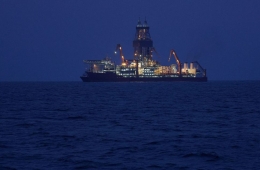
Typically, oil field development proceeds through the analysis of exploration data, identification of promising structures, exploratory drilling, commercial viability assessment, and then development and production. Significant costs begin to accumulate at the exploration drilling stage, which requires offshore drilling rigs and related equipment. The BP partnership is currently focused on reviewing existing data to identify new prospective areas and deciding whether actual drilling should take place. An official from Korea National Oil Corporation stated, “Since we are not yet entering the drilling phase, the financial outlay is minimal,” and added, “Even with the budget cut next year, there is unlikely to be any impact on the business at this time.”
Korea National Oil Corporation and BP remain in negotiations over detailed terms for joint development of the East Sea deep-sea gas field. BP was selected as the preferred negotiating partner in June, and since then, the government and Korea National Oil Corporation have been working to reach agreement with BP on contractual terms. Although the talks have now continued for over two months, there have reportedly been no delays or breakdowns. A Korea National Oil Corporation official remarked, “Given the importance of these negotiations, there are many issues to examine, but currently the negotiations are proceeding smoothly.”
The negotiations reportedly cover not only BP's equity stake and cost-sharing arrangements, but also operational rights, decision-making structures, annual exploration volumes, and future drilling obligations. As oil field development involves large-scale, long-term investment after contract signing, the structure of the initial contract can significantly influence both sides’ cost burdens and profit sharing down the line.

Daewang Whale Failure at a Cost of 120 Billion Won...This Time, Risk Sharing with BP
This project is structurally different from the first Daewang Whale exploratory drilling, where Korea National Oil Corporation effectively bore all the risk. Daewang Whale was selected as the first target for drilling among seven promising structures in the East Sea deep-sea gas field development project announced by the Yoon Suk Yeol administration in June 2024. At the time, the government said the deep waters of the East Sea could potentially contain up to 14 billion barrels worth of oil and gas.
Although exploratory drilling commenced in December of the same year, no government funds were actually invested. While the original plan was for the government and Korea National Oil Corporation to share drilling costs equally, a National Assembly budget review removed the entire 49.7 billion won in government investment for Daewang Whale. Consequently, the full first drilling cost, about 120 billion won, was effectively shouldered by Korea National Oil Corporation from its own resources.
The results fell short of expectations. Although some gas indications were detected, they did not meet the threshold for economic viability, and further detailed analysis concluded that commercial development would not be feasible. As a result, further exploration of the Daewang Whale structure has been suspended. However, geological and sample data obtained during drilling are being used to assess other promising structures.
This time, the project structure is different, with BP brought in as a partner to share the risks and costs. Notably, discussions are underway for BP to bear the initial investment costs, which should reduce the financial burden on the government and Korea National Oil Corporation. Korea National Oil Corporation will provide existing exploration data and research results, and BP will re-analyze these materials, allowing both parties to reassess the project’s commercial prospects utilizing their respective assets and technologies.
However, if promising structures are identified and the project proceeds to the exploratory drilling phase, cost issues will resurface. It is yet to be determined whether BP will bear all drilling costs or share them with Korea National Oil Corporation according to each party’s stake. Whether to include an obligation to drill in the contract also remains under discussion. As the Daewang Whale experience showed, a single round of exploratory drilling can incur costs exceeding 100 billion won, making future cost sharing arrangements for the drilling phase a key variable for the project.
Hot Picks Today
 Despite 10% Annual Interest, Russians Pull Out Cash as Fears of Deposit Nationalization Spread
- "Monami Posts a 10 Billion Won Deficit, But Consistently Awards 4.7 Billion Won in Contracts to the Third-Generation Family Company"
- "Caught Sneaking Water from Baengnokdam at Dawn"... Jeju Deploys Thermal Imaging AI Drones on Hallasan
- KOSPI Surges Over 6%... SK hynix Up 13%, Samsung Electronics Jumps 8%
- "I Love Traveling Without Spending My Own Money"... Gen Z Turns to Family Trips as Vacation Costs Soar
An official at Korea National Oil Corporation said, “It would not be accurate to say that the budget cut has created issues in negotiations with BP,” and added, “We will first re-evaluate promising structures by analyzing the existing data, after which decisions regarding drilling and cost sharing will be made in consultation with BP.”
© The Asia Business Daily. All rights reserved. Unauthorized AI training and use prohibited.





!["Is This the Next Humidifier Disinfectant Crisis?"...Geumcheon Residents Protest for Five Months [Coexistence in the AIDC Era]①](https://cwcontent.asiae.co.kr/asiaresize/307/2026081010295274897_1786325392.jpg)