USD-KRW Exchange Rate Drops to 1,300s for First Time in 11 Months...Can It Stabilize?
Weaker Dollar, Offshore Short Bets, and Exporter Dollar Selling Combine
Market Sentiment for Further Exchange Rate Decline Intensifies
"Expected to Remain in the 1,300-Won Range for Now"
Some Project a Second-Half Low of 1,340 Won
Middle East War and Uncertainty Over US Investment Remain Upside Risks
The USD-KRW exchange rate has entered the 1,300-won range for the first time in 11 months. This comes as exporters have been steadily selling dollars in the market. Additionally, expectations that the US Federal Reserve may freeze its benchmark interest rate in September, combined with mounting concerns over the US fiscal deficit, have accelerated the rapid shift to a weaker dollar. While just two months ago the exchange rate had surged to the point where it was approaching 1,600 won, assessments now indicate that it has turned into a downward trend since the beginning of this month. The prevailing expectation is for the rate to fluctuate in the high 1,300-won to low 1,400-won range for the time being, with some projecting it could fall to as low as 1,340 won in the second half of the year.

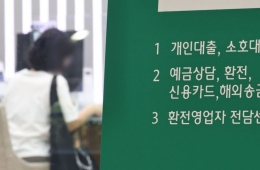
On the 20th, the KOSPI index opened at 6680.34, up 209.17 points from the previous trading day. The domestic stock market index is displayed on the electronic board in the dealing room of Hana Bank in Jung-gu, Seoul. As of 9:05 a.m., the won-dollar exchange rate stood at 1389 won, down 8.7 won from the previous day's weekly closing price. Photo by Kang Jinhyung, August 20, 2026.
View original imageAs of 10:00 a.m. on the 20th at the Seoul foreign exchange market, the USD-KRW exchange rate was trading at 1,393.3 won. This marks two consecutive days below the 1,400-won level.
The previous day, the USD-KRW exchange rate ended weekly trading in the 1,300-won range for the first time in 11 months. At 3:30 p.m. (the weekly closing price), it stood at 1,397.7 won, down 14.1 won from the previous trading day. This was the first time since September 29 of the previous year (1,398.8 won) that the weekly closing price entered the 1,300-won range, and the lowest since September 24 of the same year (1,397.5 won). In overnight trading, the rate dropped as low as 1,385.2 won. The dollar's decline intensified after the US Treasury announced that it would expand the scale of its buybacks of 10- to 30-year long-term government bonds from a maximum of 2 billion dollars to a minimum of 4 billion dollars.
The USD-KRW rate first breached the 1,500-won mark in mid-May due to the impact of the Middle East war, and then soared as high as 1,555.8 won as of July 2's weekly closing price. However, a clear downward trend has emerged this month. Up until August 19, the average USD-KRW exchange rate for August had been calculated at 1,418.6 won. Jeonghoon Suh, Senior Research Fellow at Hana Bank, stated, "The recent short-term stabilization is the result of continuous dollar selling by exporters and expectations of a further narrowing of the interest rate gap between Korea and the US, coupled with positive forecasts for Korea's economic growth, which together have pushed the exchange rate down. In addition, the inflow of funds from SK hynix's issuance of American Depositary Receipts (ADR) in the US has acted as a trigger for the exchange rate decline."
The stabilization of the USD-KRW rate down to the 1,300-won level is interpreted as the result of this movement being further amplified by the weakening dollar. Recently released US retail sales, Consumer Price Index (CPI), and Producer Price Index (PPI) figures all came in below market expectations, reducing anticipation for a US benchmark rate hike in September. Meanwhile, concerns over the US fiscal deficit have driven up Treasury yields, deepening the dollar's weakness. The dollar index, which measures the value of the greenback against the currencies of six major nations, fell to as low as 98.833.
This has reportedly led even offshore investors to rush in and heavily bet on further declines in the USD-KRW rate, making the downtrend more pronounced. Kyungwon Min, Research Fellow at Woori Bank, noted, "Yesterday, a few specific foreign players took sizable short (sell) positions on the dollar, driving the exchange rate sharply lower. As the market was testing whether the 1,300-won mark would be breached, they strengthened their short positions as it looked likely to break through."
Market participants are now considering the possibility of a further decline in the USD-KRW rate as the stabilization trend continues. Seokhyun Baek, Research Fellow at Shinhan Bank, said, "Although US President Donald Trump is threatening to announce strong economic sanctions against Iran, unless there is a meaningful impact, it will be insufficient to reverse the current downtrend in the exchange rate. Given short-term market momentum, downside pressure is likely to continue for the time being." Dawoon Moon, Research Fellow at Korea Investment & Securities, also projected, "Now that the rate has fallen below 1,400 won, short-term downward momentum will likely persist."
Continued dollar selling by exporters in the second half of the year is also acting as downward pressure. This is because there are still clear reasons for companies to exchange dollars, including large-scale domestic facility investment plans, interim corporate tax prepayments, and shareholder returns. There are also forecasts that an additional interest rate hike by the Bank of Korea this month would further narrow the US-Korea interest rate differential and drive the USD-KRW rate lower. Senior Research Fellow Suh said, "For the time being, I expect the rate to keep moving within the high 1,300-won to low 1,400-won range, but depending on this month's interest rate decision, it could briefly drop below 1,380 won."
There is even an expectation that the rate could fall as low as 1,340 won in the second half of the year. Research Fellow Moon revised his forecast for the average USD-KRW rate in the second half from 1,470 won to 1,420 won, stating, "With each increase in the exchange rate, dollar selling intensifies and the share of currency hedging rises, forming a clear inflection point for a drop in the rate. As the rate approaches its upper limit, the power of downward dollar selling pressure strengthens."
Hot Picks Today
 "Wasn't It Supposed to Be Gone? Alarming Surge in Cases Leads US to Declare Disaster Emergency"
- [Exclusive] "Bought at 7,000 Won, Now at 1,600 Won"...76% Stock Plunge Shatters Big Dreams [KOSDAQ Inflated Listings]②
- [Exclusive] "We Thought Bigger Debts Would Hurt More..." Business Owners With Less Than 100 Million Won Loans Have Higher Delinquency Rates Than Those With Over 500 Million Won
- "Military Exemption Not Enough? Even KRW 2.3 Billion in Special Housing Gains?... Heated Debate Over Asian Games National Team Benefits"
- "This Isn't Right, Someone Could Throw Out Their Back"... Triple-Layered Garbage Bags Tightly Bound with Tape
However, uncertainties such as the Middle East war risk and US investment remain external variables. Senior Research Fellow Suh pointed out, "If high yields on US long-term Treasuries persist, global financial conditions as a whole will tighten, and volatility in the USD-KRW rate could also increase. External uncertainties certainly remain."
© The Asia Business Daily. All rights reserved. Unauthorized AI training and use prohibited.