Trump Pressures Fed Again for Rate Cut... Calls Wash "Excellent"
"If Economic Indicators Are Strong, Rates Should Fall"
Criticizes Fed's Stance Driven by Inflation Fears
Downplays Concerns Over U.S. Bond Market Volatility
U.S. President Donald Trump has once again expressed dissatisfaction with the Federal Reserve (Fed)'s base interest rate policy, insisting that rates should be significantly lowered. However, he continued to express steadfast confidence in Kevin Wash, the Fed Chairman he nominated, describing him as "excellent."

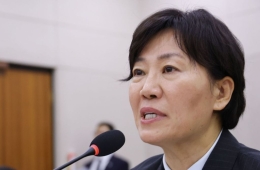
Kevin Wash, Chairman of the U.S. Federal Reserve (Fed), is speaking at a press conference related to the Federal Open Market Committee (FOMC) held on the 29th of last month (local time). Photo by AP.
View original imageㅡㄹ
According to reports from international media outlets such as CNBC and AP on the 19th (local time), President Trump reiterated the need for a rate cut at an event held at the White House with major figures from the virtual asset industry. He stated, "Interest rates should not rise for the success of our country, but should be able to come down depending on our success," arguing once again for a reduction in rates.
He also emphasized, "When we report good numbers (economic indicators), they keep raising rates because they are too afraid of inflation. There's no need for that; in fact, rates should be declining." This statement is seen as criticism of the Fed's policy of maintaining high interest rates out of concern for potential inflationary pressures.
President Trump further argued that the Federal Reserve should not hesitate to lower rates even if U.S. economic indicators remain strong. He pointed out that, in the past, good economic indicators were interpreted as demonstrating a strong economy and resulted in lower interest rates. By contrast, he argued that now, positive economic indicators increase expectations that the Fed will not cut rates, which is leading to higher market interest rates.
He also directly compared long-term government bond yields between the United States and other countries. He argued that while Switzerland's 30-year government bond yield is around 0.5 percent, the United States pays an interest rate of about 3.5 percent, asserting that U.S. rates are excessively high.
President Trump dismissed concerns regarding recent volatility in the U.S. Treasury market. When asked whether there were problems in the bond market, he responded, "No," emphasizing the strengths of the U.S. economy. However, this contrasts with the U.S. Treasury Department, led by Secretary Scott Bessent, which initiated emergency measures as 30-year bond yields surged to a 19-year high. The Treasury decided to increase the size of 10- to 30-year Treasury buybacks (long-term bond purchases) from at least $2 billion to a minimum of $4 billion per session.
While expressing dissatisfaction with the Fed's interest rate policy, President Trump maintained his trust in Chairman Wash, whom he nominated. President Trump described Wash as "excellent." Previously, President Trump had praised Wash as a "brilliant guy," while also arguing that the Fed Board was blocking interest rate cuts.
Hot Picks Today
 "Please Pay Me at Least 3 Million Won a Month": More Than Half of Young People Today Prioritize "Working Conditions" Over Company Size
- Selling Like Crazy Every Year... 30-Year-Old Hetbahn Takes on a New Challenge: Tastes Better Than "Mom's Home Cooking" [On-Site Report]
- Ran 18 km With 9-Year-Old Tied to Him at the Waist... "Man Banned From Competing for 3 Years"
- "Hey, Lady, Teach Your Kids to Behave!" ... 300,000 Won in Cash and a Bodily Injury Claim Demanded Over Child's Door Ding
- Beachgoer Finds 'Plastic' That Turns Out to Be Perfume Ingredient Worth More Than Twice as Much as Gold
Meanwhile, at the same event, President Trump urged Congress to pass the "CLARITY Act," aimed at establishing a regulatory framework for the U.S. virtual asset market. However, it has been reported that both Democratic representatives and some Republican lawmakers have stated they cannot support the bill unless it includes provisions that prohibit politicians, including President Trump, from making profits through cryptocurrency ventures.
© The Asia Business Daily. All rights reserved. Unauthorized AI training and use prohibited.




![[Market ING] KOSPI Seeks Rebound in Superweek Packed with Corporate Earnings and FOMC](https://cwcontent.asiae.co.kr/asiaresize/307/2026102514484873155_1792907327.jpg)