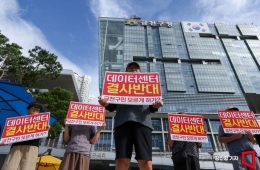
Establishment of a ‘Comprehensive Plan for the Korean Beef Cattle Industry’ Every Five Years... “Strengthening Industry Competitiveness and Stabilizing Farm Management”
Enforcement Decree and Enforcement Rules of the Korean Beef Cattle Industry Act Take Effect on August 21
Going forward, a comprehensive plan for the promotion and support of the Korean beef cattle industry must be established every five years, based on surveys and statistical investigations.
The Ministry of Agriculture, Food and Rural Affairs announced on August 20 that the Enforcement Decree and Enforcement Rules of the “Act on the Transition and Support of the Korean Beef Cattle Industry in Response to Carbon Neutrality” (hereafter referred to as the “Korean Beef Cattle Industry Act”) have been enacted and will take effect on August 21. The Enforcement Decree and Enforcement Rules specify the delegated matters and detailed standards necessary for implementation, as stipulated by the Korean Beef Cattle Industry Act.

According to the new law, a comprehensive plan for the promotion and support of the Korean beef cattle industry must be formulated every five years based on factual surveys and statistics. In addition, annual implementation plans are to be established and these must be released to the public via the official website.
The law also calls for the establishment of the Korean Beef Cattle Industry Development Council, which will deliberate detailed matters such as supply and demand control, the provision of incentives for slaughter and shipment, support for stabilizing calf production, working capital support, educational support, and the development of export infrastructure.
In addition, corporations classified as medium-sized or larger based on their primary business area and average sales revenue may participate by securing land for the cultivation of forage crops for roughage production and establishing a roughage production plan, as part of low-carbon farming activities. Participating companies are also required to prepare collaboration plans such as an analysis of their impact on the regional economy, active implementation of Korean beef supply and demand policies, and win-win strategies with existing cattle farms. They must collect opinions from organizations related to the Korean beef production industry in the relevant city, county, or district, including farming cooperative corporations, agricultural company corporations, regional agricultural and livestock cooperatives, and item-specific cooperatives.
The Ministry of Agriculture, Food and Rural Affairs will immediately establish the Korean Beef Cattle Industry Development Council following the enforcement of the Korean Beef Cattle Industry Act. The ministry also plans to implement the long-delayed calf production stabilization support project by setting the activation criteria, in order to promote production stability.
Hot Picks Today
 Despite 10% Annual Interest, Russians Pull Out Cash as Fears of Deposit Nationalization Spread
- "Millions of Rare Books Tracked to Shocking End... AI Companies' Chilling 'Panama Project'"
- SK hynix Announces 40 Trillion Won Shareholder Return; KOSPI Surges 5% in Response
- "One Less Worry About Old Age": Japanese Companies Secure Senior Talent with Regular Employment Beyond 65
- "I Love Traveling Without Spending My Own Money"... Gen Z Turns to Family Trips as Vacation Costs Soar
Lee Jaesik, Director General for Livestock Policy at the Ministry of Agriculture, Food and Rural Affairs, stated, “We will make continuous efforts to enhance communication with farmers, reflect voices from the field in our policies, and strive to strengthen the competitiveness of the Korean beef industry and stabilize cattle farmers’ management.”
© The Asia Business Daily. All rights reserved. Unauthorized AI training and use prohibited.