FSS to Closely Review '8-Week Rule' at Consumer Advisory Committee Next Week... "Minimizing Consumer Confusion"
Discussion of 8-Week Rule Response Measures at the Financial Consumer Protection Advisory Committee
Enhanced Guidance on Additional Review Procedures for Treatment Exceeding Eight Weeks
Preparation of Standard Terms and Step-by-Step Information
With the so-called '8-Week Rule' for minor injury claimants under auto insurance set to take effect on September 10, financial authorities are reviewing their guidance and management systems to minimize consumer confusion. The goal is to reduce potential disruptions as the new system is implemented in medical settings and to ensure that consumers receive necessary procedural information in a timely manner.

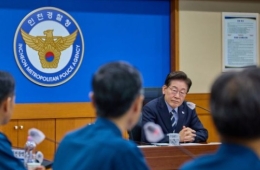
According to the financial industry and others on August 20, the Financial Supervisory Service plans to discuss consumer protection measures related to the 8-Week Rule at the fourth Financial Consumer Protection Advisory Committee meeting, which will be chaired by Governor Lee Chanjin later this month. Since its launch, the Financial Consumer Protection Advisory Committee has addressed a range of insurance consumer protection strategies, from internal controls at the product design and development stage to policy terms and brochures, as well as sales channels and commissions for corporate insurance agencies (GA).
An official from the Financial Supervisory Service stated, "At next week's meeting, we will review consumer complaints related to the implementation of the 8-Week Rule and look into guidance and post-management measures to ensure a smooth transition within the field."
Earlier, at the Cabinet meeting held on August 4, an amendment to the Enforcement Decree of the Automobile Damage Compensation Guarantee Act, commonly known as the 'Auto Liability Insurance Act,' which contains these measures, was approved. Under the revised regulation, minor injury patients—such as those suffering from sprains or contusions—will be required to undergo additional review by a medical specialist within the Auto Insurance Compensation Service if their treatment exceeds eight weeks. This step is intended to curb excessive insurance payouts caused by so-called 'habitual patients' who seek unnecessarily prolonged treatment.
In line with the system implementation, the Financial Supervisory Service is expected to complete the ongoing revision work on standard policy terms as well. This is necessary because subordinate regulations, including the Enforcement Rules on Insurance Supervision and standard contract terms, must be updated to reflect amendments to the core Auto Liability Insurance Act.
In particular, to mitigate consumer confusion arising from the regulatory changes, the agency plans to prepare a Q&A on the 8-Week Rule and reinforce step-by-step guidance regarding treatment and insurance claims. For example, at the insurance enrollment stage, consumers will be informed that additional procedures are required if minor injury claimants undergo treatment beyond eight weeks. At the claims stage, there will be specific instructions on where to submit relevant documents like medical certificates. Information on additional review processes and anticipated timelines will also be provided upfront so consumers can be informed in advance.
Despite strong opposition from both Western and Oriental medicine sectors, the 8-Week Rule is being introduced because, although the number of minor injury claimants has fallen, total medical spending has actually risen. The number of such claimants dropped by approximately 66,000 from around 1,554,000 in 2019 to 1,488,000 in 2024, yet their total treatment costs increased from 1 trillion won to 1.41 trillion won—a rise of about 41% over that period.
Although the patient count declined, the medical cost per patient rose significantly. A simple calculation shows that the average treatment cost for each minor injury claimant increased from roughly 640,000 won in 2019 to about 950,000 won in 2024, an increase of approximately 47%. The government considers these long-term treatments among minor injury patients to be a key factor causing leakage in auto insurance payouts.
If the implementation of the 8-Week Rule curtails overtreatment, it is also expected to improve the deteriorating loss ratio in the auto insurance sector. According to the insurance industry, the simple average accumulated loss ratio for auto insurance between January and June this year for the four major companies—Samsung Fire & Marine Insurance, Hyundai Marine & Fire Insurance, DB Insurance, and KB Insurance—stood at 84.5%, up 1.9 percentage points from the same period a year earlier. For June alone, the loss ratio was 83.6%, also up 1.9 percentage points year-on-year.
These four companies account for over 85% of the auto insurance market and all of them have posted an accumulated loss ratio above 84%. The insurance industry generally regards a loss ratio of around 80% as the break-even point for auto insurance. Any ratio above 80% means the insurers are essentially operating at a loss.
Hot Picks Today
 "Expensive, Smelly and Scary"... What's Happened to the "Honeymooners' Paradise" Tourists Have Abandoned?
- Women Who Say "A Husband's Annual Salary of 100 Million Won Is a Given"... Matchmaking CEO: "They Talk About It Like It's Nothing"
- "I Want to Eat Like Koreans..." Foreigners Who Once Opened Ramen Packs Now Keep Gochujang in Their Pantries
- Dedicated Semiconductor Megaproject Office to Launch... MOTIE Bolsters Organization and Staffing
- "I'll Give You 53.4 Billion Won to Keep Quiet"... Influencer Reveals Secret Deal; Musk Denies It
Spending on Korean medicine has long been identified as a major driver of higher insurance payments alongside the long-term treatment of minor injury claimants. Combined spending on Western and Korean medicine for the first half of 2021 to 2026 increased sharply from 1,162,483,000,000 won in 2021 to 1,505,674,000,000 won in 2026. Notably, the share of Korean medicine accounted for about 60% versus 40% for Western medicine. This predominance, together with practices such as overlapping use of acupuncture, pharmacopuncture, Chuna manual therapy, and herbal preparations for repeated or extended minor injury treatments, as well as a lack of detailed screening criteria, have all contributed to the problem.
© The Asia Business Daily. All rights reserved. Unauthorized AI training and use prohibited.