Taihan Cable Moves to Localize Core 'Underwater Robot' for Subsea Cable Construction
Development of HVDC Burial ROVs With Panstar Robotics
Strengthening Turnkey Capabilities From Construction to Installation
Taihan Cable is joining forces with a specialized marine robotics company to localize the core equipment needed for laying power networks deep underwater. The strategy is to reduce reliance on overseas technology for subsea cable construction, enhance construction competitiveness, and secure a leading position in the global power infrastructure market.
On August 19, Taihan Cable announced that it had signed a memorandum of understanding (MOU) at its Hoban Park headquarters in Seocho-gu, Seoul, with Panstar Robotics, a marine robotics company, for the "localization of remotely operated underwater vehicles (ROVs) for offshore wind power and high-voltage direct current (HVDC) subsea cables." The signing ceremony was attended by Chunwon Lee, Executive Director and head of the subsea business division at Taihan Cable, Jungtak Min, CEO of Panstar Robotics, and other key officials.

Chunwon Lee, Executive Director of Taihan Cable (left), and Jungtak Min, CEO of Panstar Robotics, are taking a commemorative photo after signing a business agreement on the 19th to localize underwater cable ROVs. Taihan Cable
View original imageAn ROV refers to an unmanned submersible vessel operated remotely in deep-sea environments where human entry is difficult, which is used to bury and protect subsea cables. Currently, most burial equipment used in large-scale HVDC subsea cable projects is foreign-made, and in many cases, overseas specialists must be brought in for operation. In particular, the characteristics of Korea’s southwestern offshore region, such as fast currents, high turbidity, and shallow depths, have driven a consistent demand for high-performance equipment optimized for domestic marine environments.
Through this MOU, the two companies will jointly develop high-performance burial ROVs and operating systems for use in connecting internal and external power networks within offshore wind farms, as well as for long-distance grid interconnection and HVDC subsea cables. Furthermore, they plan to apply the developed equipment and technology to actual subsea cable construction sites, participate in national research and development projects, and work together toward entry into overseas markets.
Panstar Robotics is an artificial intelligence (AI)-based marine robotics company founded by the Korea Institute of Robot Convergence (KIRO). The company possesses foundational technology for underwater robots used in subsea cable burial, and has built practical experience by deploying its self-developed robots in both domestic and overseas projects. Through this partnership, Taihan Cable intends to significantly strengthen its turnkey project capabilities, covering every step from design and manufacturing to transportation, installation, and burial.
Chunwon Lee, Executive Director of Taihan Cable, stated, "Localizing high-performance subsea cable ROVs is not just about developing equipment, but is a critical task for enhancing the competitiveness of the domestic subsea cable supply chain. We will continue to strengthen our competitive edge across the entire value chain for subsea cables to contribute to national energy security and to play a key role as a total solution provider in the global subsea cable market."
Hot Picks Today
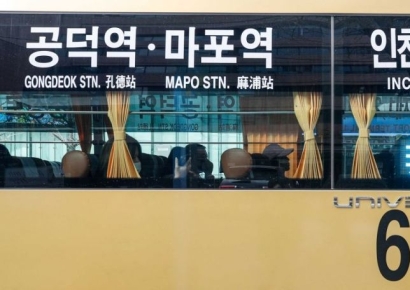 Despite "Insufficient Balance" Notices, They Board Anyway... Reports of Foreign Fare Evasion Mounting
- [Exclusive] "We Came for a KRW 140,000 Trip": Following Chinese Tourists in Korea Uncovers a 'Suspicious' Tour
- Huang Jensen: "The More Memory, the Better"... Dismisses 2029 Oversupply Concerns
- U.S. to Require Arriving Passengers to Prove They Didn't Visit the 'Ebola Epicenter' Starting Nov. 3
- "Baek Jongwon Had Been Quiet, Then Hit It Big"... Waits in the 100s in U.S. Despite KRW 46,000 Pork Belly
Meanwhile, Taihan Cable is also actively investing in expanding the domestic subsea cable supply chain. After completing its first subsea cable factory, the company is building a second plant capable of producing 640 kV-class HVDC subsea cables and has successively introduced Korea’s first cable laying vessels (CLVs) for offshore wind power, the 'Phallos' and 'Scandi Connector'. Thanks to these efforts, Taihan Cable was selected as a "leader in supply chain stabilization" in the subsea cable sector in December last year.
© The Asia Business Daily. All rights reserved. Unauthorized AI training and use prohibited.