"One Less Worry About Old Age": Japanese Companies Secure Senior Talent with Regular Employment Beyond 65
Increased Use of Senior Talent Amid Labor Shortages
Japanese Companies Expand Retirement Age Extension and Equal Treatment for Older Employees
Japanese companies are increasingly utilizing senior workers, including hiring people aged 65 and older as regular employees, in response to labor shortages.

Shionogi Pharmaceutical in Japan: Retirement Age Extended from 60 to 65—Regular Employment Beyond 65
According to the Nihon Keizai Shinbun on August 19, Japanese listed company Shionogi Pharmaceutical plans to extend its retirement age from the current 60 to 65 starting next year. The company will also allow employees who meet certain criteria to continue working as regular employees even after 65.
Previously, employees who reached retirement age were re-hired as temporary contract workers. Going forward, however, if the employee wishes to keep working and the company determines they are capable of fulfilling their duties, they will remain regular employees. The company will assess eligibility for continued employment each year.
This policy applies to employees who have not yet reached the new retirement age. Actual instances of regular employees continuing past 65 are expected to begin appearing in about five years.
Since 2012, Japan has mandated that companies guarantee employment opportunities to those who wish to work until age 65. In 2021, a law was enacted requiring companies to make efforts to ensure employment opportunities for workers up to age 70.
As a result, the number of elderly people working has increased. However, many have been re-employed as contract staff with comparatively poor treatment after retiring at 60. According to the Ministry of Health, Labour and Welfare, last year 62.2% of companies set the retirement age at 60, and only 3.9% had abolished the mandatory retirement age completely. The number of employed people aged 65 and over reached 9.43 million last year, the highest ever. However, excluding executives, 76.1% were non-regular employees.

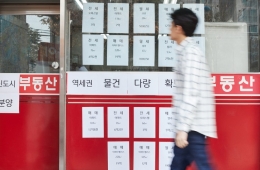
Building in Osaka, Japan, where Shionogi Pharmaceutical's headquarters are located. Photo by Yonhap News Agency
View original imageMore Japanese Companies Extend Retirement Age and Maintain Working Conditions
In Japan, beyond Shionogi Pharmaceutical, the number of companies providing working conditions for senior employees similar to those before retirement is growing. Construction company Daiwa House introduced a policy last year under which employees can continue working up to age 67 if they wish, even though the official retirement age is 65. Salary, bonuses, and other compensation remain unchanged even for those working until 67.
Snack manufacturer Calbee has established a new role called "Senior Meister," allowing seniors with specialized knowledge or skills to continue working under the same conditions as when they retired at 60.
Kainz, a home interior goods retail chain, also extended its retirement age from 60 to 65 this year, introducing a system that maintains its pay structure and employment benefits for employees after 60.
Hitachi, one of Japan’s major companies, has decided not to reduce the salaries of "senior employees" who are re-employed after retirement if they perform the same duties as regular staff.
Hot Picks Today
 "If You Don't Apply, My KRW 1.7 Million Will Be Gone"... Unclaimed National Pension Refunds Vanish After 'This Deadline'
- "King crab is 3,000 won per 500 grams; just eating it makes the trip worthwhile"... Chinese flock to North Korea on 'fake business trips'
- "When I get Home from Work, This Is All I Do, and It's Making Me Stupid"... Short-Form Craze Sparks 'Electronic Drug' Debate in China
- Lee Juwan, Who Forecast Samsung at 70,000 Won and SK hynix at 200,000 Won, Says They're "Still Overvalued"; Others Counter: "Fundamentals Are Solid, Correction Is Excessive"
- "What Was I Thinking..." Gen Z Regrets Habitual Delivery Orders After Seeing the Bill, Falls Into "Delivery Guilt"
The Nihon Keizai Shinbun analyzed, "The importance of senior talent is increasing in the labor market, where labor shortages are severe," adding, "Personnel systems that treat employees based on roles and performance—rather than age—and actively secure experienced talent will determine corporate competitiveness."
© The Asia Business Daily. All rights reserved. Unauthorized AI training and use prohibited.


!["Please Take Them Off!" They Made It All the Way to the Bed... Then "80% of Fecal Bacteria" Struck [Deep Scroll]](https://cwcontent.asiae.co.kr/asiaresize/307/2026101610053063338_1792112730.png)