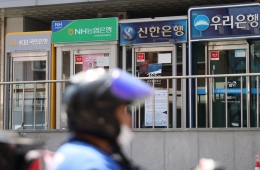
[Regional Finance Survival Strategy] ③ Strengthening Regional Banks at the Edge: "Local Money for the Region"
Limits to Self-Help for Regional Banks...Government Support Needed
Calls for Incentives on SME Lending
Regional Banks: "Municipal Treasury Account Selection Criteria Must Change"
Amid a regional economic downturn and the rapid adoption of digital finance, calls are growing to improve existing systems and redefine the roles of regional banks to bolster their competitiveness during this crisis. Experts especially agree that regional banks face structural struggles that cannot be overcome independently, and thus government and public institution support is needed from the perspective of national balanced development. However, there are also voices pointing out that, because the competitiveness of regional banks is ultimately tied to the vitality of their local economies, there must be more fundamental solutions—such as strengthening the growth infrastructure of non-metropolitan areas—implemented in parallel.
![[Regional Finance Survival Strategy] ③ Strengthening Regional Banks at the Edge: "Local Money for the Region"](http://www.asiae.co.kr/news/img_view.htm?img=2026082408533189750_1787529212.jpg)
On August 24, Jaejun Han, Professor of Global Finance at Inha University, told The Asia Business Daily, "Small and mid-sized cities in Korea find it difficult to be self-sustaining," adding, "To revitalize regional banks, there needs to be a change in policy direction."
The most frequently discussed solution is to provide policy support for the supply of funds by regional banks to local small and medium-sized enterprises (SMEs). A prominent example is offering regulatory incentives the more loans a regional bank gives to local SMEs. For instance, the non-quantitative evaluation items of the bank management assessment conducted by the Financial Supervisory Service could reflect local SME lending performance.
There are also opinions that separate weightings should be applied to loans for local SMEs struggling with funding shortages. The Bank of Korea operates the SME Loan Ratio System, which requires both commercial banks and regional banks to supply over 50% of the increase in won-denominated loans to SMEs. If banks fail to meet this ratio, they are penalized by being allocated less in financial intermediary support loans from the Bank of Korea.
Therefore, giving extra weighting to regional banks’ loans to local SMEs could help them more easily meet their SME loan ratios. Additionally, some are calling for the introduction of a separate ‘mandatory loan ratio for local SMEs.’
Byungyun Lee, Senior Research Fellow at the Korea Institute of Finance, stated in a report titled 'Strategies to Strengthen Banks’ Roles Amid Regional Extinction,' "If such measures are implemented, banks can meaningfully increase lending to local SMEs," emphasizing, "If the risk of regional extinction becomes too great, severely undermining our society’s welfare, we should actively consider introducing these systems."
Another alternative is to reduce the risk weight (RW) applied to local SME loans. Jiyong Seo, Professor of Business Administration at Sangmyung University, commented, "If banks cannot extend many loans, naturally their profits decrease. Even though regional banks have strengths in relationship banking and understand local firms well, capital constraints can prevent them from lending," and added, "If the risk weighting is relaxed, capital reserve burdens on banks are reduced, making it easier to increase business lending."
Some suggest that the central and local governments should provide direct financial and guarantee support to lower the burden on regional banks. Sangwon Lee, Professor of Finance at Dong-A University, said at last year’s National Assembly seminar on 'Regional Economic Crisis and the Role of Regional Banks,' "If local SME lending expands, the government and local authorities should offer grants or tax breaks," adding, "If government-backed loan repayment guarantees are linked, thereby reducing financial institutions’ risks, regional SMEs can receive funds under more favorable conditions, such as lower costs."
"Regional funds should stay local"... Key role of public institution and municipal treasuries
There are also calls to consider regional banks more in the process of selecting main banks for public institutions that relocate to non-capital regions. Assemblyman Hongbae Park, a former chairman of the National Financial Industry Labor Union who currently serves as Busan Metropolitan Party Chair for the Democratic Party of Korea, said, "We are hearing of cases where public institutions, even after moving to non-capital areas, keep using the commercial banks they dealt with in Seoul as their main transaction bank," and suggested, "We could discuss awarding extra points in public institution management evaluations when they use local financial institutions."
Experts also stress the need to change the criteria for selecting municipal treasuries. According to the Ministry of the Interior and Safety’s published status of 2026 municipal treasury designations, the first treasury is managed by four regional banks—Busan Bank, Kyongnam Bank, Kwangju Bank, and Jeonbuk Bank—which together account for 24 out of 243 municipal treasuries nationwide, or only 9.9%.
Municipal treasuries are one of the pillars of local finance, managing various public funds, civil servant payrolls, and public institution finances. However, since commercial and regional banks are subject to the same selection criteria, smaller regional banks often face structural disadvantages. In particular, the ‘deposit and loan interest rates’ category of the assessment tends to favor larger banks, as higher deposit rates win more funds from local authorities and lower loan rates make their bids for treasury management more attractive, giving size-dominant commercial banks an advantage in interest rate competition.
In reality, the competition among banks to secure municipal treasuries is intensifying. In the 15 trillion won bidding for the treasury of North Gyeongsang Province, in addition to NH NongHyup Bank and iMbank—the previous first and second treasury managers—KB Kookmin Bank has also applied. As commercial banks are expected to participate in the upcoming competition for Gwangju City’s treasury next month, local regional banks in these areas are becoming increasingly concerned.
One key reason regional banks view securing municipal treasuries as a matter of survival is the ‘risk of capital outflow.’ Typically, when regional banks manage a municipal treasury, the funds tend to be reinvested locally, increasing the likelihood of regional recycling. In contrast, when a commercial bank manages the treasury, there is concern that funds raised locally could be used as loan capital in other regions such as Seoul or the metropolitan area. A representative from a regional bank stressed, "A virtuous cycle is needed, whereby funds raised in the region are reinvested locally."
Institutional support alone has limits... Local economic revitalization is the fundamental solution
Still, there are also assessments that institutional support alone for regional banks has its limits—because the competitiveness of regional finance is directly tied to the vitality of the local economy. Accordingly, there is a growing consensus that the government’s "5 Regions 3 Special Zones" (the five major megaregions and three special autonomous provinces) strategy and prompt regional industrial restructuring are key to the solution.
![[Regional Finance Survival Strategy] ③ Strengthening Regional Banks at the Edge: "Local Money for the Region"](http://www.asiae.co.kr/news/img_view.htm?img=2026082409091589805_1787530156.jpg)
According to the Ministry of Data and Statistics, the share of regional gross domestic product (GRDP) between the Seoul metropolitan area and non-metropolitan areas stood at 50.1% versus 49.9% in 2015, with the metropolitan region surpassing non-metropolitan areas for the first time—and the gap has been widening ever since. In the latest annual figure for 2024, the gap further expanded, with the metropolitan area at 52.8% versus 47.2% for non-metropolitan areas. The latest trends show a particularly strong growth in metropolitan regions. According to the ministry’s provisional real GRDP data for the first quarter of 2026, the Seoul metropolitan area expanded by 5.2% year-on-year, compared to 4.2% for the Chungcheong region, 2.3% for the Daegu-Gyeongbuk area, 2.0% for the Southeast, and 0.0% (no change) for the Honam region. Through the "5 Regions 3 Special Zones" initiative, the government aims to raise the share of non-metropolitan GRDP to over 50%.
Hot Picks Today
 "Expensive, Smelly and Scary"... What's Happened to the "Honeymooners' Paradise" Tourists Have Abandoned?
- Women Who Say "A Husband's Annual Salary of 100 Million Won Is a Given"... Matchmaking CEO: "They Talk About It Like It's Nothing"
- Wearing Ankle Monitor, Man Rode Escalators on Knife Rampage... Says He Took Drugs Before Attack (Comprehensive)
- "Not Twins, but the Same Person"... Chinese Man Holds 100th-Day Celebration and Wedding on the Same Day
- "I'll Give You 53.4 Billion Won to Keep Quiet"... Influencer Reveals Secret Deal; Musk Denies It
Eunjung Yeo, Professor of Business Administration at Chung-Ang University, stated, "Regional banks grow together with the local economy, so there are clear limitations unless the local economy itself is revitalized," and added, "It’s important for the government to draw up a broad array of measures to boost local economies."
© The Asia Business Daily. All rights reserved. Unauthorized AI training and use prohibited.