"Starting Again": Trump Shakes Alliances... Japan Worries It May Be "Next After South Korea"
Trump Orders Reduction of South Korea-U.S. Joint Drills
Australia Reiterates the "North Korean Threat"
Concerns Rise in Japan Over Defense Costs and U.S.-Bound Investment Pressure
U.S. President Donald Trump has ordered a reduction of the South Korea-U.S. joint military exercises and emphasized his relationship with North Korean leader Kim Jong Un. In response, the United States' Asia-Pacific allies, including Japan and Australia, have begun to highlight the importance of security cooperation. In Japan, concerns are growing that pressure over defense costs, exchange rates, and investments in the United States could intensify in ways similar to those experienced by South Korea.
Japanese Defense Minister: "Japan-U.S.-South Korea Trilateral Cooperation Is Crucial for Peace"

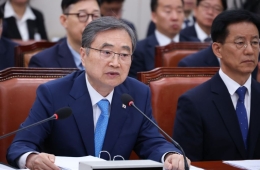
On June 28, Shinjiro Koizumi, Japanese Defense Minister, meets with Minister of Foreign Affairs Cho Hyun at the Government Seoul Complex in Jongno-gu, Seoul. Photo by Yonhap News
View original imageAccording to AFP and Nikkei Asia on August 18 (local time), Japanese Minister of Defense Shinjiro Koizumi told reporters in Canberra, Australia, "As Japan faces the most severe and complex security environment since the end of World War II, cooperation among Japan, the United States, and South Korea is extremely important for regional peace and stability."
This statement was made shortly after President Trump, on August 16, called the joint military exercises between South Korea and the United States "inappropriate and hostile," ordered their reduction, and reiterated the importance of his relationship with Chairman Kim Jong Un. On August 17, when asked if he had exchanged messages with Kim Jong Un, President Trump said, "Yes," and described them as "very positive." On the same day, The Wall Street Journal reported that a North Korea-U.S. summit could take place in conjunction with the Asia-Pacific Economic Cooperation (APEC) summit in November.
Another key regional ally of the United States, Australia, has once again emphasized the threat posed by North Korea. Australian Defense Minister Richard Marles commented on President Trump’s remarks, saying, "Australia is deeply concerned not only about North Korea’s nuclear program but also about its missile program, and we have continued to stress this." He added, "We are facing a difficult global environment with many challenges, and North Korea is responsible for a significant portion of them."
Japan Fears Pressure Similar to That Faced by South Korea
Meanwhile, in Japan, concerns are rising that President Trump’s pressure could soon be directed at Japan itself. Nihon Keizai Shimbun (Nikkei) reported on August 19 that the Japanese government and the ruling Liberal Democratic Party are preparing for the possibility of the United States increasing pressure on Japan. A senior official from the Liberal Democratic Party who has served as a Cabinet minister recalled, "It seems to be starting again," citing the precedent from the first Trump administration, when the U.S. applied pressure to its allies both on security and economic issues ahead of the 2018 midterm elections.
First, the possibility of an increase in Japan's share of the costs for stationing U.S. forces in Japan was mentioned. Japan and the United States plan to conclude a new agreement by the end of this year to set the cost-sharing amounts to apply from next year. An official from the Japanese Ministry of Defense said, "It is better to be prepared if the U.S. requests a certain level of increase." As the Japanese government is currently considering raising its defense budget target from the current 2% of GDP to between 3% and 3.5%, President Trump is also demanding that allies raise their defense spending to approximately 3.5% of GDP.
Hot Picks Today
 "Ssangyong C&E to Leave Seoul Headquarters With 120 Staff and Move to Donghae City... First Major Gamble in 60 Years"
- "Groom Disappears After Promising Marriage for Abortion... Woman Faces Stalking Charges"
- President Draws Line on Further Deregulation of Redevelopment Projects... Land Ministry-Seoul Meeting Likely to Stall
- "Turned 600 Million Won into 100-Fold Profit"…Chinese Actress Zhang Ziyi Scores 63.5 Billion Won Windfall from Investment, Not Acting
- "Persistent Musty Odor Despite Repeated Washing" ... Tackling the Source of Stubborn Sweat Smells in Workout Clothes Boosted Sales by 316% [Interview]
In the economic arena, the weak yen and investment in the United States are being cited as points of leverage. Nikkei reported that if the Bank of Japan does not raise interest rates next month, the United States could increase pressure by demanding an end to the weak yen. Of the $550 billion in U.S.-bound investments agreed upon by Japan and the United States, only about 20% have been allocated to specific projects, raising the possibility that the U.S. could demand that Japan expedite investment implementation. Nikkei also suggested that if a Japan-U.S. summit is held on the sidelines of the United Nations General Assembly in New York at the end of September, such requests from the U.S. side could be conveyed directly.
© The Asia Business Daily. All rights reserved. Unauthorized AI training and use prohibited.