JCS: "South Korea-U.S. Joint Exercise Scaled Back"... Three Major Repercussions Ahead [Yang Nakgyu's Defence Club]
Drills Halved Following Trump’s Directive
Concerns Over Adverse Impact on North Korea Readiness, OPCON Transfer, and Nuclear Submarine Plans

The schedule for the regular South Korea-U.S. joint military exercise, "Ulchi Freedom Shield (UFS)," has been significantly reduced. There are concerns that this will not only negatively impact readiness against North Korea, but could also delay the transfer of wartime operational control (OPCON), making rifts within the South Korea-U.S. alliance more evident.
On August 19, the Joint Chiefs of Staff announced, "This year's UFS exercise period has been adjusted to run from the 17th to the 21st, with some field training exercises (FTX) scaled back." They added, "The Combined Forces Command will conduct the training by splitting its wartime command posts between CP Tango and Camp Humphreys in Pyeongtaek, Gyeonggi Province."
The UFS consists of a computer-based command post exercise (CPX) and field training exercises. Initially, South Korea and the United States planned to conduct Part 1, a "defense" exercise against North Korean provocations from the 17th to the 21st, followed by Part 2, a "counterattack" virtual exercise against North Korea, through the 27th.
This Year's Joint Exercise Cut in Half
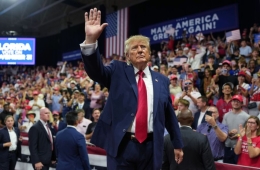
The situation changed rapidly. The day after UFS began, U.S. Forces Korea Commander Xavier Brunson visited the Ministry of National Defense in Yongsan, Seoul. It is believed that he discussed follow-up measures with Defense Minister Ahn Gyu-baek regarding President Trump's directive to reduce combined exercises. On August 16, U.S. President Donald Trump ordered Secretary of Defense Pete Hegseth to drastically scale down the joint exercises. This is the first time that a U.S. presidential order has prompted an adjustment to a South Korea-U.S. joint exercise after it had already begun. Commander Brunson also ordered a reduction in staff at CP Tango, the Combined Forces Command's wartime command post, causing some personnel to return to Camp Humphreys in Pyeongtaek, Gyeonggi Province.
Drills Against Evolving North Korean Tactics Also Reduced
The scaling back of the exercise has led to strong repercussions. Reducing field maneuvers and live-fire drills could affect the readiness posture of the combined South Korea-U.S. forces. This year's exercise incorporated new threats into the scenario, such as North Korean drone attacks, GPS jamming, and cyberattacks. Both live-action and virtual/simulated training were planned in parallel. Military authorities from both countries believed that the North Korean military was gaining real combat experience in modern warfare, particularly in drone operations, through its support for Russia. Furthermore, North Korea could improve its ballistic missile production technology through military cooperation with Russia.
North Korea is also increasing its troop deployments. Vadym Skibitsky, Deputy Chief of the Main Directorate of Intelligence (HUR) at Ukraine’s Ministry of Defense, said in an interview with the BBC that North Korea is preparing to send a substantial additional force to Russia. The current deployment of approximately 8,500 North Korean soldiers in Russia could increase to between 30,000 and 50,000. Previously, Ukrainian President Volodymyr Zelensky stated on August 8 that the number of North Korean troops dispatched to Russia could reach 30,000 to 50,000.
Delay in OPCON Transfer Now Virtually Unavoidable
The transfer of wartime operational control (OPCON) is also in question. In November last year, at the South Korea-U.S. Security Consultative Meeting (SCM), it was agreed to conduct the Phase 2 verification of the three-stage OPCON transfer process in 2026. A goal was also set to complete OPCON transfer by June 2030, within President Lee Jaemyung’s term. The South Korean military had emphasized that this year’s joint exercise would serve as an opportunity to strengthen the combined South Korea-U.S. defense posture and continue preparations for OPCON transfer based on mutually agreed conditions. In addition, the government planned to propose, at the upcoming SCM expected this fall, verification of Full Operational Capability (FOC)—Phase 2 of Mission Capability Assessment—and the timing of OPCON transfer to both presidents. However, with the scaling back of the joint exercise, this timeline is expected to fall through.
The growing cracks in the South Korea-U.S. alliance are also influencing their agreed nuclear-powered submarine development. After the South Korea-U.S. summit in October last year, both sides agreed to cooperate on securing nuclear fuel for submarine construction following the approval of technology transfer. However, no progress has been made. Negotiations on amending the nuclear agreement to secure rights for uranium enrichment and spent fuel reprocessing have also not advanced. The first interagency follow-up meeting on nuclear cooperation was held only in June, and a date for a second meeting has not yet been set. If President Trump’s dissatisfaction extends to security issues, negotiations over nuclear-powered submarines are likely to face further delays.
Possible Delay in Nuclear Submarine Program and Burden-Sharing Demands
President Trump may use delays in OPCON transfer and the nuclear-powered submarine program as leverage to demand higher defense cost sharing from South Korea—similar to his first term. After the first North Korea-U.S. summit in Singapore in June 2018, he referred to joint South Korea-U.S. drills as "war games," questioning their cost and subsequently suspending or scaling back some exercises.
This year, South Korea’s share of defense costs stands at about 1.5 trillion won. Under the 12th Special Measures Agreement (SMA), this will apply for the next five years starting this year. Given that President Trump has consistently criticized allied nations for "free-riding" on security, South Korea could again face a hefty security bill. The burden has been compounded by the deployment of key U.S. assets to the war in Iran, which has placed strain on military posture in the Indo-Pacific. The nuclear-powered aircraft carrier George Washington, for example, was temporarily relocated from Japan to the Middle East, leaving the Western Pacific without a U.S. carrier presence for a time.
Shin Jongwoo, Secretary-General of the Korea Defense and Security Forum (KODEF), analyzed that President Trump's latest directive is intended not only as a message to North Korea, but also to pressure South Korea to play a greater role regarding the Iran issue.
Hot Picks Today
!["Your House Is a Mess": Cleaning All Night Before Friends Come Over? Why Home Gatherings Are Disappearing [The World Is Z Now]](https://cwcontent.asiae.co.kr/asiaresize/93/2026102409244072721_1792801480.png) "Your House Is a Mess": Cleaning All Night Before Friends Come Over? Why Home Gatherings Are Disappearing [The World Is Z Now]
"Your House Is a Mess": Cleaning All Night Before Friends Come Over? Why Home Gatherings Are Disappearing [The World Is Z Now]
- "Was He Looking Because She Was Prettier Than Me?"... Tracking Her Boyfriend's Gaze Reveals a Twist [Experiment Notes]
- "Tired of Seeing My Account in the Red"... 'This' Must Be Tamed for Korean Stocks to Take Off, They Say [Weekend Money]
- 'Big Spenders' Lose Interest: Even Hermes Shares Fall 40%... The 'Tables Have Turned' for Once-Untouchable Luxury Brands
- "Shares Hit Daily Limit on 56 Billion Won News"... Marubeni Launches Tender Offer for K-Beauty Firm of 'Chae Sira's Husband' Kim Taewook
Secretary-General Shin said, "President Trump is likely to have expected South Korea—as an ally—to play a meaningful role in the Iran war and the Strait of Hormuz issue," adding, "Major issues such as nuclear-powered submarines and shipbuilding cooperation remain unresolved between South Korea and the United States, so it is diplomatically crucial to reinforce the alliance."
© The Asia Business Daily. All rights reserved. Unauthorized AI training and use prohibited.