Will Quick Fixes for Energy Crises End? Government to Mine Scientific Data for 'Energy Saving'
RCT to Be Conducted with General Households This Winter
Laying the Groundwork for Coping with External Shocks and Achieving NDC Targets
The government is working on initiatives to encourage households to reduce energy consumption based on scientific data.

According to government sources on August 19, the Ministry of Planning and Budget plans to conduct a randomized controlled trial (RCT) with general households this winter and incorporate the findings into energy demand management policies. The experiment will be carried out for three months from November this year to January next year, a period when heating and electricity usage typically surge. After randomly selecting sample households, the ministry will compare the effectiveness of monetary incentives—by measuring the impact of different payout ratios—and non-monetary incentives that promote energy-saving behavior, in order to assess how various incentive schemes affect consumption reduction. The ministry will soon commission related research projects.
This research is one of the detailed tasks under the "Sustainable Innovation Lab," which was introduced through the Medium- to Long-term Strategy Committee in March of this year. The key is to evaluate the effectiveness of policy through scientific methodology, specifically using RCT. A randomized controlled trial assigns participants randomly to experimental and control groups, then verifies the effects of interventions. Notable examples include a 2008 experiment related to health insurance in the state of Oregon in the United States. At the time, public health insurance for low-income groups was selectively expanded, with 30,000 people chosen through random lottery. Results showed a significant increase in healthcare usage, but improvements in health and labor market outcomes were not statistically significant.
The government has selected the energy sector as a subject for the Sustainable Innovation Lab due to South Korea’s energy environment, where energy prices spike with every external shock—such as the Russia-Ukraine war or crises in the Middle East. The rationale is that energy security requires not only controlling supply—which is often impossible—but also managing demand. This initiative also aligns with the country's "2030 Nationally Determined Contributions (NDC)" pledge to reduce total greenhouse gas emissions by 40% from the 2018 level (727.6 million tons) to 436.6 million tons by 2030.
Hot Picks Today
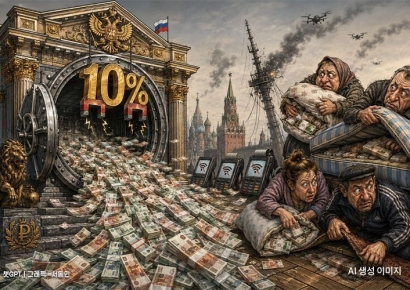 Despite 10% Annual Interest, Russians Pull Out Cash as Fears of Deposit Nationalization Spread
- "Millions of Rare Books Tracked to Shocking End... AI Companies' Chilling 'Panama Project'"
- SK hynix Announces 40 Trillion Won Shareholder Return; KOSPI Surges 5% in Response
- "One Less Worry About Old Age": Japanese Companies Secure Senior Talent with Regular Employment Beyond 65
- "I Love Traveling Without Spending My Own Money"... Gen Z Turns to Family Trips as Vacation Costs Soar
The government plans to utilize the empirical data collected this winter in future energy demand management policies and medium- to long-term fiscal planning. An official from the Ministry of Planning and Budget said, "Our goal is to evaluate energy demand reduction policies—which require massive fiscal resources—using scientific methods," adding, "We are primarily focused on identifying ways to encourage voluntary reductions in household consumption."
© The Asia Business Daily. All rights reserved. Unauthorized AI training and use prohibited.