Former Blue House Secretary Kwangchul Lee Acquitted in "Kim Hak-ui Departure Ban" Case to Receive 7.92 Million Won Criminal Compensation
Supreme Court Confirmed Acquittal in June Last Year
Kwangchul Lee, former Blue House Senior Secretary for Civil Affairs, who was indicted in connection with the suspicion over the "Kim Hak-ui emergency departure ban" case but was ultimately acquitted, will receive criminal compensation.

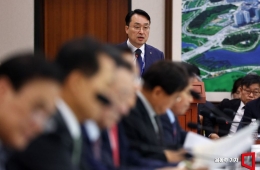
Kwangchul Lee, former Blue House civil affairs secretary. Photo by Jinhyung Kang aymsdream@
View original imageAccording to the official gazette on August 19, the Seoul Central District Court Criminal Settlement Division 51 (Presiding Judge Jeon Boseong) recently decided, "The state shall pay the applicant (former secretary Lee) 7,929,000 won as cost compensation."
The suspicion surrounding the Kim Hak-ui emergency departure ban centers on claims that in March 22, 2019, Kyugeun Cha, lawmaker of the Innovative Party of Korea, former prosecutor Kyuwon Lee, and Kwangchul Lee, former Blue House Senior Secretary for Civil Affairs, illegally banned former Vice Minister of Justice Kim Hak-ui from leaving the country when authorities detected his attempt to depart at Incheon International Airport.
At the time, former prosecutor Lee, who was dispatched to the Supreme Prosecutors' Office's Past Affairs Investigation Task Force, was accused of blocking Kim’s departure by submitting an emergency departure ban request based on an old case number for which Kim had already been acquitted.
While serving at the Blue House, former secretary Lee was indicted on charges of coordinating between lawmaker Cha, who was then the head of the Ministry of Justice’s Immigration Service, and former prosecutor Lee, and leading the overall process of the travel ban.
However, in June of last year, the Supreme Court acquitted all of them, confirming their innocence. The court ruled that the emergency departure ban imposed on Kim satisfied all the legal requirements at the time and could not be deemed illegal.
Hot Picks Today
 "Jealous of Koreans" - Now a Must-Do on Every Trip... The Place Where Foreigners Spent KRW 229.8 Billion
- [Why&Next] Why NAVER Is Doubling Down on Membership with 'Nepe Festa'
- "I thought getting into a big company was the goal"... The 'position' only 1 in 121 employees reaches
- "'No! Dad, Run!'... Father Moved by 5-Year-Old Son Who Shielded Him from Ghost at Korean Folk Village"
- "Please Let Me Go Home"... Customers Trapped in Department Store Parking Lot for 5 Hours Vent Their Anger
Meanwhile, criminal compensation is a system under which the state compensates defendants who are acquitted for damages resulting from detention or trial. It is divided into reimbursement for detention and cost compensation that covers expenses such as attorney fees and transportation costs incurred during the trial.
© The Asia Business Daily. All rights reserved. Unauthorized AI training and use prohibited.


!["Please, Just Take Them Off" - They Made It All the Way to Bed... Then Fecal Bacteria Struck [Deep Scroll]](https://cwcontent.asiae.co.kr/asiaresize/307/2026101610053063338_1792112730.png)