US Bond Market Shows Short- and Long-Term Decoupling...Short-Term Yields Reflect Policy Rate Cuts (Comprehensive)
30-Year US Treasury Yield Surpasses 5.33%
Expectation for September Rate Hike Drops by Half in Two Weeks
Market Reflects Possibility of Rate Cut in 2027 Amid Economic Slowdown
In the U.S. bond market, long- and short-term interest rates are moving in opposite directions. Yields on long-term bonds, such as the 30-year Treasury, have surged to their highest level in 19 years due to concerns about fiscal deficits and inflation, while short-term rates are gradually trending downward. As expectations for additional Federal Reserve (Fed) rate hikes ease following signs of slowing employment, consumption, and inflation, investors are now preparing for the possibility of rate cuts in the future. The market anticipates that this divergence between short- and long-term yields will likely persist for the time being.

According to Bloomberg and other sources on August 18 (local time), the yield on the two-year U.S. Treasury, which is highly sensitive to Fed policy, stood at 4.17%, down 0.4 basis points from the previous session. Earlier this month, it hovered in the 4.3% range; however, the yield has been trending downward as signs of slowing employment and easing inflation have lowered the likelihood of further Fed tightening. In fact, contrary to market expectations, U.S. nonfarm payrolls declined by 23,000 in July, and retail sales saw their steepest drop in a year and two months.
30-Year Yield Surpasses 5.33%... Long-Term Rates Continue to Climb
A different pattern is unfolding in the long-term market. The yield on the 30-year U.S. Treasury climbed above 5.33% during trading, marking its highest level since 2007. Analysts attribute the rise in long-term rates not only to macroeconomic outlooks but also largely to supply-demand factors, including increased issuance of long-term Treasuries and weakened investment demand.
Upward pressure on long-term yields is coming from several sources: the U.S.'s massive fiscal deficits and the resulting increase in Treasury issuance; higher international oil prices and inflation concerns stemming from the war in Iran; and large tech firms issuing long-term corporate bonds to expand artificial intelligence (AI) investments.

Consequently, the widening gap between short- and long-term rates has led to a "steepening" of the yield curve. While short-term rates remain relatively low, reflecting reduced expectations of further Fed tightening, long-term rates are staying elevated due to fiscal, inflationary, and supply-demand pressures.
This situation shows that even if the Fed keeps its policy rate unchanged or cuts rates in the future, the financial conditions experienced by households and businesses may not ease significantly. Mortgage rates, corporate long-term borrowing costs, and corporate bond funding rates are influenced not only by policy rates but also by long-term market rates. If long-term yields stay elevated, borrowing costs for households and businesses may remain high, prolonging the effect of financial tightening even in the absence of additional Fed rate hikes.
The Disconnect Between Short- and Long-Term Rates Likely to Persist
The market is focusing on the possibility that the divergence between short- and long-term rates will continue for some time. In the short run, if employment and consumption continue to weaken, the Fed will have less justification for further tightening, and the likelihood of future rate cuts could increase.
However, even if the Fed does lower rates, it is uncertain whether long-term yields will follow. Unless concerns about fiscal deficits, Treasury supply, and inflation risks are resolved, there remains the possibility of another sharp rise in long-term yields, including the 30-year bond.
Hot Picks Today
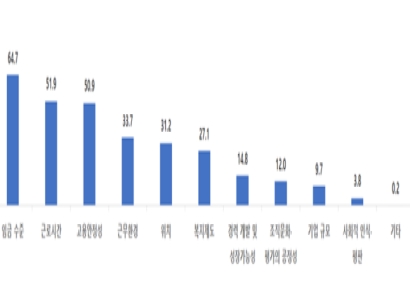 "Please Pay Me at Least 3 Million Won a Month": More Than Half of Young People Today Prioritize "Working Conditions" Over Company Size
- Selling Like Crazy Every Year... 30-Year-Old Hetbahn Takes on a New Challenge: Tastes Better Than "Mom's Home Cooking" [On-Site Report]
- I Thought Only 'Old Guys' Ate It... Young People Are Hooked on This 'Unusual Food' at Risk of Disappearing? [Delicious Stories]
- [Exclusive] Prosecution Service Overhauls Cartel "Leniency" Rules, Guarantees Reporting Firms' Legal Status from the Outset
- Beachgoer Finds 'Plastic' That Turns Out to Be Perfume Ingredient Worth More Than Twice as Much as Gold
In fact, according to Bloomberg, in the long-term Treasury options market, put options—which hedge against price declines (i.e., rising long-term yields)—still command higher premiums. While this bearish positioning has eased somewhat since the end of last month, it indicates that caution over the risk of further long-term selling remains.
© The Asia Business Daily. All rights reserved. Unauthorized AI training and use prohibited.