Governor Park Wansu: "Disaster Response System Must Change Completely" ... Immediate Deployment of Equipment and Personnel, Forced Towing of Vehicles
"We must move away from a system that responds only after a disaster has occurred."
Governor Park Wansu of Gyeongnam Province made this statement as he led the "Emergency Countermeasures Meeting for Heavy Rain" held on the morning of August 18 in response to the record-breaking heavy rain that fell over the Namhae coast, including Geoje and Tongyeong, during the three-day Liberation Day holiday.
![Governor Park Wansu of Gyeongnam Province is giving instructions at the "Heavy Rain Emergency Measures Meeting" held in relation to the record heavy rains that fell over three days during the Liberation Day holiday in the southern coastal areas including Geoje and Tongyeong. <br>[Photo by Gyeongnam Province]](http://www.asiae.co.kr/news/img_view.htm?img=2026081814522783807_1787032346.jpg)
Governor Park Wansu of Gyeongnam Province is giving instructions at the "Heavy Rain Emergency Measures Meeting" held in relation to the record heavy rains that fell over three days during the Liberation Day holiday in the southern coastal areas including Geoje and Tongyeong.
[Photo by Gyeongnam Province]
Governor Park said, "With climate change, we may continue to see heatwaves and droughts, only for the situation to suddenly change to unprecedented heavy rain. This kind of abrupt transition could repeat itself. Since disasters can now occur at any time, it is essential to establish a prompt and detailed response system, and as preparations for heatwaves and heavy rain are being strengthened across Korea, local governments must also boldly shift their disaster response systems."
He continued, "We must assume extreme conditions even in normal times and prepare early measures, emergency responses, and recovery plans in advance," emphasizing, "A system needs to be in place that enables the immediate deployment of necessary personnel and equipment on site whenever an actual disaster occurs."
He specifically noted, "While there is plenty of equipment within the province and nationwide support has been offered, the real issue lies in the field," highlighting the need for a field-oriented support system that quickly identifies and deploys the required equipment and personnel.
He instructed, "Accurately identify which equipment is needed at the disaster sites and connect this directly to local township, town, or neighborhood offices or the relevant department, ensuring that deployment happens without delay."
He further advised, "Assess the demand for support personnel such as volunteers and the military for each affected area in advance and allocate them appropriately. Personnel and equipment coming from distant locations should not wander or get delayed upon arrival due to confusion in the deployment process."
![An "Emergency Rainstorm Countermeasures Meeting" regarding the record-breaking heavy rain that fell over the Namhae coast, including Geoje and Tongyeong, during the three-day Liberation Day holiday, is being held in the provincial government office's meeting room. <br>[Photo by Gyeongnam Province]](http://www.asiae.co.kr/news/img_view.htm?img=2026081814530883812_1787032387.jpg)
An "Emergency Rainstorm Countermeasures Meeting" regarding the record-breaking heavy rain that fell over the Namhae coast, including Geoje and Tongyeong, during the three-day Liberation Day holiday, is being held in the provincial government office's meeting room.
[Photo by Gyeongnam Province]
Governor Park also stressed the need for a system that can quickly move vehicles blocking rescue, evacuation, and emergency recovery activities during disaster situations.
He pointed out, "When inspecting the landslide damage site in Geoje, even though there was an urgent need for residents to evacuate, we still had to wait for insurance companies to check the vehicles before they could be moved."
He added, "Just as vehicles obstructing the emergency dispatch of fire trucks at fire scenes are forcibly removed, there needs to be institutional reform so that vehicles blocking rescue operations, resident evacuation, and emergency recovery can be swiftly moved or towed during disaster situations."
Governor Park also emphasized the importance of stabilizing the livelihoods of residents affected by this heavy rain.
He instructed, "For apartment complexes damaged by landslides or soil runoff, conduct structural and safety inspections and allow residents to return only after safety has been confirmed. In anticipation of prolonged evacuation periods, make sure there are no inconveniences in providing shelter, meals, and emergency relief for the elderly, infants, and people with disabilities."
Hot Picks Today
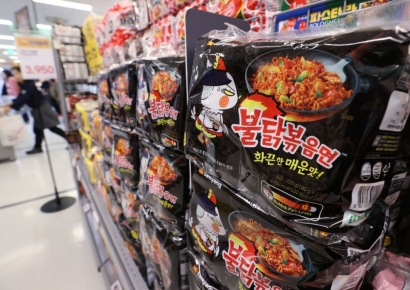 "Earned 500 Million Won in Three Months from Samsung Electronics"... Cash-Rich Samyang Foods' Stock Investment Revealed
- While Retail Investors Suffer, Over 110 Billion Won in Fees Collected Effortlessly... Samsung Electronics and SK hynix ETFs Sweep Up Profits
- "One Billion Won Salary in Just Six Months": Securities Firms on the Verge of Surpassing Banks in Job Preference
- Even With Salaries Exceeding KRW 100 Million, Young Talent Continues to Depart... Rising Concerns Over Mass Resignations at KDB and Eximbank [Public Financial Institution Relocation] ①
- "Has North Korea Imported Maunjaero?" Kim Ju Ae Shows Striking Transformation with Sharper Jawline and Slimmer Face
He added, "Since the record-breaking rain has weakened the ground, inspections and monitoring must be strengthened in areas at risk of additional damage such as landslides, soil runoff, and retaining or boundary wall collapses. If necessary, evacuate residents preemptively."
© The Asia Business Daily. All rights reserved. Unauthorized AI training and use prohibited.