[Editorial] Leader Kim Minseok Faces Test of 'Constructive Horizontal Relationship'
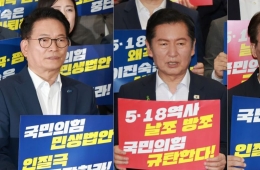
Former Prime Minister Kim Minseok has been elected as the new leader of the Democratic Party of Korea for a two-year term. As no candidate secured a majority in the first round, the preferential voting system was applied. As a result, Kim received 54.08% of the votes, surpassing former leader Jeong Cheongrae, who garnered 45.92%. Kim’s victory was underpinned by receiving 66.69% of the delegate votes and 55.94% of the party member votes. This leadership election factored in 70% from party members and delegates and 30% from a public opinion poll, and for the first time, a ‘one person, one vote’ system was implemented. With this result, Leader Kim will now head the ruling party and hold the nominations authority for the 2028 elections.
However, Kim’s path ahead will not be entirely smooth. The perception that he became leader thanks to the support of President Lee Jae-myung is a double-edged sword. Cooperation between the party, administration, and the Blue House is expected to run much more smoothly compared to the Jeong Cheongrae administration. However, there is also concern that the party could become subdued and merely follow the lead of the Blue House. In this context, Kim will need sophisticated political skill to maintain active communication and cooperation with the Blue House while also ensuring the party's voice is heard—a so-called ‘creative horizontal relationship’. There are also a number of policy challenges ahead, including assuaging public dissatisfaction over the amendment to the Criminal Procedure Act and real estate issues. The recent fall in President Lee’s approval rating to its lowest point since taking office is also closely tied to the ruling party.
Most importantly, Kim’s ability to foster unity within the party will be his first real test. After his defeat, Jeong Cheongrae commented, “Kim Minseok may have won, but many of his positions have lost,” but added, “We must unite, starting with ourselves.” Kim also pledged harmony, saying, “I will move forward together,” while vowing unity with Jeong. President Lee is also seen fostering unity, having invited both Kim and his former rivals Jeong Cheongrae and Song Younggil to the Blue House for a dinner on August 19. As such, the ongoing factional conflicts within the Democratic Party are expected to subside, at least for the time being.
Hot Picks Today
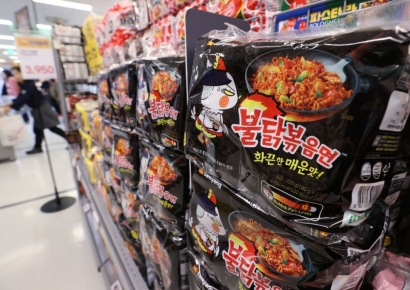 "Earned 500 Million Won in Three Months from Samsung Electronics"... Cash-Rich Samyang Foods' Stock Investment Revealed
- "Can't Stand My Child Falling Behind": US Parents Resort to Gambling and Loans for Back-to-School Purchases
- Jeonju Job-Seeking Youth Take a Pause and Recharge at a Mountain Temple
- Paek Jongwon's US Visit Sparks Two-Day Stock Surge... Will The Born Korea’s 'K-Sauces' Continue to Thrive?
- "Did They Really Have to Cast a War Criminal Descendant?" Heated Online Debate Over Japanese Actress in Hyukoh's New Music Video
Under Jeong Cheongrae’s leadership, friction within the party and with the Blue House occurred frequently. Regardless of the intention or underlying reasons, such tensions were apparent to the public, and the party failed to present a sense of stability as the ruling party. It is hoped that under Kim Minseok’s leadership, the party will earn the public’s trust as the governing party. In addition to party-Blue House coordination, it is necessary to set goals and work toward them not by unilateral action, but through ample consultation with the opposition. The public hopes the ruling party will be responsive to public opinion while being able to assert its positions to the Blue House.
© The Asia Business Daily. All rights reserved. Unauthorized AI training and use prohibited.