Spending Tens of Millions to Solve Children's Problems... Chinese Mothers Flock to 'Parent Awakening Camps'
‘Parent Awakening Camps’ Rising Among Chinese Parents
High-Priced Programs Marketed as Solutions to Children’s Problems
Criticism Grows Over Exploiting Parental Anxiety and Guilt
It has been reported that Chinese parents are spending tens of millions of won to attend so-called ‘parent awakening camps’ in order to address issues such as their children’s poor academic performance, refusal to attend school, or video game addiction. While the stated purpose is to improve parenting methods and restore relationships with their children, there is also criticism that some companies are selling expensive programs by exploiting parents’ anxieties.
"Children Change When Parents Change"… High-priced Camps Emerge in China

According to the South China Morning Post (SCMP) on August 17 (local time), there has been a recent surge on Chinese social media in introductions of ‘parent awakening camps’ that aim to improve parenting styles and rebuild family relationships. These programs are generally divided into large-scale lectures led by professional counselors and high-priced hands-on experiences.
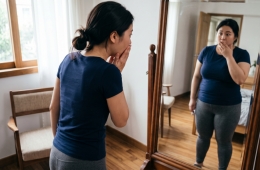
Zhang Luilian, a resident of Shandong Province in eastern China, also spent about 30,000 yuan (approximately 620,000 KRW) on a “Wise Parent Awakening Camp.” When her daughter, now in her thirties, showed no intention of getting married, Zhang’s husband blamed her, saying she didn’t know how to raise a child properly. As a result, Zhang decided to participate in the camp. The program included exercises in which she had to confide her honest feelings to two other participants, imagining them as her parents. This was part of a process to reflect on her relationship with her own parents and to restore emotional bonds within the family.
Chinese Parents’ ‘Educational Anxiety’ Intensifies… Some Invest 20 Million Won in Camps

There have also been cases where parents spent even more to resolve their children's school refusal issues. Another mother, Wang Hui, ended up spending over 100,000 yuan (about 20 million KRW) on a similar program after her son refused to attend school. She was advised by the program instructor to recite a ‘parental energy affirmation’—meaning she should trust her child—twice daily.
However, her son’s refusal to go to school only worsened; he continued to visit PC rooms every day. When Wang requested a refund, the instructor reportedly encouraged her to continue, telling her that “a mother should do anything for her child.”
Some instructors present success stories, saying that the program led to children succeeding academically or at work and improved relationships with parents. However, in many cases, it was difficult to verify whether these outcomes were truly the result of the program. As a result, some have criticized these programs for provoking parental anxiety and guilt in order to encourage participation. One industry insider argued that some camps blame parents—particularly mothers—for the problems children face, instilling a sense of guilt.
Hot Picks Today
![[Exclusive] 115 Billion Won in State Funds Go to 'China-Made' Vehicles... Tesla Takes 12% of Subsidies [The Hole in EV Subsidies]](https://cwcontent.asiae.co.kr/asiaresize/93/2026080414414669172_1785822105.jpg) [Exclusive] 115 Billion Won in State Funds Go to 'China-Made' Vehicles... Tesla Takes 12% of Subsidies [The Hole in EV Subsidies]
[Exclusive] 115 Billion Won in State Funds Go to 'China-Made' Vehicles... Tesla Takes 12% of Subsidies [The Hole in EV Subsidies]
- "Heading to Japan but Skipping Korea"... The Race to Attract Multi-Purpose Domes Worth Hundreds of Billions in Annual Revenue
- "With Just 80 Million Won in Cash, 'Newly Built Seoul Apartment' Possible... Will Redevelopment 'Body Tech' Among 2030s Ignite?"
- "Get 17 Million KRW Just for Registering Your Marriage"... Dramatic Policies Unveiled in This Country Facing Low Birthrates
- "Has North Korea Imported Maunjaero?" Kim Ju Ae Shows Striking Transformation with Sharper Jawline and Slimmer Face
Meanwhile, the emergence of ‘parent awakening camps’ is seen as closely tied to China’s deeply rooted “educational anxiety.” In China, so-called “tiger moms” and “wolf dads,” known for their strict management to ensure their children's academic success, are already widely recognized. Recently, however, experts point out that parents are increasingly linking their children's academic achievements, career paths, and even marriage prospects to their own sense of success, which is further fueling their anxieties about their children’s problems.
© The Asia Business Daily. All rights reserved. Unauthorized AI training and use prohibited.