[Insight & Opinion] Desirable 'Three Literacies' for the AI Era
If we only ask simple questions, our dependence on AI only increases
We need emotional intelligence that goes beyond technical proficiency
We must develop AI, human, and future literacy
![[Insight & Opinion] Desirable 'Three Literacies' for the AI Era](http://www.asiae.co.kr/news/img_view.htm?img=2024040311115727527_1712110317.jpg)
It has been half a century since John Kenneth Galbraith, one of the most prominent economists of the 20th century, published his influential work "The Age of Uncertainty." He wrote and released the book in 1977. In many ways, the book's title was a prescient prediction. After all this time, we are confronted with a reality true to its name. We now live in an age defined by uncertainty—a time marked by instability and anxiety.
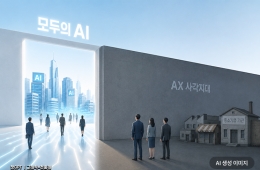
Artificial intelligence (AI), which is gradually becoming an essential tool in our daily lives, is also a factor that adds to this uncertainty and anxiety. AI has now become a variable in numerous fields. The future society, poised to be reordered around AI, is difficult to predict. It is highly likely that this AI era will persist for several decades. It is clear that this will fundamentally change both individuals and society. In this context, we must acquire "AI literacy," the ability to skillfully manage and utilize AI technology. This is a necessary requirement for successfully navigating the AI era, just as the ability to read and write was essential in past societies centered around text.
Desirable AI literacy is not limited to merely making use of AI technologies. It also requires the ability to ask the right questions and to think critically. In particular, the ability to ask questions is considered the greatest competitive edge in the age of AI and is seen as the highest level of AI literacy. However, compared to this need, we have become too accustomed to simply searching for answers. We have rarely had opportunities to ask or create new questions. As a result, most people settle for asking basic questions to AI and just wait for its answers. In such cases, dependence on AI only increases, while the abilities to question and to think critically atrophy. Therefore, the most desirable approach to AI literacy is to use AI while maintaining the intention to develop these capabilities.
But is AI literacy alone enough? That would be insufficient. Just as both sword and shield are needed on a battlefield, we also need a shield to accompany AI literacy—the sword—during the AI era. I would like to call this shield "human literacy." Human literacy encompasses human capabilities, including empathy and emotional intelligence. While AI literacy is a technical ability, human literacy is a humanistic one. From this perspective, what humans must further develop in comparison to AI is, in fact, emotional intelligence.

With the advent of the AI era, we have the task of developing various AI literacies. The photo shows a recent class where teachers and children are participating in the "AI Picture Diary," part of the "Digital Sprout Project" conducted by SK Telecom and Soonchunhyang University. Photo by SK Telecom
View original imageAs the AI era progresses, the relative value of emotion over reason grows even greater. AI now surpasses human reason in almost every task it undertakes. In response, humans will inevitably place more emphasis on emotion, seeking out emotional facets of life. The age of emotion, in earnest, is about to begin—an era that follows the age of reason. In this context, capacities related to emotion and empathy—known as human literacy, such as emotional intelligence—can serve as powerful tools for thriving in the AI era, alongside AI literacy.
Furthermore, it would be ideal if we could also cultivate "future literacy." Future literacy is the ability to foresee, design, and create the future. UNESCO has also drawn attention to future literacy, defining it as "the ability to use the future for present decisions and actions." This is based on the premise that the future is not predetermined but open-ended, emphasizing the capacity to explore and design multiple alternative futures. With future literacy, we can make flexible and resilient decisions even in the face of uncertainty. It allows us to remain open-minded, ask questions, and work toward a better future even amid unsettling changes.
The era of superintelligent AI is a challenging one, as it brings with it both numerous benefits and heightened uncertainty, instability, and anxiety. AI literacy, human literacy, and future literacy—these three core literacies are ultimately the best tools for navigating the AI era. What is even more encouraging is that, as we strive to develop these three literacies—which are difficult to cultivate alone—AI itself can serve as an excellent coach to help us along the way.
Hot Picks Today
 "Earned 500 Million Won in Three Months from Samsung Electronics"... Cash-Rich Samyang Foods' Stock Investment Revealed
- "Can't Stand My Child Falling Behind": US Parents Resort to Gambling and Loans for Back-to-School Purchases
- Jeonju Job-Seeking Youth Take a Pause and Recharge at a Mountain Temple
- Paek Jongwon's US Visit Sparks Two-Day Stock Surge... Will The Born Korea’s 'K-Sauces' Continue to Thrive?
- "Did They Really Have to Cast a War Criminal Descendant?" Heated Online Debate Over Japanese Actress in Hyukoh's New Music Video
Hyun-Gon Kim, Visiting Professor at Chungnam National University Graduate School of National Policy and former President of the National Assembly Futures Institute
© The Asia Business Daily. All rights reserved. Unauthorized AI training and use prohibited.