Pressure to Cut Back South Korea–U.S. Joint Exercises... Possible Military Involvement in Hormuz [Yang Nakgyu's Defence Club]
Request for Dialogue with North Korea Recalls First Trump Administration
Considering a Military Contribution to Hormuz to Appease Trump
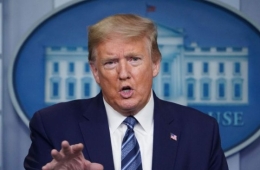
Concerns are emerging that starting next year, a series of South Korea–U.S. joint military exercises could be canceled. The atmosphere appears reminiscent of the first Trump administration in 2018, as U.S. President Donald Trump is requesting dialogue with North Korea while ordering a significant reduction in the scale of joint exercises.
![Pressure to Cut Back South Korea–U.S. Joint Exercises... Possible Military Involvement in Hormuz [Yang Nakgyu's Defence Club]](http://www.asiae.co.kr/news/img_view.htm?img=2026072823233961659_1785248620.jpg)
On August 17 (local time), U.S. President Trump announced that there had been a response from North Korean leader Kim Jong Un to his suggestion for U.S.-North Korea dialogue. When asked by reporters to confirm whether Kim had actually responded, President Trump replied, "Yeah, he has." However, he did not provide specifics about when and how Kim responded.
President Trump ordered the reduction of the South Korea–U.S. joint military exercises. This day marks the first day of the theater-level South Korea–U.S. joint exercise "Ulchi Freedom Shield" (UFS). Trump is sending a gesture of reconciliation to North Korea and scaling back joint exercises, reminiscent of the first Trump administration. After the summit with North Korean leader Kim Jong Un in Singapore in 2018, a series of joint military exercises between South Korea and the U.S. were canceled. In August of that year, the UFG joint exercise was suspended for the first time in 28 years, and starting the following year, both the Key Resolve exercise and the Foal Eagle (field maneuver exercise) were halted. During this year’s UFS period, the number of field training exercises (FTX) conducted will decrease by eight to a total of 14 compared to last year (which had 22 exercises, including 17 battalion-level or above), and there is a strong possibility that even these may be canceled beginning next year.
If South Korea–U.S. joint exercises are canceled, it could weaken preparedness against North Korea and accelerate the expansion of U.S. Forces Korea's role in containing China. There are also growing concerns that the Yoon Suk-yeol administration’s plan to transfer wartime operational control (OPCON) may be affected. The government and military have set the target year for OPCON transfer this year, with the goal of completing the process within the current administration's term (by June 2030). If joint exercises are canceled or significantly reduced, the evaluation and verification of whether the conditions for OPCON transfer are being met may face disruptions.
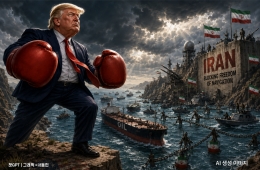
Against this backdrop, attention is focusing on the government’s announcement that it is currently "discussing ways to contribute militarily" to the freedom of navigation in the Strait of Hormuz. This move is seen as an effort to allay President Trump's dissatisfaction with the perceived insufficiency of South Korea's contributions. By using the phrase "military contribution" instead of the previously used "substantial contribution," the government has more concretely articulated its intent; this marks the first official statement by government officials to the press confirming that a "military contribution" to the Hormuz situation is being reviewed. However, military contribution entails various risks such as the safety of Korean troops and the controversy over possible involvement in conflict with Iran, not to mention the potential for diplomatic friction. From the government’s perspective, it may be considered a measure of last resort.
Hot Picks Today
 "Heading to Japan but Skipping Korea"... The Race to Attract Multi-Purpose Domes Worth Hundreds of Billions in Annual Revenue
- "Now Too Cheap"... Samsung Electronics and SK hynix Down 40%, Securities Firms Highlight Key Reversal Points [Weekend Money]
- [Exclusive] “We Thought We’d All Go Out of Business,” but Sales in Local Districts Jumped After Olive Young and Daiso Opened
- Another Record-Breaking Year: Major Conglomerates Collect 2.2 Trillion Won in Annual Trademark Royalties
- "After Getting Injected to Look Better..." Experts Warn Women in Their 20s and 30s
To dispatch troops abroad, a motion for troop deployment must be approved by the National Assembly, and the military authorities believe that conditions such as stabilization of the Strait of Hormuz must be met first. It is reported that the military authorities, in consultation with the U.S., are also reviewing a list of military assets that could be deployed, including maritime patrol aircraft, logistics support vessels, and mine detection equipment.
© The Asia Business Daily. All rights reserved. Unauthorized AI training and use prohibited.