[K-Industries: Future Designers] "AI Fighter Jets Leading the Way: The Future of Aerial Combat Is Near"
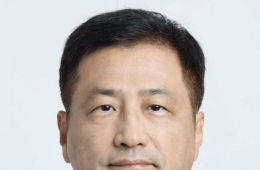
(14) Sungshin Lim, Head of AI Development at Korea Aerospace Industries
Field-Testing KAiLOT, the Aviation and Defense AI
The Brain Connecting Manned and Unmanned Systems
National Security Tied to Independent Development
The KF-21 fighter jet is dispatched on a mission into an area where enemy threats are anticipated. In this scenario, artificial intelligence (AI) unmanned aircraft enter the danger zone ahead of the KF-21 to conduct reconnaissance of the surrounding area. Other AI drones play roles such as monitoring enemy movements or protecting the KF-21. Information collected by these AI drones from various positions is transmitted in real-time to the KF-21 pilot. The pilot then focuses on viewing the entire battlefield, deciding where to go, what to prioritize, and when to abort the mission based on that information.
This is a scene from a future aerial battle where a manned-unmanned teaming system is fully realized. The 'AI pilot' supports the human pilot, minimizing friendly casualties at the front line. Such a scenario may soon become a reality, thanks to Korea Aerospace Industries (KAI). KAI is independently developing the aviation and defense-specialized AI called "KAiLOT," designed to be installed across a variety of aerial platforms, including fighter jets, drones, rotary aircraft, and future aerial mobility vehicles. KAiLOT will act as the brain of the next-generation aerial combat system, serving as the connection between manned and unmanned aircraft.

Sungshin Lim, Head of AI Development at Korea Aerospace Industries (KAI), is being interviewed by The Asia Business Daily on the 13th at KAI headquarters in Sacheon, Gyeongnam. The background photo shows the next-generation aerial combat system based on artificial intelligence (AI). Provided by KAI
View original imageSungshin Lim, who has been leading software and AI development at KAI for 19 years, stated in an interview held on the 13th at KAI headquarters in Sacheon, Gyeongnam, "Currently, KAiLOT, after undergoing flight demonstrations, has achieved level 4–5 out of 10 based on the unmanned aerial vehicle autonomy assessment system (0 to 10) proposed by the US Air Force Research Laboratory." He added, "While there are still significant hurdles to overcome in comparison with global industry leaders, we are rapidly closing the technological gap through ongoing demonstration processes."
Lim majored in natural language processing, an AI technology that helps computers understand and generate human language. He joined KAI in 2007 and has worked as the leader of the software development team and later as head of the software and AI research division.
Founded in 1999, KAI has accumulated advanced capabilities in aviation and defense software development through its aircraft programs. Since its inception 25 years ago, KAI has not experienced a single flight test accident. As of June this year, combined accumulated flight test hours totaled over 37,000 hours—about 11,275 hours for airplanes and approximately 26,152 hours for helicopters. This not only speaks to the proven safety of the technology but also means that extensive data has been accumulated.
However, AI development differs somewhat from traditional software engineering approaches. Classic aviation software is designed and validated according to clear, predefined requirements, whereas AI improves through continual performance enhancement based on learning from data and actual outcomes. Nevertheless, KAI’s prowess in aviation software has provided a substantial advantage in adopting AI. Lim stated, "There’s a big difference between developing a competent AI algorithm and actually implementing AI that performs reliably in an aircraft’s mission. Combining our deep understanding of both aircraft and software with new technologies—that’s how we are building our distinctive, aviation-specialized AI competitiveness."
It has not been easy to raise KAiLOT’s assessment level as an aviation and defense-specialized AI model. AI requires extensive data for training; yet for defense AI, gathering relevant data is essentially impossible. Footage of enemy weapon systems or real-world battlefield situations is extremely hard to obtain—or in some cases, should not be obtained at all. To tackle this challenge, KAI has focused on a proactive strategy revolving around “synthetic data” technology—generating data directly in a virtual environment instead of waiting for or seeking real data.
Lim explained, "We have conducted countless proof-of-concept (PoC) projects to verify the creation and application potential of synthetic data, and we have continued to build up our research with our own investments." He continued, "As demonstrated at the Seoul International Aerospace & Defense Exhibition (ADEX), some of the core features of our AI models have actually been trained not on real-world data but on meticulously crafted synthetic data. Our goal is not just to 'create fake data' but to elevate KAiLOT to a world-leading level by working together with top AI companies in Korea, such as Naver, combining the physical characteristics and image data of air combat environments with Naver's world-class experience in developing world models."

Seongshin Lim, Head of AI Development at Korea Aerospace Industries (KAI), poses for a photo after an interview with The Asia Business Daily on the 13th at KAI headquarters in Sacheon, Gyeongnam. Lim emphasized, "The development of defense AI pursued by KAI is an inevitable choice to achieve technological independence that enables us to judge and act independently in any situation." Provided by KAI
View original imageThe independent development of aviation and defense AI is directly linked to national security. Lim remarked, "During the KF-21 development, there were also concerns and opposition, but we never gave up and ultimately secured our own fighter jet technology. I believe the same story will play out in the defense AI sector." He continued, "Currently, global companies seem to be sharing various AI models and technologies to expand their market reach, but as soon as the technology becomes more advanced and monopolized, they will inevitably restrict AI model exports to protect their own national security and interests."
He added, "If we fail to develop our own AI technologies, we could end up in a dire situation where we have to ask for foreign approval just to use the ‘brains’ of our weapon systems on the battlefield of the future. KAI's pursuit of defense AI development is therefore an inevitable choice to achieve the level of technological independence needed to make our own decisions and act in any circumstance."
Hot Picks Today
 "Earned 500 Million Won in Three Months from Samsung Electronics"... Cash-Rich Samyang Foods' Stock Investment Revealed
- While Retail Investors Suffer, Over 110 Billion Won in Fees Collected Effortlessly... Samsung Electronics and SK hynix ETFs Sweep Up Profits
- "Has North Korea Imported Maunjaero?" Kim Ju Ae Shows Striking Transformation with Sharper Jawline and Slimmer Face
- "Even If They Want to Quit, 23 Million U.S. Workers Are Trapped by 'This'"
- Paek Jongwon's US Visit Sparks Two-Day Stock Surge... Will The Born Korea’s 'K-Sauces' Continue to Thrive?
Lim further stated that government investment is essential for South Korea to become a leading country with sovereignty over AI technology in the global aerospace and defense markets. "At KAI, the digital transformation of the production site (DX) is well advanced, creating the optimal environment to translate the tacit knowledge of skilled workers into artificial intelligence," he said. "It is necessary to designate the aerospace sector as a national AX demonstration industry and establish a center where comprehensive AI conversion can be tested and validated."
© The Asia Business Daily. All rights reserved. Unauthorized AI training and use prohibited.