[Leaking EV Subsidies] Subsidies Favor Tesla as Tax Benefits for Eco-Friendly Cars Are Cut
HEV Individual Consumption Tax Exemption Ends This Year
HEV Purchase Costs to Rise by 1 Million Won From Next Year
EV Maximum Benefit to Drop by 5.69 Million Won in Two Years
As the government shifts from offering tax benefits for eco-friendly vehicles to strengthening direct subsidy support, the criteria and allocation methods for electric vehicle (EV) subsidies are becoming increasingly important. There are growing calls for improvements to the system, as a substantial portion of the limited budget is being funneled to China-made Tesla vehicles, and the subsidies are being rapidly depleted, which could jeopardize the policy goal of supporting domestic automakers.
![[Leaking EV Subsidies] Subsidies Favor Tesla as Tax Benefits for Eco-Friendly Cars Are Cut](http://www.asiae.co.kr/news/img_view.htm?img=2026081810553183406_1787018131.jpg)
According to the automotive industry on August 18, the individual consumption tax exemption for hybrid electric vehicles (HEVs) will end at the close of this year. As a result, starting next year, consumers will see the cost burden for purchasing an HEV rise by up to 1 million won per vehicle.
Currently, HEVs receive an individual consumption tax deduction of up to 700,000 won. In addition to this, the education tax—which is 210,000 won, or 30% of the individual consumption tax—and the value added tax, which is 91,000 won or 10% of the combined individual consumption and education tax, are also reduced. This brings the total possible deduction up to a maximum of 1,001,000 won.
The government explained that tax support for HEVs has fulfilled its original purpose, as the market has matured sufficiently. In the first half of this year, out of 663,693 vehicles sold domestically, HEVs accounted for 43%. Since more than 4 out of every 10 new cars sold were HEVs, ending the tax benefits is expected to result in a significant cost burden for consumers.
While the individual consumption tax exemption for electric vehicles (EVs) and fuel cell electric vehicles (FCEVs) will be extended by two years through the end of 2028, the benefits will be gradually reduced. This year, the deduction caps are 3 million won for EVs and 4 million won for FCEVs, but they will decrease to 2 million won and 3 million won, respectively, starting next year. In 2028, the caps will shrink further to 1 million won and 1.5 million won before coming to an end. When additional benefits such as the education tax, value added tax, and up to 1.4 million won in registration tax deductions expire, the maximum tax benefit lost will total 5.69 million won for EVs and 7.12 million won for FCEVs.
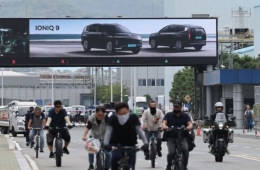
The government believes that offering direct support through subsidies will be more effective for nurturing domestic eco-friendly vehicles than tax relief. However, since Tesla alone received about 114.6 billion won in national EV subsidies in the first half of this year, criticism has mounted that the current system is ineffective in supporting domestic vehicles, which underscores the necessity for more sophisticated subsidy distribution criteria.
![[Leaking EV Subsidies] Subsidies Favor Tesla as Tax Benefits for Eco-Friendly Cars Are Cut](http://www.asiae.co.kr/news/img_view.htm?img=2026080410320068829_1785807121.jpg)
Unlike tax benefits, subsidies cannot be received once the budget is exhausted—another factor to consider. Approximately 70% of the government’s total budget for national EV subsidies this year was already spent in the first half. In the case of local government subsidies, which are even smaller, funds can run out even sooner. As a result, depending on the timing of their purchase, even buyers of the same vehicle may receive different amounts or no support at all.
It is also not the case that subsidies will increase by the same amount as the tax benefit reduction. For example, even if the government reduces the individual consumption tax deduction for EVs by 1 million won, it does not guarantee a corresponding 1 million won increase to purchase subsidies. Depending on the subsidy criteria and allocation methods, both consumers and manufacturers could experience vastly different outcomes.
Related Articles
![[Exclusive] 115 Billion Won in State Funds Go to 'China-Made' Vehicles... Tesla Takes 12% of Subsidies [The Hole in EV Subsidies]](https://cwcontent.asiae.co.kr/asiaresize/37/2026081814574683824_1787032666.gif) [Exclusive] 115 Billion Won in State Funds Go to 'China-Made' Vehicles... Tesla Takes 12% of Subsidies [The Hole in EV Subsidies]
[Exclusive] 115 Billion Won in State Funds Go to 'China-Made' Vehicles... Tesla Takes 12% of Subsidies [The Hole in EV Subsidies]
An automotive industry insider commented, "Starting next year, EV subsidies will be cut from 3 million won to 2 million won. If the government does not make up the difference, it effectively means consumers are losing out," adding, "There don’t seem to be any concrete measures in place yet. We hope that the subsidy amount will at least match the prior tax benefits so that consumer advantages remain intact." Whether the tax benefits for eco-friendly vehicles are to be discontinued or extended will be finalized through tax code review in the National Assembly.
© The Asia Business Daily. All rights reserved. Unauthorized AI training and use prohibited.