Trump Refuses to Extend Iran Ceasefire MOU... Hormuz Tensions Escalate (Comprehensive)
Trump: "Could Declare Strait of Hormuz as U.S. Territory"
WTI Up 2.55%, Brent Oil Up 2.65%
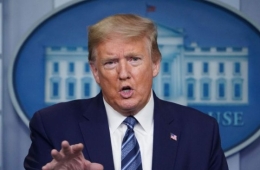
On August 17 (local time), U.S. President Donald Trump stated he has no intention of extending the memorandum of understanding (MOU) with Iran, the deadline for which has now expired. With Iran warning that it will escalate military operations if the diplomatic stalemate persists, President Trump reiterated that he could declare the Strait of Hormuz as American territory, thereby causing tensions in the Middle East to rise once again. As the likelihood of an early reopening of the Strait of Hormuz diminished, international oil prices climbed as well.

During a press briefing at the White House that day, President Trump was asked whether he was willing to extend the MOU with Iran and replied, "No."
The United States and Iran had signed a provisional MOU this past June to end the war, agreeing to reach a final deal within sixty days. The agreement stipulated that the negotiation period could be extended by mutual consent, but with little progress made, the deadline expired on this day.
President Trump also once again mentioned the possibility of declaring the Strait of Hormuz as American territory. He said, "We are controlling the strait through a blockade," adding, "I like the idea of declaring it American territory. We could do that."
President Trump had previously commented on August 14 that the Strait of Hormuz could be declared American territory after the end of the war with Iran.
Iran Warns of "Full Offensive"
Iran is also increasing pressure. A senior Iranian official warned the foreign press that if the United States does not uphold the agreement, Iran could shift from its current defensive posture to a "full offensive," expanding its military actions in the Strait of Hormuz.
According to Bloomberg, both the United States and Iran regard the MOU as having effectively lost its validity. This assessment comes not only because renewed armed clashes have occurred over the Strait of Hormuz, but also because there has been little progress on Iran’s nuclear issue, which President Trump has targeted as a key objective for military action.
As military tensions intensify in the Middle East, international oil prices surged. On the New York Mercantile Exchange, West Texas Intermediate (WTI) crude for September delivery rose 2.55% from the previous session to $84.50 per barrel. On the ICE Futures Exchange, Brent crude for October delivery gained 2.65% to close at $90.87 per barrel.
The diminished prospects for an early normalization of the Strait of Hormuz—through which about one fifth of the world’s crude oil and gas shipments passed prior to the war—are cited as a key factor behind the rise in oil prices. A further escalation in U.S.-Iran military conflict could also heighten concerns about disruptions to Middle Eastern oil supplies.
The possibility of the U.S. and Iran resuming negotiations remains unclear. While Oman is holding talks with Iran on managing transit through the Strait of Hormuz, the U.S. is not directly participating in these negotiations. Although Iran has announced that a "shipping map" for the strait has been finalized, with negotiations ongoing, it is uncertain whether this will actually lead to reopening.
Hot Picks Today
 "Heading to Japan but Skipping Korea"... The Race to Attract Multi-Purpose Domes Worth Hundreds of Billions in Annual Revenue
- "Now Too Cheap"... Samsung Electronics and SK hynix Down 40%, Securities Firms Highlight Key Reversal Points [Weekend Money]
- Ex-Spouse Requests Half of National Pension 24 Years After Divorce... What Did the Court Decide?
- [Good Morning Market] US Semiconductor Rally... KOSPI Aims to Regain 7,000 Mark
- "After Getting Injected to Look Better..." Experts Warn Women in Their 20s and 30s
In an interview with Fox News that day, President Trump made tough remarks, suggesting that military action could be taken if Oman interferes with the negotiation process with Iran. Bloomberg assessed that as U.S.-Iran talks remain at an impasse and tensions over the Strait of Hormuz continue to mount, prospects for peace in the region have further deteriorated.
© The Asia Business Daily. All rights reserved. Unauthorized AI training and use prohibited.