"The Secret Behind the 7.2 Billion Won Apartment—Residents' Attitudes Shift After Moving In"
Receiving Incentives for Openness, Now Seeking to Install Security Gates
Raemian One Bailey in Banpo-dong, Seocho-gu, Seoul is the most expensive apartment in Korea, with an exclusive area of 84㎡ trading at 7.2 billion won—equivalent to over 2 billion won per 3.3㎡ (the standard unit, or one 'pyeong'). Controversy has arisen as the complex attempted to install perimeter fences and security gates, only to be blocked by the jurisdictional Seocho District Office. This issue sees the demands of residents, who seek to protect their privacy and safety, directly clashing with the district authority's stance to uphold the 'openness' pledge made during rezoning for reconstruction.

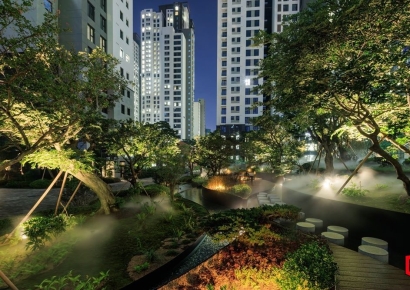
The background to One Bailey’s current views and architectural design lies in the easing of regulations following its designation as a 'special construction zone.' The complex was granted substantial incentives on the condition of creating an open residential environment without perimeter walls, thus harmonizing with its surrounding area.
Relaxation of building interval regulations increased the number of households with guaranteed sunlight from 1,466 households (49%) to 1,797 households (60%), an increase of 331 households; and 1,648 households, or 55.11% of the total 2,990 units, now have views of the Han River. South-facing units account for 1,970 households, comprising 65.9% of the entire complex. Furthermore, thanks to its designation as an excellent design apartment, 2,204 units (73.7% of the total) were able to secure about 9㎡ of extra usable space per unit by being exempt from balcony removal regulations. Eased floor area ratio calculations resulted in an additional 2,706.85㎡ of space for amenities and community facilities.
These benefits were not limited to paperwork. The scenic Han River views, spacious usable areas, and generous community environment directly translated into asset value—a monetary gain that could total several hundreds of billions of won. All these advantages were made possible in exchange for the promise to “live in harmony with the neighborhood” and to open up the complex.
The situation changed after residents moved in. The resident representatives applied to the district office to install security gates around the perimeter, citing the results of an internal vote. Their reasons included noise, invasion of privacy, and concerns about crime resulting from outsiders entering the premises.
Seocho District Office announced, “If security gates are installed without approval from the administrative agency, administrative actions such as listing the structure as an illegal building and imposing enforcement fines will follow,” and rejected One Bailey’s application to install the gates. Increasing exclusive entrances for residents and restricting external foot traffic contradict the intent behind the special construction zone designation, which was to establish open community pathways. The office also pointed out that proceeding would require a new review by the Seoul City Architecture Committee.
Subsequently, the One Bailey Residents’ Council put forward another vote among residents to approve legal expenses for appealing the rejection, but the motion failed. Nevertheless, the council resolved to proceed with the lawsuit, citing that minor expenses could be covered independently, and even conducted a survey asking whether to proceed with installation without the district office’s consent.
Despite officially notifying residents that unauthorized installation could result in enforcement fines, restoration orders, registration as a building code violation, and even possible criminal charges, the council is pushing ahead with installation, seeking justification for litigation through a resident vote.
Seocho District Office stated, “It is important to first review alternatives that do not compromise the openness of the complex, such as installing informational signs to mark private space within the complex, expanding CCTV coverage, increasing patrols, improving lighting, and enhancing security in designated school zones.”
Hot Picks Today
 "The Secret Behind the 7.2 Billion Won Apartment—Residents' Attitudes Shift After Moving In"
- "Half of the National Pension After 24 Years of Divorce"... What Did the Court Decide?
- Government's Tax Reform Plan: Targeted Adjustments for ISAs, Real Estate Framework Remains Intact
- "Too Cheap Now"... With Samsung Electronics and SK hynix Down 40%, Securities Firms Point to a Reversal Trigger
- "After Getting Injected to Look Better..." Experts Warn Women in Their 20s and 30s
According to the Seoul Metropolitan Government, the designation, modification, or cancellation of a special construction zone must be publicly announced in the government gazette as stipulated by Presidential Decree. Under the Building Act, if the boundaries of a special construction zone are changed or there are alterations to buildings within the zone (including minor changes), requisite procedures such as a review by the Architecture Committee must be carried out.

© The Asia Business Daily. All rights reserved. Unauthorized AI training and use prohibited.