The Key to Youth Settlement in Rural Areas Is 'Jobs'... "Simple Experiences or Relocation Support Are Not Enough"
KREI Report on Measures to Support Economic Activity for Expanding Youth Entry and Settlement in Rural Areas
Survey of 450 Young People
"High Risk of Giving Up or Returning to Cities If Economic Opportunities Are Lacking"
A national research institute has suggested that for young people to settle in rural areas, it is essential to build a sustainable foundation for economic activity, going beyond simply providing experiential opportunities or one-off relocation support—specifically, by creating quality jobs.
According to the Korea Rural Economic Institute (KREI)'s report, 'A Study on Measures to Support Economic Activity to Expand Young People's Entry and Settlement in Rural Areas,' released on August 16, young people who have moved to rural areas cited a lack of quality jobs, difficulties in securing housing, absence of business coaching resources, and the exclusive attitudes of local communities during the initial stages as major challenges.

The research team conducted a comprehensive survey and field interviews with 450 young people—including 250 with low to moderate levels of interest or engagement in rural life, and 200 who are already actively engaged in rural communities—to analyze the difficulties faced during entry and corresponding policy demands.
The findings indicate that if there are insufficient opportunities for stable income, young people are likely to either give up on moving to rural areas or, if already there, return to cities due to unstable earnings.
From a policy perspective, the report points out that support from various ministries is fragmented, and the assistance provided by the Ministry of Agriculture, Food and Rural Affairs is mainly focused on the agri-food sector. As a result, it fails to fully address the startup and economic activity needs of young people working outside of agriculture in rural regions. In addition, while relationship-building programs such as short-term rural stays have helped attract young people, the lack of follow-up support that connects these experiences to actual employment or settlement has hindered the transition to deeper engagement.
The study also found that the type of support needed varies according to the level of young people's engagement with rural communities. Those with low to moderate involvement, just beginning to take interest in rural life, desired relational and emotional stability, information, and firsthand experiences. In contrast, highly engaged young people, already active in rural areas, prioritized economic income and future opportunities for economic activity. Notably, 93% of these highly engaged respondents expressed intent to continue their work in rural areas, with 61.3% citing 'economic opportunities found in rural regions' as the primary reason, highlighting that an income base beyond simple experiences is key for ongoing engagement.
Based on these results, the research team proposed that for highly engaged youth, startup support mechanisms such as peer learning among entrepreneurs, dedicated pacing professionals for close mentoring, and pilot stores making use of idle spaces should be established. In addition, public-interest jobs, including community maintenance and care services, should be linked as income sources for young people as a means to help them sustain life in rural areas.
For youth with low or moderate engagement, the study suggests introducing step-by-step entry programs, including local editors who report and share stories based on community assets, urban-run rural-urban connection academies, youth residencies (based on either community living or work immersion), and pilot multi-regional living projects such as '4 Metropolises, 3 Rural Areas.' The report also recommends a public-interest gig work platform to facilitate the connection of short-term or project-based jobs to those who seek them. Additionally, even youth who have left rural regions should not be seen as lost to the area; rather, they can serve as supporters or potential active members. The study emphasizes the importance of maintaining ties through a relationship population database and personalized communication based on customer relationship management (CRM) systems.
Hot Picks Today
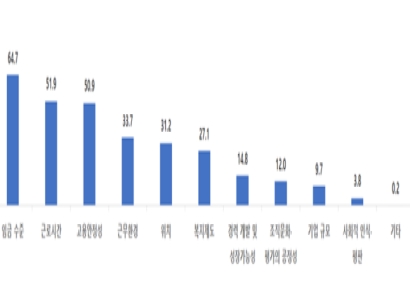 "Please Pay Me at Least 3 Million Won a Month": More Than Half of Young People Today Prioritize "Working Conditions" Over Company Size
- Selling Like Crazy Every Year... 30-Year-Old Hetbahn Takes on a New Challenge: Tastes Better Than "Mom's Home Cooking" [On-Site Report]
- He Left It in the Car and Forgot... "I Nearly Collapsed with Joy": Man Wins $1.48 Million Lottery
- Ran 18 km With 9-Year-Old Tied to Him at the Waist... "Man Banned From Competing for 3 Years"
- Beachgoer Finds 'Plastic' That Turns Out to Be Perfume Ingredient Worth More Than Twice as Much as Gold
Inhye Kwon, Associate Research Fellow at KREI, stated, "For young people to choose rural areas as a new place to live, it is essential to build a sustainable foundation for economic activity, rather than relying on simple experiences or one-time relocation support. A comprehensive, organically-linked support system must be established—one that covers non-agricultural sectors, where most rural youth work, and addresses every stage from initial interest to full settlement—so that rural areas can be designed as spaces of new opportunity for young people."
© The Asia Business Daily. All rights reserved. Unauthorized AI training and use prohibited.