Over 300 Days to Liquidation Trading... KOSDAQ Firms Facing Delisting Still Delay with Lawsuits
Sysworks' Injunction Dismissed After 323 Days
21 Companies Facing Delisting Delays...
Average Case Duration Far Exceeds 202 Days
Although the ‘mass births and deaths’ policy to improve the KOSDAQ market is underway, the pace of delisting remains slow, partly due to a steady stream of lawsuits from companies facing delisting. There are ongoing calls to increase the number of dedicated court divisions to speed up the process.

According to the Financial Supervisory Service’s Data Analysis, Retrieval and Transfer System (DART) as of August 18, KOSDAQ-listed company SYSWORK began liquidation trading on August 13 due to delisting. This comes almost a year after the Korea Exchange's KOSDAQ Market Division announced the commencement of liquidation trading in relation to delisting. The Korea Exchange had issued a notice starting liquidation trading on September 23 last year.
The prolonged timeline was because the company filed for a preliminary injunction to suspend the effect of the delisting decision. On September 19 last year, immediately after the Korea Exchange made its public announcement about SYSWORK's delisting, SYSWORK filed for an injunction with the Seoul Southern District Court just three days later to halt the effect of the delisting decision. A dismissal was finalized only on August 10—323 days after the application was filed—allowing the Korea Exchange to resume the delisting process. However, SYSWORK has since filed an appeal against the injunction decision.
According to DART, as of August 13, a total of 21 companies, including SYSWORK, have delayed their delisting over the past year by filing for preliminary injunctions to suspend the Korea Exchange's delisting decisions. Of these, 11 cases—about 50%—have exceeded the average decision timeframe for delisting injunctions, which was 202 days in 2024 as announced by the Financial Services Commission.

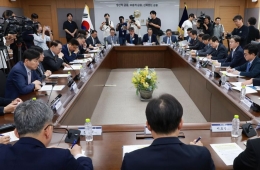
The delisting suspension injunction has become a tool for companies facing delisting to buy more time. Out of 85 delisting-related injunction lawsuits filed in the past five years (2021–2025), only two have been granted. The Financial Services Commission announced a reform plan for prompt and rigorous delisting of underperforming companies in February. Under this plan, Seoul Southern District Court’s 51st Civil Division was put in charge of handling all related injunction cases.
The problem is that such injunction applications end up tying up shareholders without any real countermeasures from the companies. One investor in a company that filed for such an injunction posted in an online community, “I wish they would just delist instead of wasting time. The law is making investors suffer.” Another investor vented, “I am still a shareholder, but delisting is the answer for a stock like this. I hope it never gets relisted.”
Hot Picks Today
 "Bought It Cheaper in Japan Than Korea"... Improper Use Leads to Vomiting and Abdominal Pain, Official Warning Issued
- "I Pay and Check Out Myself"…Self-Checkout Sparks Outrage, Leads to Proposed 10% Discount Bill
- "Boss, What Is This?" The 2,000 Won 'Pizza-Like Rice Cake' Causes a Sensation at Local Shops [Flavor File X]
- "In My Eyes, I'm Still 28"... Chinese Woman Gives Birth to Son at 58 and Daughter at 60
- "Uncle Will Buy Them All for Wonie"... Men in Their 30s Sweep Up 600,000 'RESCENE Bread'
Junseo Lee, professor of business administration at Dongguk University, commented, “There seem to be two types of cases: one, where companies use lawsuits to shield themselves from minority shareholder actions; and another, where fundamentally sound companies face temporary setbacks, such as a qualified opinion from auditors, and need more time to clarify their situation. In the end, since this is a right constitutionally guaranteed, the only solution within legal boundaries is to increase the number of dedicated courts to speed up the process.”
© The Asia Business Daily. All rights reserved. Unauthorized AI training and use prohibited.