"I Lost My Wedding Fund", "I Feel Foolish for Trusting the Home Market"—Retail Investors in Agony Amid Global Shock at Korea's Market Volatility
Sharp Correction Follows KOSPI Surge
BBC: "Volatility in Korean Stock Market Stands Out"
Foreign media outlets have highlighted the repeated sharp swings in the Korean stock market amid the artificial intelligence (AI) frenzy, as well as the stories of individual investors who have suffered significant losses along the way.
On August 14 (local time), the BBC reported that “as the KOSPI, considered one of the world’s most volatile equity indices, repeatedly surges and plunges, Korean individual investors are experiencing substantial losses.”

On the 14th, the KOSPI index recovered above the 7,000 mark in early trading amid strong U.S. tech stocks, with the domestic market status displayed on the electronic board at the Hana Bank dealing room in Jung-gu, Seoul. It is the first time in 15 trading days since July 24 that the KOSPI index surpassed 7,000 during the session. August 14, 2026 Photo by Kang Jinhyung
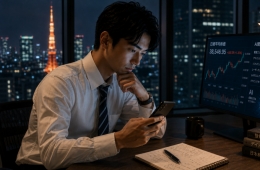
View original imageYongjun Kim, who works at a bank, invested in stocks last month and lost about 20 million won. This money was set aside to purchase a home ahead of his planned marriage. However, the tech stocks he invested in fell by about 25 percent last month, resulting in losses.
Kim said, “The blow is significant, and I think I’ll really have to work hard to make up for the losses. I believe those who took even bigger risks than me are experiencing far greater pain.”
Ungsa Kim also remarked that every time he checks his stock trading application, he can see how most of the gains he once had have evaporated. At the beginning of this year, he invested about half of his workplace bonus in SK hynix stock. The stock price quadrupled, but he has since given back most of those gains. The current value of his holdings is about 300 million won, which is roughly half of what it was at its peak. Kim told the BBC, "Just thinking about it brings tears to my eyes."
Recently, investors worldwide have been flocking to tech stocks, but volatility has also grown, with stock prices swinging sharply whenever related news emerges. The BBC pointed out that such instability is particularly pronounced on the KOSPI, which has a high proportion of tech stocks.

Surge in Leverage Investment Amid Growing Optimism in Tech Stocks
The global investment boom driven by AI has also caused major fluctuations in the share prices of Korea’s leading semiconductor companies. Vikas Khong of the financial services firm BNY evaluated that between June and August, the KOSPI experienced one of the steepest corrections in its history, comparable to those seen during the COVID-19 pandemic and the 1997 Asian financial crisis.
The KOSPI more than doubled from the beginning of this year and surpassed the 9,000 mark in mid-June, but plummeted to just over 5,500 within a few weeks. It has since partially recovered and is now fluctuating in the 6,900 range. Khong cited concerns over the massive amounts of capital being funneled into AI as a major reason for the recent sell-off.
Investment analyst Tobias Leger explained that months of soaring tech stocks led to extreme optimism in the market, which in turn drove some individual investors to borrow money to invest.
In particular, investors who scaled up their investments using leverage (borrowed funds) were hit especially hard. Leverage allows investors to buy more shares than their own capital would permit, thereby expanding gains if stock prices rise. However, if prices fall below a certain threshold, brokerages may demand that investors deposit additional funds to cover the shortfall in what is known as a "margin call."
It’s estimated that margin calls occurred in around 1.2 million domestic individual investor accounts as of the end of July. The BBC noted that this figure equates to one in every 30 individuals of working age in Korea.
Frank Benzimra, head of Asia equity strategy at Societe Generale, explained that leverage investing is spreading not only in Korea but also among individual investors in Taiwan and the United States. He noted that this trend is amplifying the risks associated with stocks linked to AI.

"I Trusted the Domestic Market"... Retail Investors Suffering as Correction Drags On
Youngji Park, a KOSPI investor, said she invested most of her cash holdings in Samsung Electronics shares. At one point, the value of her holdings climbed to 45 million won, but she subsequently suffered significant losses as the stock price plunged. Park also plans to continue holding her shares in the hope of a recovery. She said, “I feel like a fool for trusting the Korean stock market. Now it’s a long-term game. Waiting is the only option.”
University student Sumin Lee felt the so-called 'FOMO' (Fear Of Missing Out) when she worried she might miss the investment opportunity, so she pooled money with a friend to invest in SK hynix. However, she now regrets not selling when the stock price reached 3 million won per share last June. At the time, there was widespread expectation in the market that the stock could reach 5 million won, which led her to continue holding her shares. Lee said, “I didn’t have anyone around me with much investment experience, and I didn't properly study investing before buying stocks.”
Korea’s Stock Market Swings Are Impacting Other Markets
The sharp volatility in Korea’s stock market is also fueling concerns about overseas markets. Benzimra noted that indices with a high concentration of tech stocks, such as Japan’s Nikkei 225, have displayed trends similar to the steep movements seen in the KOSPI.
However, he said that most stock markets around the world are made up of companies from various industries, so the likelihood of experiencing volatility as extreme as Korea’s is lower.
Hot Picks Today
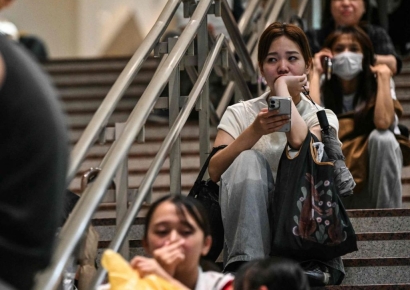 7,000 Stranded at Airport, Many Koreans Among Them... Emergency as Record-Breaking Rain Hits Greater Tokyo Area
- [Exclusive] Hyundai Motor Retirees Face Crackdown on “Car-Tech”...25% Discount Benefits Also Taxed
- "This Came Out of Nowhere"...16 Inmates Electrocuted After Dinner at US Prison
- Will Health Insurance Premiums Rise Next Year After Five Years of Surplus End? ... Additional Premiums for Interest and Dividend Income Possible [Why&Next]
- Why Did a Healthy Former Swimmer in His 30s Die in a 1.8-Meter-Deep Pool?
He said, “I don’t expect to see the same level of volatility in markets with a wide variety of large caps, such as the TOPIX in Tokyo or the U.S. stock market.”
© The Asia Business Daily. All rights reserved. Unauthorized AI training and use prohibited.