Trump Allows Overseas Construction of U.S. Naval Vessels... Korea Emerges as Key Player (Comprehensive)
Rebuilding the U.S. Naval and Shipbuilding Industrial Base
Trump Signs Presidential Memorandum
Foreign Shipbuilders Investing in U.S.
Allowed to Build Up to Two Vessels at Home Yards
Offers Hope for Long-Standing Goals of Korean Industry, Including Hanwha
The U.S. government has eased regulations to allow foreign shipbuilding companies investing in the U.S. to build up to two U.S. military vessels at their own shipyards. This development offers hope for the long-standing goal of the South Korean shipbuilding industry, which has eagerly pursued entry into the U.S. naval market, including Hanwha Group's early move to explore the acquisition of Austal USA, a U.S. shipyard operator. However, industry insiders remain cautious, noting there are still many hurdles to overcome before these regulatory changes translate into actual ship orders and project success.
Trump Signs Presidential Memorandum

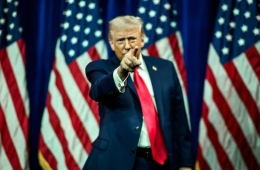
U.S. President Donald Trump is saluting at an event held in Ohio on the 11th (local time). Photo by AP
View original imageU.S. President Donald Trump signed a presidential memorandum on August 13 (local time) aimed at "rebuilding the U.S. Navy and the U.S. shipbuilding industrial base." This comes about a month after he suggested the need to ease restrictions on naval vessel construction to strengthen the U.S. Navy, stating, "We will look at companies from Korea and other regions," during an Army event held in Pennsylvania last month.
This move incorporates the so-called "Finland Model," an agreement made with Finland in October last year regarding the construction of a medium-sized icebreaker. In the memorandum, President Trump delegated authority to the Secretary of War (Department of Defense) to exempt certain shipbuilding contracts from the Burns-Tollefson Act's prohibition on overseas construction, provided the contract meets specific conditions and is determined to be necessary for national security. The Secretary of War is required to submit a ship procurement plan within 90 days of the memorandum's effect. However, the Secretary must notify Congress of the national security determination, and only after 30 days may contracts be finalized.
For a foreign shipbuilding company to participate in the construction of U.S. naval vessels under this framework, it must either build a new shipyard in the U.S., acquire an existing U.S. shipyard, or secure a majority stake in one. The company is also required to employ and train American citizens, transfer proprietary shipbuilding techniques and technologies utilized at its home shipyards to the U.S. shipyard under license, and establish a domestic U.S. supply chain.
Companies meeting these requirements are permitted to build only the first two units of ordered naval vessels at their home country shipyards. Up to three types of vessels are eligible for this arrangement: surface combat ships capable of anti-submarine warfare, surface warfare, and escort missions; CONSOL (Consolidated Cargo Replenishment) tankers that supply fuel and materials to warships at sea; and Roll-on/Roll-off (Ro-Ro) vessels specializing in the rapid loading and unloading of vehicles and military equipment. However, beginning with the third ship, all construction must take place at U.S. shipyards.
The Trump administration is also pushing for the establishment of the fifth public naval shipyard in the U.S. for the first time in over 80 years. The Department of Defense is tasked with developing a plan within 120 days to increase repair capacity for nuclear-powered submarines and aircraft carriers and is considering the installation of up to three new dry docks near the Pacific Fleet. The government also plans to establish a submarine component repair center and reorganize the Naval Sea Systems Command (NAVSEA) to reduce delays in vessel delivery and minimize repetitive design changes.
Expectations and Concerns within the Korean Shipbuilding Industry

At the naming ceremony for the National Security Multi-Purpose Vessel (NSMV) No. 4 'Lone Star State' held at Hanwha Philippines Shipyard on July 19 (local time). Photo by Yonhap News Agency
View original imageThe Korean shipbuilding industry has expressed a mix of expectations and concerns regarding the new regulatory exceptions. An industry official commented, "This measure is seen as a concrete step forward for Korea-U.S. shipbuilding cooperation, and we look forward to it leading to actual ship orders and tangible project results in the future."
Korean shipbuilders, despite their advanced technologies, have struggled to directly enter the U.S. naval shipbuilding market due to restrictions on foreign construction of U.S. naval vessels. Instead, they have pursued both direct and indirect investments to broaden cooperation with the U.S. Hanwha, which acquired Philil Shipyard, has recently accelerated its entry into the U.S. market by seeking to acquire Austal USA, the American subsidiary of the Australian shipbuilding and defense company Austal. HD Hyundai has supported local productivity enhancements by introducing its independently developed intelligent welding systems to Huntington Ingalls, the largest defense shipbuilder in the U.S. Samsung Heavy Industries has been actively involved in developing the U.S. shipbuilding workforce by helping local personnel access training and education programs, such as VR/AR-based welding and coating facilities, in partnership with its maintenance, repair, and operations (MRO) partner, the U.S.-based Biger Marine Group.
The South Korean government also launched the Korea-U.S. Shipbuilding Cooperation Center officially in Washington, D.C. on July 23. The center will serve as a bridge between the two countries, building a local network and developing workforce training programs for Korea and U.S. companies. It aims to improve the efficiency and fundamentally reform underperforming American shipyards.
However, industry observers point out that there are still many challenges before such measures result in real ship orders and successful projects. President Trump's direct demand and pressure for Korean investment in the U.S. market may increase both investment costs and risk burden for domestic companies. Moreover, they must also contend with potential strong opposition in the U.S. Congress and the protracted legislative reform process. A shipbuilding company official reiterated, "This measure is seen as a further concretization of Korea-U.S. shipbuilding cooperation, and we hope it ultimately leads to actual ship orders and project successes."
Experts also emphasize the need for a cautious approach, as there are clear opportunities and limitations. Lee Eunchang, a research fellow at the Korea Institute for Industrial Economics & Trade, noted, "Despite the strong intention from the U.S. administration, numerous laws and regulations remain significant barriers to bilateral shipbuilding cooperation. While it may take time to convince Congress, we must seek ways to gradually resolve these obstacles." Um Kyungah, a research fellow at Shin Young Securities, stated, "If the law is only modified by exception clauses and not fundamentally amended, it will be difficult to guarantee the long-term sustainability of this business. However, given President Trump's strong drive, this announcement may serve as one step in the process of genuinely amending the law in the future."
The background behind the U.S. relaxing its long-held restrictions on foreign construction of naval vessels is complex. President Trump diagnosed in the memorandum that the U.S. Navy's overly complex designs and repetitive modifications have led to increased costs, construction delays, and even project cancellations. He pointed out that the lack of production capacity and competition among shipbuilders has resulted in large order backlogs across six major naval shipbuilding programs, and that the U.S. commercial shipbuilding industry still lacks global competitiveness.
Hot Picks Today
 "One Less Worry About Old Age": Japanese Companies Secure Senior Talent with Regular Employment Beyond 65
- "Six in Ten Koreans Support Female Conscription, Survey Finds"
- [New York Stock Market] Treasury Announces Major Buyback Expansion... All Indices Close Modestly Higher
- Bus Driver Helps Passenger Who Soiled Himself; Minister Kim Touched, Wants to Award Commendation
- Raising Prices Boosts Sales... Revival of China's 'Doomed' Ramen Market
Economic considerations are also a major factor. President Trump addressed cost issues last month, saying, "It cost us 19 billion dollars (about 28 trillion won) to build one aircraft carrier. That's an insanely high price." The "2026 U.S. Navy Shipbuilding Outlook" published by the Congressional Budget Office (CBO) in January of this year also noted that the U.S. shipbuilding industrial base faces significant challenges in supporting the Navy's long-term shipbuilding plans.
© The Asia Business Daily. All rights reserved. Unauthorized AI training and use prohibited.