"Though He Was a Student Like Ahn Sangho"... Kim Iknam, Who Took a Different Path Amid Controversy Over the Actress's Great-Grandfather's Pro-Japanese Past
Served as Instructor at Uihakgyo, Army Medical Chief, and Founding President of the Medical Research Association
Returned to the Korean Empire after Studying Modern Medicine in Japan
Trained Medical Professionals Amid National Crisis
Recently, as controversy continues to surround the pro-Japanese activities of actress Ha Young's great-grandfather, Ahn Sangho, renewed attention is being given to the life of Kim Iknam, a Korean doctor who studied modern medicine in Japan during the same period, but chose a completely different path.

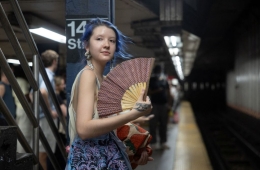
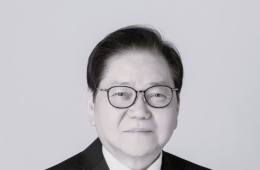
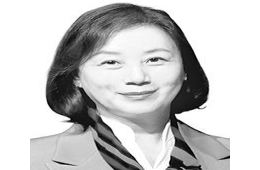
Kim Iknam (left in the left photo) and Kim Gyojun. Their relationship started as a mentor-mentee bond dedicated to the advancement of medicine in South Korea and lasted for 40 years like brothers. The right photo features actress Ha Young. Photo by Yonhap News
View original imageOn August 11, posts began circulating on social media and networking services comparing the lives of Ahn Sangho and Kim Iknam. Both were government-sponsored students who studied medicine in Japan with support from the Korean Empire, but the choices they made regarding their return and subsequent actions diverged significantly. Notably, as the debate over Ahn Sangho's pro-Japanese activities has been rekindled, Kim Iknam’s work—returning to Korea at the request of the Korean Empire and dedicating himself to modern medical education and training healthcare professionals—has also gained renewed attention.
Completely Different Choices After Graduation as Government-sponsored Students
Like Ahn Sangho, who is at the center of recent controversy, Kim Iknam also studied modern medicine in Japan with support from the Korean Empire. He graduated from Jikei Medical School three years earlier than Ahn Sangho, making him a senior at the same institution. However, after graduation, the paths they took became distinctly different. One notable point of divergence was their response to an appointment as instructor at ‘Euihakgyo’, the first modern medical education institution established by the Korean Empire.

'Maeil Sinbo' April 6, 1937 Issue - Obituary of Mr. Kim Iknam. National Library of Korea Newspaper Archive
View original imageAfter graduating from Jikei Medical School in July 1899, Kim Iknam was asked by the Korean Empire government to take up a position as an instructor at Euihakgyo. He returned to Korea the following year, in August 1900, to begin this role. Over approximately four years, Kim Iknam served as an instructor at Euihakgyo and helped train a total of 32 Korean modern physicians. At a time when the sovereignty of the Korean Empire was rapidly eroding, he played a vital role in cultivating a group of Korean doctors trained in modern medicine, marking a significant contribution to the history of modern medicine in Korea.
At the call of the state, Kim Iknam later moved on to become the Chief Medical Officer of the Army of the Korean Empire, working in the field of military medicine as well. In 1908, to counter the ‘Gyerim Medical Association’ led by Japanese doctors, he organized and became the first president of the ‘Medical Research Society’, an association of Korean doctors. By contrast, Ahn Sangho was named as Kim Iknam’s successor to the instructor position at Euihakgyo.
Ahn Sangho was appointed as an instructor at Euihakgyo in October 1904, but did not return from Japan at that time and was dismissed about three months later. He finally returned to Korea in 1907, by which time Euihakgyo had already been merged into Daehan Hospital as part of the medical institution reorganization under the Japanese Residency-General. Thus, even though both had studied modern medicine in Japan as government-sponsored students, their responses to their nation's call and subsequent activities were quite the opposite.
Kim Iknam, Distancing Himself from Japanese Rule, Faces Disadvantages
There is evidence that Kim Iknam kept a distance from the Japanese authorities. In June 1907, he participated in a memorial project for Dr. Jeong Jae Hong, who attempted to assassinate Ito Hirobumi and then committed suicide. Due to such activities, Kim Iknam is known to have suffered disadvantages under Japanese rule, and he never received the official physician’s license, the ‘Medical Practice Permit’, issued by the authorities at the time to control the medical profession.
Hwang Sangik, Professor Emeritus at Seoul National University College of Medicine, told Yonhap News that this is an important clue indicating that Kim Iknam did not actively cooperate with the Japanese authorities. Professor Hwang explained, “Given that Kim Iknam held key positions in the medical, educational, and military medical fields, he was a person the Japanese authorities likely tried hard to win over. Nevertheless, there are no traces of him cooperating with them.”
Hot Picks Today
 7,000 Stranded at Airport, Many Koreans Among Them... Emergency as Record-Breaking Rain Hits Greater Tokyo Area
- [Exclusive] Hyundai Motor Retirees Face Crackdown on “Car-Tech”...25% Discount Benefits Also Taxed
- "This Is Not Right, Chairman"...Flood of Criticism over SK hynix's Pursuit of 'Five-Layer Duplicate Listing'
- KakaoBank Executives Purchase 21,100 Shares in Company Stock, Express Commitment to Responsible Management
- "Foreign Foodies Flock Here: Majang Livestock Market Emerges as the Next Hot Spot After Seongsu"
So, why did Kim Iknam’s name remain largely unknown to the general public for so long? Analysts point out that the disappearance of Euihakgyo—where Kim Iknam worked—soon after the loss of national sovereignty, and the lack of proper evaluation of its history, played a significant role. Professor Hwang said, “After its establishment as the first medical school by the Korean Empire, Euihakgyo was abolished only eight years later with the loss of sovereignty, and its history and significance have not been adequately recognized. Kim Iknam, too, lost the institutional foundation for his work as the state itself disappeared.”
A Name Revived Late... A Memorial Stone and a Statue at Seoul National University College of Medicine
The full reevaluation of Kim Iknam’s life began in the 2000s. As researchers continued to uncover related materials, the roles of Euihakgyo and Kim Iknam in the history of modern medicine in Korea started to gain proper recognition. In 2015, a memorial stone marking the former site of Euihakgyo was installed in Jongno-gu, Seoul, and in 2018, a statue of Kim Iknam was erected at the Yeongeon Campus of Seoul National University College of Medicine.

The scene of the statue unveiling ceremony of Professor Kim Iknam held in 2018 at Seoul National University College of Medicine. Seoul National University College of Medicine
View original imageOver 120 years ago, Ahn Sangho and Kim Iknam both studied modern medicine in Japan as government-sponsored students of the Korean Empire. The recent controversy over Ahn Sangho’s pro-Japanese activities, paradoxically, is bringing renewed attention to the very different path chosen by Kim Iknam, who started with a similar background. Professor Hwang remarked, “This recent controversy has become an opportunity to reconsider a very important figure in the history of modern medicine in Korea,” and added, “I hope this incident will help publicize the long-overlooked achievements of Kim Iknam and the historical value of Euihakgyo.”
© The Asia Business Daily. All rights reserved. Unauthorized AI training and use prohibited.