Victor Cha: "Kim Jong Un May Meet Trump Again...Aiming for Recognition as a Nuclear Power"
Possibility That Kim Is Learning Trump's Negotiation Tactics through the Iran War
"Bypassing Seoul and Seeking Direct Ties with Washington and Tokyo"
China May Also Facilitate North Korea-U.S. Dialogue
There is analysis suggesting that North Korean leader Kim Jong Un may have gained incentives to resume summit diplomacy with U.S. President Donald Trump as he observes the war in Iran. It is argued that, in order to manage President Trump's unpredictable military and diplomatic strategies, maintaining channels of contact with the United States could be advantageous for North Korea.

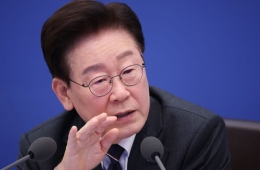
Victor Cha, Korea Chair at the Center for Strategic and International Studies (CSIS). CSIS website
View original imageVictor Cha, Korea Chair at the Center for Strategic and International Studies (CSIS), presented this outlook in an analysis titled "After Iran: Scenarios for Reopening Trump-Kim Summits," released on August 13 (local time). CSIS observed that, as of now, while most forecasts suggest Kim Jong Un is not interested in resuming summit diplomacy with the United States—unlike President Trump—North Korea’s revisionist tendencies could potentially overturn this view.
The aspect that drew Cha's attention is Kim Jong Un’s ongoing pattern of making choices to maximize North Korea’s strategic interests by diverging from established diplomatic frameworks and expectations. For example, contrary to widespread predictions that, after COVID-19, North Korea would focus on restoring economic ties with China, the country has instead rapidly deepened military and economic cooperation with Russia since the Ukraine war began.
According to Cha, if Kim Jong Un continues such revisionist approaches, he may opt for direct dialogue with President Trump once again, despite North Korea’s growing alignment with Russia and China.
Cha specifically noted that a North Korea-U.S. summit could serve as a process through which North Korea secures de facto recognition as a nuclear-armed state. President Trump has maintained denuclearization of North Korea as a U.S. policy objective but has shown a more flexible stance than in the past, even referring to North Korea as a "nuclear power." CSIS analyzes that, in these circumstances, Kim Jong Un may regard reestablishing relations with President Trump as a strategic opportunity.
Cha also mentioned that, should Kim Jong Un pursue an actual summit, the most probable timing would be after the U.S. ruling party suffers defeat in the midterm elections. If the two leaders meet, Cha predicts the summit may involve reaffirming the principles agreed upon at the 2018 Singapore summit.
Lessons from the Iran War: "Maintaining Contact with Unpredictable Trump Is Advantageous"

Cha further analyzed that the ongoing conflict between the U.S. and Iran could influence Kim Jong Un’s judgment. Observing President Trump’s use of both negotiations and military pressure while swiftly shifting strategies depending on the situation, North Korea may conclude that maintaining a direct communication channel with the U.S. president—rather than severing ties—would be beneficial in managing risks.
CSIS has assessed that President Trump’s diplomacy is characterized by so-called "post-diplomacy," where broad agreements are announced at the summit level first, with follow-up negotiations delegated to working-level officials. This approach could allow North Korea to participate in a summit without committing to complete denuclearization in advance.
Cha predicts that, if a summit is realized, Kim Jong Un is likely to propose topics such as a peace treaty, suspension of South Korea-U.S. joint military exercises, and an end to North Korea-U.S. hostilities. He also noted that North Korea could target President Trump’s focus on peace-brokering achievements and his interest in the Nobel Peace Prize.
The analysis suggests that even if there is no immediate denuclearization breakthrough at the summit, simply negotiating nuclear issues directly with the U.S. president could help North Korea gain de facto recognition as a nuclear-armed state.
"Seoul Bypass... Possibility of Direct Diplomacy with Washington and Tokyo"

Analysis by Victor Cha, Senior Advisor for Korea at the Center for Strategic and International Studies (CSIS). Source: CSIS Website
View original imageThe possibility has also been raised that Kim Jong Un’s diplomatic shift may not be limited to the United States alone. Highlighting the possibility of a summit between North Korea and Japanese Prime Minister Sanae Takaichi, Cha noted that Kim could seek direct engagement with both the United States and Japan, aiming to exploit cracks in trilateral cooperation among South Korea, the United States, and Japan.
CSIS suggested that Kim Jong Un might choose a strategy of bypassing Seoul and dealing directly with Washington and Tokyo. As a result, Cha sees little likelihood that renewed North Korea-U.S. summit diplomacy would immediately lead to restored inter-Korean dialogue.
Rather than responding to the "peaceful coexistence" proposal of the Lee Jaemyung administration, North Korea may find that pursuing direct improvement of relations with the United States and Japan is more consistent with its strategic goals.
Hot Picks Today
![[Exclusive] "Forecasts of Over 10 Billion, but Only 100 Million Earned"... 95% Followed This Pattern: Why Are KOSDAQ Special Exception IPOs Inflated? [KOSDAQ Inflated IPOs]①](https://cwcontent.asiae.co.kr/asiaresize/93/2026100609060151026_1791245160.jpg) [Exclusive] "Forecasts of Over 10 Billion, but Only 100 Million Earned"... 95% Followed This Pattern: Why Are KOSDAQ Special Exception IPOs Inflated? [KOSDAQ Inflated IPOs]①
[Exclusive] "Forecasts of Over 10 Billion, but Only 100 Million Earned"... 95% Followed This Pattern: Why Are KOSDAQ Special Exception IPOs Inflated? [KOSDAQ Inflated IPOs]①
- "Smelling the Earth and Harvesting Rice"... Young Chinese Millennials and Gen Z Choose Rural Work for Travel
- "My Debt Is 73 Million Won"... Sharing Every Repayment Led to an Unexpected Turn
- "Drinking This in the Morning Is Like Drinking Alcohol"..."Doctors Warn: Never Consume It"
- Is 'KOGUMA' Coming Too?... "Japan in Serious Trouble" - Archipelago on High Alert Ahead of Holidays
Cha also sees the possibility that China could play a role in facilitating the resumption of summit diplomacy between North Korea and the United States. China may do so both as a friendly gesture toward President Trump and to counter Russia’s growing influence over North Korea.
© The Asia Business Daily. All rights reserved. Unauthorized AI training and use prohibited.