U.S. July PPI Flat...Inflation Eases, Dimming Hopes for September Rate Hike
Producer Price Growth Slows Sharply from June, Falls Short of Expert Forecasts
Core PPI Up 4.7% Year-over-Year, 0.4% Month-over-Month
New Unemployment Benefit Claims Rise to 209,000
Fed Rate Hike Expectations for September Recede
In July, U.S. producer prices remained flat compared to the previous month, indicating that inflationary pressure is easing. With recent signs of a slowdown in the labor market as well, market expectations have grown that the Federal Reserve (Fed) will not raise interest rates next month.

A worker is organizing products at a mart located in Manhattan, New York City, USA. New York, USA – Photo by Yoonju Hwang
View original imageAccording to the U.S. Department of Labor's Bureau of Labor Statistics on the 13th (local time), the Producer Price Index (PPI) for July was unchanged (0.0%) from the previous month. This was lower than the 0.2% increase forecast by experts polled by Dow Jones.
On a year-over-year basis, the PPI rose by 4.7%, a significant slowdown compared to the 5.5% increase in June. The deceleration in overall producer price growth was attributed to declines in energy and food prices. Core PPI, excluding the more volatile food, energy, and trade services components, increased by 0.4% from the previous month and by 4.7% compared to the same month last year.
The producer price index, also known as wholesale prices, reflects changes in the prices companies receive for selling goods and services. Since these changes can be reflected in final consumer prices with some time lag, the producer price index is used as a leading indicator for the future trend of consumer prices.
This latest report was interpreted as a signal that the inflationary pressures in the U.S., which had risen after the Iran war due to surging international oil prices, are not spreading further. After the war, energy price hikes drove U.S. inflation higher, but as energy and food prices recently declined, price pressure at the production stage has somewhat eased.
Glenn Smith, Chief Investment Officer at GDS Wells Management, commented, "This is good news for both consumers and the Fed," adding, "the Fed is in a very challenging position, as it needs to tame inflation while also keeping an eye on a weakening labor market."
With clearer signs of easing inflation, sentiment has strengthened in financial markets that the Fed is less likely to raise rates next month. The yield on the two-year U.S. Treasury note, which is sensitive to policy rate expectations, fell by 4 basis points (1bp = 0.01 percentage points) to 4.16% on the day.
New Unemployment Claims Surpass 200,000... Nonfarm Payrolls Also Exceed Expectations
Labor market data released on the same day showed that the number of new unemployment benefit claims for the previous week increased to 209,000. With unemployment claims following the recent slowdown in hiring, there are rising expectations that the Fed will pay more attention not only to inflation but also to signs of weakening in the labor market.
Thomas Barkin, President of the Federal Reserve Bank of Richmond, also said in Greenville, South Carolina, "A substantial part of today's high inflation stems from shocks that will dissipate over time," citing tariff effects and oil price shocks following the Iran war as examples. However, he cautioned that if some inflationary pressures become entrenched, further tightening may be necessary in the future.
The Fed is expected to review additional inflation and employment data ahead of next month's Federal Open Market Committee (FOMC) meeting. Markets are also awaiting Federal Reserve Chair Kevin Warsh's remarks on monetary policy at the Jackson Hole Economic Policy Symposium at the end of this month.
Hot Picks Today
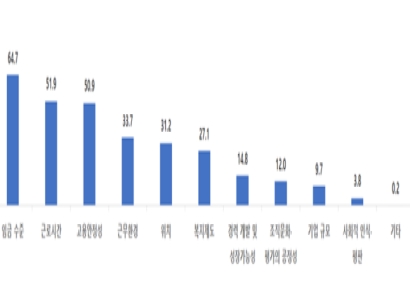 "Please Pay Me at Least 3 Million Won a Month": More Than Half of Young People Today Prioritize "Working Conditions" Over Company Size
- Selling Like Crazy Every Year... 30-Year-Old Hetbahn Takes on a New Challenge: Tastes Better Than "Mom's Home Cooking" [On-Site Report]
- Sleep Is Koreans' 'No. 1' Health Interest, but They Averaged Under 7 Hours a Night This Year
- "Hey, Lady, Teach Your Kids to Behave!" ... 300,000 Won in Cash and a Bodily Injury Claim Demanded Over Child's Door Ding
- "Don't Trust This Woman": Documentary on 'Investment Scammer' Earns KRW 22 Billion in One Week
Meanwhile, the July employment report released on the 8th showed a decrease of 23,000 nonfarm jobs, a sharp contrast to the projected increase of 80,000—an additional sign of a cooling labor market. With inflationary pressure also subsiding, expectations are mounting that the Fed will hold rates steady in September.
© The Asia Business Daily. All rights reserved. Unauthorized AI training and use prohibited.






![[Market ING] KOSPI Seeks Rebound in Superweek Packed with Corporate Earnings and FOMC](https://cwcontent.asiae.co.kr/asiaresize/307/2026102514484873155_1792907327.jpg)