"Mandatory Negotiations With Franchisees"... Clash Over Franchise Business Negotiation Standards [Why&Next]
Enforcement Decree Amendment for Franchise Business Pre-Announced, Implementation Set for Year-End
Franchise Headquarters and Franchisees Clash Over Group Registration Criteria
Key Standards: 10% of Franchisees, 1,000 Members, or Minimum of 30 Members
"Concerns Over Overcrowding" VS "Registration Barriers for Small-Scale Headquarters"
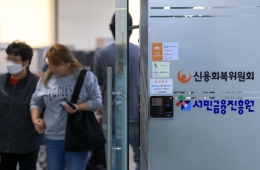
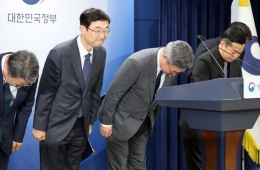
The franchise industry is in turmoil after the Korea Fair Trade Commission (KFTC) unveiled a draft amendment to the Enforcement Decree of the Franchise Business Act aimed at strengthening the bargaining power of franchise owners. This is due to sharp conflicts between headquarters and franchisees over requirements for forming franchisee groups and the scope of negotiation topics.
Headquarters are concerned that franchisee groups could evolve into unions, posing future management risks, while franchisees are already seeking to expand their authority based on mandatory negotiation clauses. As a result, there are concerns that the new regulations, designed to address power imbalances between headquarters and franchisees, could in fact heighten conflict.
!["Mandatory Negotiations With Franchisees"... Clash Over Franchise Business Negotiation Standards [Why&Next]](http://www.asiae.co.kr/news/img_view.htm?img=2026081316595380365_1786607994.gif)
Draft Amendment Announced: Registration Requirements for Franchisee Groups Included
According to industry sources on August 14, the KFTC pre-announced the draft amendment to the Enforcement Decree of the Act on Fairness in Franchise Transactions on August 3. At the same time, it also launched an administrative notice for the new “Guidelines on Franchisee Group Registration and Negotiation Procedures for Changing Terms and Conditions.” After new registration and negotiation requirements for franchisee groups were added to the Franchise Business Act in December 2025, specifics have been outlined in the enforcement decree and the new guidelines.
The core change is the introduction of a registration system for franchisee groups, where a registered group representing at least 10% or 1,000 franchisees can request negotiations regarding changes in transaction terms, and headquarters are required to comply. If the group is formed using the 10% ratio, at least 30 franchisees must participate. The amendment also states that if the participation rate is less than 30%, the group must seek opinions from other franchisees.
According to KFTC data, at the end of 2024, the proportion of headquarters with 30 or more franchises was 11.9%. Franchises under these headquarters account for 87.8% of the total. Therefore, for large headquarters with 300 or more franchises, the criteria for registration of a group are set at 10% or 1,000 or more members, while for those with 30–299 franchises, a minimum of 30 franchisees is required for group registration.
!["Mandatory Negotiations With Franchisees"... Clash Over Franchise Business Negotiation Standards [Why&Next]](http://www.asiae.co.kr/news/img_view.htm?img=2026081215314978475_1786516308.png)
The amendment stipulates that negotiations between headquarters and franchisees should include all matters recorded in the franchise agreement and advertising or promotional activities. The interval for re-negotiation on the same issue was set at 180 days. Negotiations must involve employees of the headquarters and members of the franchisee group, although the participation of a third-party proxy is also allowed.
Headquarters vs Franchisees: Fierce Battle Over Registration Criteria
As the legislative and administrative notification processes began, both sides strongly criticized the proposals. The main point of contention is the group registration requirements. At meetings held during the preparation of the amendment, headquarters insisted on a minimum participation rate of over 40% to ensure operational consistency and the representativeness of negotiating groups. In contrast, the franchisee groups argued that since the requirement is for negotiations, not final agreements, the threshold should be 10% or 100 franchisees. Ultimately, the 10% requested by franchisee groups was reflected in the amendment.
The Korea Franchise Association, representing headquarters, pointed out that the 10% requirement is excessively low, potentially resulting in as many as 10 groups per brand and creating confusion. It also argued that if multiple groups repeat different demands and reach various agreements, it could undermine brand consistency.
!["Mandatory Negotiations With Franchisees"... Clash Over Franchise Business Negotiation Standards [Why&Next]](http://www.asiae.co.kr/news/img_view.htm?img=2026081209435877727_1786495438.jpg)
The convenience store sector, a major industry player with nearly 20,000 franchises, argued that the minimum required number of 1,000 members for group registration also lacks representativeness. A convenience store industry representative explained, "For large-scale brands with around 18,000 franchises, the minimum of 1,000 franchisees amounts to less than 10% of total owners. It's difficult to say such a group is truly representative."
In contrast, franchisees argue that the 'minimum of 30 members' rule will prevent many negotiations with multiple headquarters. The Korea Franchisees Association, which represents franchisee interests nationwide, stated, "For 88.1% of brands, even if all franchisees join, registering as a group will still be impossible because of this requirement. This unreasonable lower limit considerably raises the difficulty of forming a group for smaller brands and must be withdrawn immediately."
KFTC: “Supplementary Measures Such as Opinion Collection”
The KFTC explained that, while applying the 10% participation rate requested by franchisee representatives, it introduced supplementary measures such as the minimum registration thresholds of 1,000 or 30 members to reduce burdens on smaller headquarters. The intention behind the amendments is to provide grounds for sanctions should a headquarters refuse to negotiate at the request of a franchisee group. Therefore, while slightly lowering the registration threshold, the KFTC also included mechanisms to address side effects anticipated by headquarters.
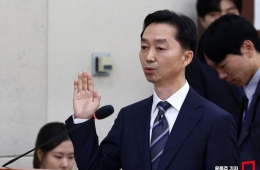
Ju Byungki, chairperson of the KFTC, explained on a radio program on August 11, "Only the top 20% of headquarters can guarantee strengthened negotiation power, but those brands represent coverage for almost 90% of stores from the franchisee's perspective." He added, "In addition to the 10% participation rate requirement, supplementary mechanisms to ensure group representativeness and exemptions for small headquarters are included."
!["Mandatory Negotiations With Franchisees"... Clash Over Franchise Business Negotiation Standards [Why&Next]](http://www.asiae.co.kr/news/img_view.htm?img=2022060710133193862_1654564412.jpg)
The opinion collection mechanism mentioned by Chairperson Ju ensures that when a group requesting negotiations represents at least 10% but less than 30% of all franchisees, procedures are triggered to gather the views of other franchisees as well. Despite these measures, both headquarters and franchisee sides have expressed concerns about the shortcomings and possible side effects of the KFTC's decisions.
"Not an Agreement but a Conversation" VS "Ultimately, Results Must Be Produced"
The two sides are also at odds over the scope and outcome of negotiations, the interval for re-negotiations, and the participation of third parties—not just the group registration requirement.
According to the amendment, the scope of negotiations includes all recorded items in the franchise agreement and advertising and promotional activities. Headquarters argue this could undermine their management rights and core brand policy, resulting in slower decisions and reduced agility in responding to market changes. They contend that fundamental management rights and the ability to maintain brand consistency should be excluded from the negotiation agenda. Conversely, franchisees counter that most of these issues, such as contract terms and advertising activities, are closely tied to their profitability and must be subject to negotiation.
Even the term “negotiation” as defined in the amendment is being debated. A representative from the Korea Franchisees Association said, "This is about having a conversation, not signing an agreement. Demanding representativeness for the purpose of starting a conversation is inappropriate." On the other hand, a representative from the Korea Franchise Association countered, "The very act of negotiating inherently leads to a result, and reaching agreements will ultimately be the responsibility of headquarters."
Regarding the 180-day interval for renegotiating the same issue, headquarters criticize it as forcing them to dedicate resources to endless negotiations all year long, causing serious administrative and financial burdens. Franchisees, however, believe this clause undermines their negotiation rights. Headquarters have also expressed concerns that the amendment allows third-party proxies to join negotiations, potentially resulting in the leakage of sensitive information and outside interference.
KFTC Reviewing Stakeholder Meetings...Academics Call for Dialogue and Communication
The KFTC will collect opinions on the new guideline through August 24 and on the enforcement decree amendment through September 14. The Korea Franchise Association plans to gather and organize feedback from member companies and submit formal documents to the KFTC within the deadline, while the Korea Convenience Store Association is also collecting member feedback in preparation for an official response. The Korea Franchisees Association is preparing its own submission as well. The KFTC is also considering holding separate meetings with stakeholders before implementing the amendment at the end of the year.
Hot Picks Today
 “Washing Dishes and Folding Clothes 200 Times a Day”... China’s “Robot Trainers” Earn Up to 1.2 Million Won a Month
- "Even New York Taxi Drivers Are Talking About the KOSPI; South Korean Market to Top 9,000 Again Within a Year"... 'Wall Street's Stock-Picking Ace' Names His Picks
- "How Are You Supposed to Carry This Around?"... Consumers Fume Over Promo for Women's Mesh Underwear-Inspired Pouch
- "Inviting Celebrities and Shopping for Luxury Goods"... Gambling Site Operators Who Lived Lavishly Overseas for 10 Years Arrested
- 220 cm-Tall 26-Year-Old Woman Dies Less Than a Year After Giving Birth... Deadly Complications Hidden Behind 'Gigantism'
Academics say that, given the distinctive features of the domestic franchise market and the clear imbalance of power between headquarters and franchisees, it is important to create an environment where both sides can engage in constructive dialogue and collaboration. Im Chae-woon, a professor at Sogang University, emphasized, "Negotiations with franchisee groups are essential to eradicate the practice of unilaterally imposing transaction terms on franchisees based on non-disclosure agreements and franchise contracts. Regardless of scale, every headquarters should have a representative franchisee group for communication and dialogue."
© The Asia Business Daily. All rights reserved. Unauthorized AI training and use prohibited.