"Unemployment Benefits Even After Less Than a Year: Concerns Over Unintended Effects for Youth"
Ministry of Employment and Labor to Provide Unemployment Benefits for Voluntary Resignations
Number of Repeat Claimants Rising for Five Consecutive Years, Sparking Concerns Over Possible Abuse
As the government is moving forward with a plan to provide up to 1 million won in unemployment benefits even to young people who voluntarily resign, concerns are emerging that this could lead to unintended side effects such as encouraging early job changes and repeated claims among the youth.

The photo is not directly related to the specific content of the article. Pixabay
View original imageAccording to the Ministry of Employment and Labor on August 12, the government announced plans on August 4 to push for an amendment to the Employment Insurance Act that would provide unemployment benefits for the first time in a young person’s life. The intent is to support individuals under the age of 35 who, in the early stages of their careers, wish to leave jobs that do not match their aptitude in order to make a new start.
Currently, unemployment benefits are, in principle, granted only to those who leave their jobs involuntarily. The government’s move is interpreted as an attempt to expand the scope of unemployment benefit payments in order to increase job opportunities for young people.
2 out of 3 Young Employees Quit Within the First Year
The problem is that a significant number of young people resign voluntarily within the first year of employment. Thus, a policy intended to lower the burden of resignation could actually incentivize even earlier job turnover.
According to employment administration statistics from the Korea Employment Information Service, as of June this year, 192,299 people under the age of 35 lost their employment insurance coverage. Among them, 145,333 left voluntarily for personal reasons, and 1,085 resigned due to workplace relocation, changes in working conditions, or delayed wage payments. The combined total of such “voluntary resignations” stands at 146,418, representing 76.1% of all those who lost coverage.
Of these voluntary leavers, 66.5% (97,437) had worked less than a year at their jobs. Including those who worked between 1 and 3 years (35,757 people, or 24.4%), the number of voluntary resignations with less than three years’ tenure totals 133,194—91.0% of the entire group.
“If Repeated Claims Become Addictive, Job Separation Among Youth Will Become More Frequent”
There are also concerns that the issue of repeat claims could accelerate misuse of unemployment benefits by involuntary leavers. While the total number of unemployment benefit recipients has decreased by more than 50,000 compared to four years ago, the number of repeat claimants has actually increased by more than 50,000—now accounting for roughly 3 out of every 10 beneficiaries.
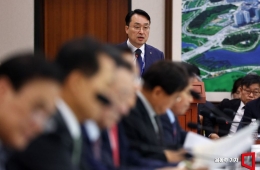
According to data submitted by the office of Kim Sohee, a People Power Party member of the National Assembly's Climate, Energy, Environment, and Labor Committee, to the Ministry of Employment and Labor as of August 13, last year the number of people receiving job-seeking benefits was 1,722,000. Of these, 496,000 were repeat claimants who had received job-seeking benefits twice or more within the past five years—accounting for 28.8% of the total. This means about 3 out of every 10 job-seeking benefit recipients have received unemployment benefits at least twice in the past five years.
Kim Sohee stated, “Job-seeking benefits should not be viewed as a ‘unemployment bonus’ repeatedly claimed, but rather as a ladder for reemployment. We must devise institutional measures to reduce repeat claims and strengthen the benefit’s original purpose of promoting reemployment.”
“Deferred Benefit Periods and Reimbursements”—Overseas Example Indirect Payout Methods
International examples can provide ideas for breaking the cycle of habitual repeat claims. In the United States, strict eligibility and claiming processes are in place. In principle, voluntary resignations do not qualify for unemployment benefits, and exceptions are made only when difficult working conditions or illness are proven.
China rewards companies that maintain long-term employment by reimbursing up to 60% of their unemployment insurance premiums, or by giving subsidies to businesses hiring young people. The goal is to foster a working environment where young employees do not need to resign early.
In Japan, there are waiting periods for benefit eligibility. For those leaving for personal reasons, there is a 7-day waiting period and a one-month “benefit restriction” period during which no unemployment benefits are paid. If an individual resigns more than three times within five years, the waiting period is extended to three months.
Hot Picks Today
 "I Should Enjoy It After Retirement": Prices Quadruple... Memberships Over 100 Million Won Popular, but Closures Mount
- "I thought getting into a big company was the goal"... The 'position' only 1 in 121 employees reaches
- "Jealous of Koreans" - Now a Must-Do on Every Trip... The Place Where Foreigners Spent KRW 229.8 Billion
- “I Bought Big Packs to Stock Up Because They Were a Better Deal”... Why Are They Disappearing From Grocery Stores?
- "Please Let Me Go Home"... Customers Trapped in Department Store Parking Lot for 5 Hours Vent Their Anger
The Ministry of Employment and Labor plans to submit the Employment Insurance Act amendment in the fourth quarter, following labor-management consultations in the third quarter. After the law is passed by the National Assembly, it will sequentially proceed with building the relevant IT systems and preparing subordinate regulations.
© The Asia Business Daily. All rights reserved. Unauthorized AI training and use prohibited.