"My Family Roots Are Traitors": A Nurse’s Confession Brings Renewed Attention to Hayoung Controversy
Debate Erupts Online over Hayoung’s Great-Grandfather Controversy
Disputes over Descendants’ Responsibility Stir Heated Reactions
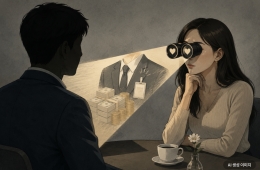
As Liberation Day approaches, controversy surrounding actor Hayoung’s great-grandfather, Ahn Sangho, and his alleged pro-Japanese activities continues. Meanwhile, an online story shared by an office worker, who identified himself as a descendant of a person with pro-Japanese history, has drawn widespread attention. He claimed that after watching the film ‘Assassination’ with his family, he discovered for the first time that his great-grandfather, like the traitorous character Kang Inguk in the movie, had a background related to “gold mine excavation rights.” On August 11, a post titled “Thoughts of a Descendant of a Pro-Japanese Collaborator on Hayoung’s Great-Grandfather's Pro-Japanese Allegations” appeared on social media platforms and networking services (SNS) frequented by office workers.

Actor Lee Kyung-young, who played the traitor Kang Il-guk in the movie 'Assassination.' Assassination still cut.
View original imageUser A, who introduced himself as currently working as a nurse, referenced director Choi Dong-hoon’s 2015 film ‘Assassination.’ In the film, the character Kang Inguk, played by Lee Kyung-young, is depicted as a pro-Japanese businessman who amassed wealth and power by cooperating with the Japanese colonial authorities. A claimed that just as Kang Inguk secured gold mine excavation rights in the story, his own great-grandfather was also a person who held the rights to excavate a gold mine.
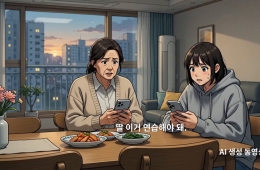
According to A, he first learned about his great-grandfather after watching ‘Assassination’ with his family and criticizing the pro-Japanese character in the film, when his father told him about their ancestor. He recalled that his father, at that time, said something to the effect of, “Your great-grandfather also owned gold mine excavation rights,” and added, “That’s when I realized that our family’s roots were those of traitors.” A further explained that even his own father was initially unaware of the family’s pro-Japanese past, having only heard that his grandfather was “someone who contributed greatly to the nation and thus earned gold mine excavation rights.”

The Taegeukgi flag hanging at Jingwansa Temple in Eunpyeong-gu, Seoul, on Liberation Day in 2023. Photo by Huh Younghan
View original imageHowever, it is not confirmed that A’s great-grandfather directly served as the model for the character Kang Inguk in the film. A explained that his father later wondered “how it was possible to obtain gold mine excavation rights in those days,” and began researching, eventually uncovering their ancestor’s history. Regarding the recent controversy over Hayoung’s great-grandfather, A also expressed the view that before introducing one’s family history with pride based merely on stories passed down through the family, one should first verify the facts.
A confessed that he also lives with the burden of his ancestor’s past. He said his father has been working day labor jobs after a business failure, and that other relatives are experiencing financial and family hardships—circumstances A accepts as a kind of “ancestral karma.” He added that even when faced with difficult situations in his job as a nurse, he tries to do his utmost caring for patients by thinking of it as “atoning for ancestral karma.”
"Reflection is meaningful" vs "No to guilt-by-association": Online Opinions Split
Reactions from online users to A’s confession were split. Some commented on the significance of self-reflection, praising the attitude of researching and reflecting on one’s family history rather than simply excusing the ancestors’ wrongdoings. Comments on the post included encouragements such as “It’s admirable to live with self-reflection,” along with personal experiences from others who, like A, found out about their own family’s past only later in life.
On the other hand, many pointed out that while historical evaluation of pro-Japanese activities is necessary, it is inappropriate to hold descendants who were not involved responsible for their ancestors’ actions. One user remarked, “Betraying the country is hard to forgive, but isn’t it too much to say that the karma also follows the descendants?” On the employment platform Blind, there have also been posts arguing that criticism of Hayoung should not lead to “guilt by association” or “witch-hunting,” further fueling the debate. Regardless of how one judges the historical actions of ancestors, opinions remain divided over how far responsibility should extend to descendants.
The Pro-Japanese Controversy Sparked by “Descended from Four Generations of Doctors” Introduction
Previously, Hayoung introduced her family in broadcasts and interviews as being “a family of doctors spanning four generations.” She explained that her great-grandfather studied Western medicine in Japan, opened a clinic in Hanyang, and treated Emperor Gojong. Once it became publicly known that her great-grandfather was Dr. Ahn Sangho, his activities during the Japanese occupation began to attract renewed scrutiny online. According to confirmed records, Ahn Sangho was listed as a council member of the Daejeong Friendship Association, established in 1916. This association is evaluated as being pro-Japanese, as it cooperated with the colonial policies of the Japanese Government-General of Korea at the time.

Amid controversy, Hayoung publicly apologized with a handwritten letter, but with Liberation Day approaching, the angry public sentiment is not calming down easily. Hayoung Instagram
View original imageIn 1918, Maeil Shinbo—the official newspaper of the Japanese Government-General—published an article featuring Ahn Sangho and his family as an example of assimilation between the Japanese and Koreans. However, Ahn Sangho is not included on the government’s official list of “pro-Japanese and anti-national figures,” nor is he listed in the “Directory of Pro-Japanese Figures” published by the Institute for Research in Collaborationist Activities. Some argue that while participation records such as involvement in the Daejeong Friendship Association should be critically assessed, it would be premature to legally or officially brand Ahn Sangho as a “pro-Japanese and anti-national figure” without thoroughly examining specific acts.
Hot Picks Today
 "Fears of a 'Robot Vacuum Repeat'... China Quietly Expands Its Reach Into Automotive Parts"
- "Buying a Home Like Paying Rent" Youth Future Bogeumjari Loan Launched... 'Marriage Penalty' Also Resolved [8/13 Real Estate Measures]
- Deposit Daily for a Month to Earn 10% Interest... Ultra-Short-Term Installment Savings Exceeds 100,000 Accounts in Four Days
- "Just Wanted a Cup of Tea at Starbucks"... 63-Year-Old Man Suffers Severe Injury to Genital Area
- "We Offer 33 Million Won a Month" ... Where Is the Bold Recruitment Limited to Doctors Over 60?
In the early stages of the controversy, Hayoung’s agency responded that while it was true Ahn Sangho was her great-grandfather, the pro-Japanese allegations were “completely unfounded.” The agency later reversed its position after further review of relevant materials confirmed that records do exist listing Ahn Sangho as a council member of the Daejeong Friendship Association in 1916. The agency apologized for having given a hasty answer without sufficient verification, causing confusion. Amid the controversy, Hayoung publicly apologized with a handwritten letter, but with Liberation Day approaching, the angry public mood is not subsiding easily.
© The Asia Business Daily. All rights reserved. Unauthorized AI training and use prohibited.