"Who Goes Anymore?" Visitor Numbers Plummet, Iconic Japanese Izakaya Industry Faces Nearly One-Third Shrinkage
Izakaya bankruptcies reach 118, the highest ever for the first half of the year
Concerns over customer loss due to price hikes make it hard to pass rising costs on to menu prices
Izakaya and Robatayaki market expected to hit 1.1 trillion yen by 2035
Down 31% from 2019, as more consumers avoid "second rounds" of drinking
Japan's representative pubs, known as "Izakaya," are closing down one by one across the country. As the costs of ingredients and rent rise, and consumers cut back on spending, the culture of moving from one drinking spot to another—once a staple of Japanese nightlife—is weakening, leaving small, independent Izakayas particularly hard hit.

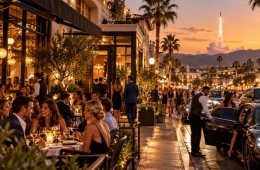
Tokyo, Japan. Photo is not directly related to the specific content of the article. Photo by AFP Yonhap News Agency
View original imageAlcohol, food ingredients, labor, and rent: A wave of price hikes leads to record-high Izakaya bankruptcies in Japan
According to the Nihon Keizai Shimbun on August 11 (local time), Tokyo Shoko Research (TSR), a Japanese credit research firm, reported that there were 118 cases of Izakaya operators filing for bankruptcy in the first half of this year. This is the highest number recorded for the first half since statistics began in 1989.
More than 90% of these bankrupt businesses were small operators with fewer than 10 employees. TSR noted that the total number of Izakaya bankruptcies this year could reach an all-time high.
What is putting the most pressure on the Izakaya industry is the rising cost of doing business. Prices for alcoholic beverages like beer, whisky, and sake, as well as ingredient costs, labor, and rent, are all on the rise. However, raising menu prices risks driving away regular customers, so operators find it difficult to fully pass these cost increases on to consumers.
In fact, Kazunori Matsubara, who runs Kurano-Suke, a 20-seat Izakaya in Koto Ward, Tokyo, said that while customers have returned after COVID-19, profitability has not recovered to previous levels. To reduce cost burdens, Kurano-Suke has cut its menu to half of its pre-pandemic size and raises prices by 50 yen every six months. Still, the wholesale price of katsuo (bonito), a key ingredient in popular dishes, has jumped three to four times over the past two to three years. Matsubara said, "If we raise prices any further, people simply won't order."
There are concerns that next year's planned cut in the food consumption tax could actually be bad news for the Izakaya industry. Japanese Prime Minister Sanae Takaichi's administration plans to reduce the food consumption tax rate from the current 8% to 1% for two years starting April of next year.

The photo is not directly related to the specific content of the article. Photo by AFP Yonhap News Agency
View original imageWill more consumers drink at home? Competition intensifies in the dining-out sector
The industry sees a possibility that consumers, rather than going to Izakayas, will increasingly choose to buy prepared foods from supermarkets and drink at home. Manager Koto commented, "Once the habit of drinking at home takes root, it's hard to reverse."
Competition with major restaurant chains and fast food companies is also intensifying. Market research firm Fuji Keizai Group projects that the combined Izakaya and Robatayaki (open-grill) market will shrink by 31% from 2019 to reach 1.1 trillion yen in 2035. In contrast, the fast food sector—including hamburgers, ramen, and conveyor-belt sushi—is expected to grow by 58% during the same period, reaching 5.1 trillion yen.
Within the Izakaya sector, the survival strategy is shifting away from price competition toward offering unique store concepts and special experiences. In the past, proximity to train stations, low prices, and all-you-can-drink options were key selling points; now, more consumers are seeking signature dishes, regional sake, and distinctive atmospheres or services.
Hot Picks Today
 Despite "Insufficient Balance" Notices, They Board Anyway... Reports of Foreign Fare Evasion Mounting
- [Exclusive] "We Came for a KRW 140,000 Trip": Following Chinese Tourists in Korea Uncovers a 'Suspicious' Tour
- Huang Jensen: "The More Memory, the Better"... Dismisses 2029 Oversupply Concerns
- U.S. to Require Arriving Passengers to Prove They Didn't Visit the 'Ebola Epicenter' Starting Nov. 3
- "Baek Jongwon Had Been Quiet, Then Hit It Big"... Waits in the 100s in U.S. Despite KRW 46,000 Pork Belly
Daisuke Miwa, a foodservice industry analyst, commented, "It's not so much that people are abandoning Izakayas; rather, the nature of demand is changing. Today, many customers are choosing restaurants with a specific purpose in mind."
© The Asia Business Daily. All rights reserved. Unauthorized AI training and use prohibited.