Automatic Sample Dilution Processed in 30 Seconds With 99.7% Accuracy [Reading Science]
KIGAM Automates the Entire Process from Mass Measurement to Dilution Ratio Calculation
Up to 60 Samples Processed Consecutively... Expected Applications in Precision Analysis for Semiconductors and Secondary Batteries
A technology has been developed to automate laboratory work that previously required humans to individually separate samples and add diluents to adjust concentrations. The new technology takes only about 30 seconds to process each sample, and its dilution ratio accuracy reached 99.7%.
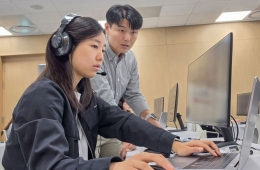
The Korea Institute of Geoscience and Mineral Resources (KIGAM) announced on August 13 that a research team led by Dr. Park Junghun from the Center for Georesources Analysis has developed an "automatic mass dilution device" that automates the entire process, from sample dispensing to mass measurement, diluent addition, and dilution ratio calculation.

For accurate component analysis, it is essential to dilute samples to a certain concentration before placing them in analytical equipment. Conventionally, dilution was mainly performed based on volume; however, volume can vary depending on temperature, humidity, pressure, and solution density, and discrepancies could also arise due to differences in the operator’s skill.
The research team adopted mass as the new standard. The device measures the mass of the sample, adds the diluent, and then measures the total mass to automatically calculate and adjust the actual dilution ratio. By automating sample transfer, diluent injection, and the recording of measured values, the system also reduces the potential for human error and contamination during the work process.
Reliability tests showed a 99.7% accuracy in the dilution ratio. The variation rate in measured sample mass was 0.310%, while the variation rate for the total mass (sample plus diluent) was 0.083%.
Up to 60 Samples Processed Sequentially... Applications Expanded to Precision Analysis for Cutting-Edge Industries
The device can accommodate up to 60 15 mL centrifuge tubes or up to 24 50 mL centrifuge tubes at once. The dilution factor can be set from 5 to 100 times, and mass is measured in 0.1 mg increments. Each sample takes 30 to 35 seconds to dilute.
The research team plans to initially utilize the device for the analysis of geological and environmental samples, such as water, soil, rock, and minerals. Moving forward, they aim to extend its application to advanced industries where trace component management is crucial, including the semiconductor, display, secondary battery, and high-purity materials sectors.
Hot Picks Today
![Selling Like Crazy Every Year... 30-Year-Old Hetbahn Takes on a New Challenge: Tastes Better Than "Mom's Home Cooking" [On-Site Report]](https://cwcontent.asiae.co.kr/asiaresize/93/2026102216175071025_1792653470.jpg) Selling Like Crazy Every Year... 30-Year-Old Hetbahn Takes on a New Challenge: Tastes Better Than "Mom's Home Cooking" [On-Site Report]
Selling Like Crazy Every Year... 30-Year-Old Hetbahn Takes on a New Challenge: Tastes Better Than "Mom's Home Cooking" [On-Site Report]
- "Please Pay Me at Least 3 Million Won a Month": More Than Half of Young People Today Prioritize "Working Conditions" Over Company Size
- A 12-Year-Old Girl Went to the Hospital After Her Blood Pressure Hit 225 and Was Stunned: "What Is This Coral Reef-Like Thing in Her Aorta?"
- "Hey, Lady, Teach Your Kids to Behave!" ... 300,000 Won in Cash and a Bodily Injury Claim Demanded Over Child's Door Ding
- Beachgoer Finds 'Plastic' That Turns Out to Be Perfume Ingredient Worth More Than Twice as Much as Gold
Dr. Park Junghun of KIGAM commented, "The core of this development lies in standardizing and automating the manual dilution process that has long been repeated in analytical settings, thereby minimizing operator-related discrepancies. We plan to expand its application to address the demand for ultra-precise analysis in advanced industries such as semiconductors and secondary batteries."
© The Asia Business Daily. All rights reserved. Unauthorized AI training and use prohibited.