[8.13 Real Estate Measures] KRW 33 Trillion in PF Guarantees for 2027... Preventing 'Construction Cliff' and Supporting Additional Relocation Loans for Redevelopment
Expansion of Capital Supply to Sound Projects
PF Guarantees to Average KRW 28.7 Trillion Annually Over Next Three Years—2.2 Times Increase
Easing of Relocation Loan LTV Requirements
The "Comprehensive Financial Measures for Real Estate Market Stabilization" announced by the Financial Services Commission on August 13 places a strong emphasis on resolving the liquidity crunch in the project financing (PF) market—a key factor cited for housing supply shortages—to ensure that funding leads to actual construction starts and increased housing supply. This decision is based on the assessment that, since the Legoland crisis in 2022, financial companies have tightened PF loan screening, resulting in difficulties securing capital even for projects with sound business fundamentals. Coupled with higher interest rates and rising construction costs, this has led to a significant downturn in new housing starts. Accordingly, the government plans not only to provide more funding to the PF market but also to expand guarantees, lower guarantee fees, normalize distressed projects, and ease regulations to maximize the effect on housing supply.
Shin Jin-chang, Secretary General of the Financial Services Commission, stated, "It is now necessary to approach the PF market from the perspective of expanding capital supply to sound projects and promoting housing supply, rather than focusing solely on resolving distressed assets. The government has therefore decided to significantly increase the scale of capital supply to the PF market from the current KRW 26.3 trillion to at least KRW 47.8 trillion, plus alpha."
![[8.13 Real Estate Measures] KRW 33 Trillion in PF Guarantees for 2027... Preventing 'Construction Cliff' and Supporting Additional Relocation Loans for Redevelopment](http://www.asiae.co.kr/news/img_view.htm?img=2026081310183279547_1786583911.jpg)
PF Guarantees for Sound Projects to Be Expanded to KRW 28.7 Trillion—2.2 Times Increase; Additional Fee Reductions for Early Construction Starts
The Financial Services Commission will drastically expand capital supply to PF projects with sound business prospects. The guarantee supply by Korea Housing & Urban Guarantee Corporation (HUG) and Korea Housing Finance Corporation (KHFC) will be increased to an annual average of KRW 28.7 trillion over the next three years. This is 2.2 times higher than the previous three-year annual average of KRW 13.1 trillion. In particular, the PF guarantee supply target for 2027—when the planned amount of new construction is projected to be lowest—will be raised to KRW 33 trillion to accelerate construction starts. The targets are KRW 23 trillion for 2026, KRW 33 trillion for 2027, and KRW 30 trillion for 2028.
Support will also be expanded for projects facing funding difficulties due to rising construction costs. The scale of KHFC's "Construction Cost Plus PF Guarantee," which was increased to KRW 4 trillion after the Middle East crisis, will be raised again to KRW 5 trillion. The 30% guarantee fee reduction, originally set to end in April 2027, will be extended through the end of 2027. To incentivize early construction starts, an additional 10% guarantee fee reduction will be offered to projects that commence construction within three months of receiving a guarantee.
The KHFC’s PF guarantee coverage ratio for residential projects will also be temporarily raised from the current 90–95% to up to 100% until the end of 2027. In addition, a new special guarantee product will be introduced, allowing insurance companies to pay a special contribution to the KHFC, which will then encourage PF lending by insurers. This is aimed at expanding the supply channels of PF funding from the banking sector to the insurance sector as well.

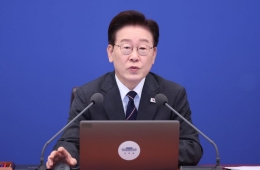
Yoon-duk Kim, Minister of Land, Infrastructure and Transport, is announcing the "Measures for Rapid Housing Supply to Stabilize the Monthly Rent and Sales Market and Comprehensive Financial Measures to Stabilize the Real Estate Market" on August 13 at the Government Complex Seoul in Jongno-gu, Seoul. The announcement was attended by Ok-won Lee, Chairman of the Financial Services Commission, Gi-geun Lim, Director of the Office for Government Policy Coordination, and Hyung-il Lee, Vice Minister of Strategy and Finance. August 13, 2026. Photo by Yongjun Cho
View original imageAccelerating Normalization of Distressed Projects: KAMCO PF Fund to Exceed KRW 4.1 Trillion and Syndicated Loans to Jump to KRW 5 Trillion
The drive to normalize PF projects with poor business prospects or delayed due to funding shortages will accelerate as well. The government plans to increase the size of KAMCO’s PF Normalization Support Fund from the current KRW 1.1 trillion by an additional KRW 3 trillion plus alpha, totaling over KRW 4.1 trillion. To this end, over the next three years, the government will invest KRW 1.5 trillion in public funds and match it with KRW 1.5 trillion in private capital to create an additional KRW 3 trillion fund. More than 60% of the total investments will be allocated to residential projects. The Financial Services Commission expects that investing KRW 3 trillion could promote the supply of at least 18,000 new housing units.
The scale of PF syndicated loans—backed by the five major banks and insurance companies—will also be expanded from KRW 1 trillion to KRW 5 trillion. Additionally, PF funds created by financial institutions themselves will also be expanded to a total of KRW 10 trillion. To prevent reckless funding, a dedicated manager will be assigned for each project, and an inter-ministerial task force led by the Office for Government Policy Coordination will be activated to resolve issues that arise during permit approvals or project execution.

Guarantees for Housing Above KRW 1.2 Billion; LTV Calculation and Additional Loan Regulations Eased
Regulations related to PF will also be temporarily eased. The government will defer the PF equity capital ratio requirements for residential projects, originally set to take effect next year, for two years.
Barriers for KHFC’s PF guarantees will be lowered. Previously, business expense guarantees were not available for housing priced above KRW 1.2 billion within the same complex. However, as high land costs in the Seoul metropolitan area mean that even partial exclusions can create project-wide funding difficulties for developers and builders—leading to delays—the new policy will allow guarantees for business expenses (such as land costs) even for projects including units above KRW 1.2 billion.
Additionally, guarantee eligibility—previously limited to projects where residential units accounted for at least 70% of the entire project—will be expanded to include mixed-use complexes, serviced residences, and dormitories as quasi-residential types, provided the combined share is over 70%.
The method of calculating the loan-to-value (LTV) ratio for relocation loans will be rationalized. The LTV ratio, which is currently based on the asset value prior to redevelopment, can now be calculated using the higher of the pre-redevelopment asset value or the post-redevelopment estimated value of newly built homes, depending on which is greater. The Financial Services Commission plans to implement this by amending the enforcement decree and internal rules of the KHFC, effective August 31.
A new guarantee product for additional relocation loans will also be introduced to help union members in cases where existing relocation loans are insufficient. Previously, at the National Real Estate Public Debate hosted by the government, suggestions were made to relax regulations on these loans to better facilitate redevelopment projects.
Currently, relocation loans for union members are capped at KRW 600 million, with an LTV of 40% applied in regulated areas. Going forward, when more than KRW 600 million is needed, the developer or union will be able to borrow from banks and then lend the funds to union members, with guarantees provided. The guarantee limit for additional relocation loans will consider the projected relocation funding needs for each project.
A new redevelopment and reconstruction loan guarantee product will be established to support participation by small and mid-sized construction companies, and a guarantee fee rate 0.1 percentage points lower than the standard product will be applied. Furthermore, KHFC will introduce a new loan guarantee product for rental housing operators, providing guarantees for up to 90% of the housing value to support funding for rental business operations. Issuance of mortgage-backed securities (MBS) will also be promoted to support access to long-term, fixed-rate funding. The government will consider allowing exceptions to certain mortgage loan regulations for cases where non-apartment buildings are newly built or acquired, or existing homes are demolished for new supply.
Experts emphasize that in order for expanded PF financial support to translate into real housing supply, funding needs for each project must be accurately assessed, with particular focus on accelerating starts in the Seoul metropolitan area.
Ahn Donghyun, Professor at the Department of Economics at Seoul National University, commented, "Actual housing supply must come first, with financing measures such as real estate PF following close behind. The Ministry of Land, Infrastructure and Transport needs to precisely design how much is needed for bridge loans and PF disbursements related to housing supply so that banks’ risk-weighted assets (RWA) and securities firms’ net capital ratios (NCR) can be matched with timely funding."
Hot Picks Today
 "Wasn't It Supposed to Be Gone? Alarming Surge in Cases Leads US to Declare Disaster Emergency"
- " Korean versions of Wegovy and Mounjaro are coming"... Hanmi Science Surges More Than 10% in After-Hours Trading
- After 17 Tardies, AI Says, "We Should Fire This One, Right?" ... Outcry as U.S. Puts Brakes on 'Robot Bosses'
- Mrs. Kim Hye Kyung Attends 'Hunmaengjeongeum' Centennial Exhibition: "It Resonates with King Sejong's Care for His People"
- "Mom, You Didn't Throw Away My Old Clothes, Right?"... 20-Something and 30-Something Women Rediscover 20-Year-Old Fashion Styles
Kang Kyunghoon, Professor of Business Administration at Dongguk University, noted, "In order to maximize the effect of expanded real estate PF support policies, it is important to move up the start time of new housing construction in the Seoul metropolitan area. Although the Financial Services Commission is allocating more funding to sound PF projects, these projects are more likely to be concentrated in provincial areas rather than the Seoul metropolitan area. Whether these measures will have a direct and significant effect on increasing supply and reducing prices in the Seoul area remains to be seen."
© The Asia Business Daily. All rights reserved. Unauthorized AI training and use prohibited.