"Preparing Seven Seeds for the Post-AI Era"… Government Targets SMR, Fusion, Quantum Tech as Next Growth Drivers
Selection of Seven Major SEEDs Including SMRs, Nuclear Fusion, Quantum, Space, and Bio
Planting the Seeds of Advanced Technology to Grow Tomorrow's "MEGA Projects"
What will be the next technology, after artificial intelligence (AI), to drive South Korea’s economy? The government is now launching a "post-AI" strategy to secure advanced technologies as new growth engines over the next 10 to 20 years, following semiconductor, physical AI, and AI data centers.
The plan is to make long-term investments in technologies for which the market has yet to fully form—such as small modular reactors (SMR), nuclear fusion, quantum, space·aerospace, and advanced bio—to develop them into future core industries.

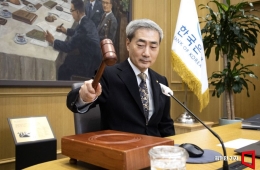
On August 12, the Ministry of Science and ICT, together with other related ministries, held the "7 Future Growth Engines SEED Briefing" at the Blue House, announcing the promotion plan for the seven SEED projects.
SEED stands for "Strategic Emerging Engines for Disruptive innovation." The government believes that maintaining competitiveness in current core industries alone is not enough to respond to low growth and rapid paradigm shifts in technology, and has therefore formulated a strategy to preemptively acquire advanced future technologies to dominate future markets.
The SEED projects selected by the government fall into three categories: future clean energy, next-generation frontiers, and advanced supply chains. Future clean energy includes SMRs, nuclear fusion, and next-generation renewable energy. Next-generation frontiers cover quantum, space·aerospace, and advanced bio. In addition, advanced supply chains—including critical minerals and materials·components·equipment—were chosen as the seventh SEED.
Deputy Prime Minister and Minister of Science and ICT Baek Kyunghoon mentioned "Robot Taekwon V," celebrating its 50th anniversary as Korea’s first robot animation, stating, "Robot Taekwon V inspired a generation of science kids in the 1970s and 1980s to pursue science and engineering, and to dream of becoming scientists," adding, "Now is the time for us to have similar inspirational dreams that can transcend a tough reality." He continued, "The SEED projects are future seeds prepared so that children and South Korea can once again dream with excitement toward the world," and pledged, "We will nurture these seeds so that 10 to 20 years from now Korea will become a uniquely dominant global leader."
2030 Moon Landing · 2039 Nuclear Fusion Power... Timeline for Future Technologies
The government has also presented concrete R&D and commercialization targets for the seven SEEDs. For SMRs, the plan is to commercialize light-water reactors by 2035, and begin construction of non-light-water SMRs in the 2030s. For nuclear fusion, the government plans to build a Korean-style innovative fusion reactor by 2035, demonstrate 100MW power generation by 2039, and expand to commercial reactors with a capacity of 300–500MW in the 2040s.
In the quantum field, the target is to secure a domestic quantum processor unit (QPU) with error correction capabilities at the 100-qubit level by 2029, and to develop a full-stack quantum computer comprising quantum chips, control systems, and operating software, all with domestic technology. By 2035, the goal is to become number one in the world in quantum chip manufacturing capabilities.
In the space·aerospace field, the government will launch a private-led 700kg-class lunar lander by 2030 and build an independent low-Earth orbit satellite network by 2035. The plan includes developing key technologies for new space industries such as space data centers and active-control satellites.
For advanced bio, the goal is to accelerate the discovery of new drugs for diseases such as cancer and other difficult-to-cure conditions by tenfold using AI and robotics, and to commercialize brain–computer interface (BCI) products—enabling users to enter text or control machines with their thoughts—by 2035.
Transforming Today’s 'SEEDs' into Tomorrow’s 'MEGAs'
The core of this strategy is to not only foster seven technologies as individual R&D projects, but also to grow them into large-scale future industries.
Currently, the government is focusing on semiconductors, physical AI, and AI data centers as the "three major MEGA projects." The vision is to reinvest the capital generated from these industries into SEED technologies, and for successfully developed SEEDs to become the next MEGA projects, creating a virtuous cycle of innovation.

To this end, technology development will be promoted together with demonstration, regulatory reform, and commercialization. Private companies will be encouraged to participate from the early stages in SMR, nuclear fusion, quantum, and advanced bio projects, while laws and regulations that hinder high-tech commercialization will be revised.
The university and government-funded research institute systems will be restructured to focus on future technologies. Universities will be provided with block funding at the institutional level, rather than to individual researchers, and government institutes will restructure their R&D portfolios around nationally defined missions.
Investment in supply chains supporting advanced technologies will also be expanded. The government will invest 10 trillion won in developing materials·components·equipment technologies by 2030, and increase the number of reserved key minerals from the current 24 to 29 types. The maximum stockpiling period will be extended from 180 to 365 days.
The government plans to establish a public–private joint "Future Pioneering Task Force" (tentative), led by the Deputy Prime Minister, to review the detailed roadmaps and implementation status of the seven SEEDs through the Science and Technology Ministers' Meeting. New candidates for future growth engines will also be identified and added as needed.
Hot Picks Today
 "The Transfer Failed, but 'Ding Dong' Money Came In"... 32.5 Billion Won Financial Incident at Toss Bank
- "They Wouldn't Give It a Second Look When Offered to Ancestors"... MZ Goes Wild for 80-Year-Old Ceremonial Liquor as a Household Must-Have
- Pinky swear: "I'll become a female soldier"... An elementary school student's moving letter of support from 11 years ago
- Arrest Warrant Sought for Daughter in Her 40s Over 'Mother's Murder'; She Denies the Crime in Police Questioning
- The 'Hangover Legend' That Had You Waking Up the Day After Tomorrow Returns After 11 Years... Lee Sunmin's Captain Q Sells Out
An official from the Ministry of Science and ICT stated, "Maintaining today’s technological advantage in core industries alone will not guarantee Korea’s sustainable growth," adding, "To secure the nation’s next generation of strategic industries for 10–20 years from now, it is necessary to sow the seeds of advanced technology today and nurture them with a long-term perspective."
© The Asia Business Daily. All rights reserved. Unauthorized AI training and use prohibited.