"The Undervaluation Is Over"...Global Investors Bet on Korean Semiconductor Stocks
Temasek, which recently decided to make new investments in Samsung Electronics and SK hynix, is actively investing across the entire AI semiconductor value chain, including companies such as Nvidia, TSMC, and ASML. The Abu Dhabi Investment Authority (ADIA), one of the world's largest sovereign wealth funds, reportedly visited Korea in June to review overall investment strategies in the Korean capital markets, including investment in Korean AI semiconductor companies, by meeting with domestic asset management firms. Following its direct participation in KOSDAQ IPO deals last year and earlier this year, ADIA has launched a new phase of exploring investment opportunities in Korean equities. Meanwhile, the Abu Dhabi Investment Council (ADIC), another sovereign wealth fund under the Abu Dhabi government, took an early lead by investing approximately 300 billion won in the Korean stock market last year through Quad Asset Management and Petra Asset Management. Similarly, the Norwegian sovereign wealth fund also entrusted funds to independent Korean asset managers like Quad Asset Management and VIP Asset Management.


From Temasek and ADIA to Yale University—Global Heavyweights Flock to K-Semiconductors
Global heavyweights managing the wealth of Silicon Valley titans are also pouring funds into the Korean stock market. Iconiq Capital, the family office managing assets of Mark Zuckerberg, CEO of Meta, invested 100 billion won in Korean equities last year through Quad Asset Management. Millennium Management, a global hedge fund, has entrusted 374.6 billion won to Billionfold Asset Management. In May this year, representatives from Yale University’s endowment visited Korea and held consecutive meetings with domestic asset managers such as VIP Asset Management, Life Asset Management, and Align Partners, exemplifying the continued "love call" for K-Equities.
The reason overseas institutional investors are turning their attention to Korean equities is largely due to a perception that the memory semiconductor sector within the AI value chain is significantly undervalued. According to an analysis by Hanwha Investment & Securities based on Bloomberg estimates, the projected price-earnings ratio (PER) for this year stands at 106.6 for Japan’s Kioxia, 24.4 for Taiwan’s TSMC, and 18.3 for U.S.-based Micron. In contrast, Samsung Electronics and SK hynix languish at 6.3 and 8.6, respectively. When compared to the average PER of these three companies, which is 49.65, Samsung Electronics and SK hynix are trading at an 82–87 percent discount.
Looking solely at operating profits, Samsung Electronics and SK hynix actually outperform their global peers. During the second quarter of this year, Samsung Electronics recorded operating profit of approximately 8.94 trillion won, while SK hynix posted a record 6.05 trillion won in operating profit for the quarter. In the same period, TSMC’s operating profit was 766.6 billion Taiwan dollars (about 3.5 trillion won), Kioxia reported 127 billion yen (about 1.1 trillion won), and Micron posted a third fiscal quarter (from late February to late May) operating profit of 3.33 billion U.S. dollars (about 5.14 trillion won).
Although the share prices of Samsung Electronics and SK hynix have surged by 352% and 885%, respectively, from last year’s lows to the closing price as of August 11, many believe an upward trend will continue. An industry insider remarked, “It may be premature to judge them as undervalued based solely on PER, as there are still burdens from capital expenditures (CAPEX) and supply risks. Nonetheless, despite concerns about the overheating of AI-related investments, global institutional investors still see AI as the most promising investment sector.” As investments in AI data centers expand, there is growing demand not only for high-bandwidth memory (HBM) but also for general-purpose DRAM and NAND, leading to more stable profit structures for memory makers compared to the past.
Hot Picks Today
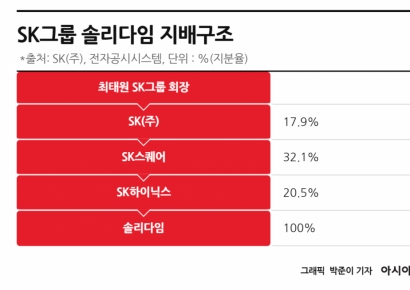 Record Results Expected, but SK hynix Weighs a "Split-Off Listing" Amid High Expectations
- "I Came to Korea and Easily Made 3.3 Million Won a Month"... The "Easy Gig" Everyone's Talking About Among International Students Turns Out to Be...
- President Lee's Approval Rating Falls 2.2 Percentage Points to 35.2% [The Asia Business Daily-Realmeter Poll]
- "Hand in Your Resignation and Get a Year's Salary"... This Country Pushes Early Retirement for Civil Servants
- "Oh Eunyoung's Consultation Fee: Millions of Won? Not Expensive"... Yonsei Professor's Sharp Rebuke over "300,000-Won Lecture Fee"

Even Greater Shareholder Returns... Hopes Rise for Ending the "K-Discount"
Government policy initiatives to improve corporate governance and expand shareholder returns are also seen as positive factors for the revaluation of Korean equities. Forecasts suggest that Samsung Electronics may deliver between 10 trillion and 20 trillion won in new annual shareholder returns. Meanwhile, SK hynix, which had previously been considered passive in returning capital to shareholders relative to its performance and cash-generating ability, announced on August 7 a quarterly dividend of 375 won per common share and stated it would “finalize and announce additional shareholder return measures to enhance shareholder value within the third quarter.”
© The Asia Business Daily. All rights reserved. Unauthorized AI training and use prohibited.