How Did It Come to This... "People Use Credit Cards Knowing They Can't Repay": The Tragedy of Americans Relying on Debt for Groceries and Gas
Card Reliance Spreads for Groceries and Utilities in the U.S.
30% of Respondents: "Used Cards Despite Knowing They Couldn't Pay Off All Debts"
Minimum Payment Default Rate Among Low-Income Earners Three Times Higher Than High-Income Earners
A recent survey has revealed that the number of households in the United States using debt to cover essential living expenses such as groceries and utility bills is on the rise.

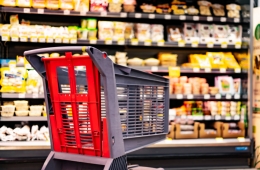
A photo to help understand the article showing Walmart in California, USA last month. Photo by Reuters and Yonhap News.
View original imageOn August 10 (local time), USA Today reported, citing a consumer survey by the marketing firm Omnisend, that “an increasing number of people are borrowing money to pay for food expenses.” The survey was conducted in June, targeting 1,075 consumers.
According to the survey, 30% of respondents said that, in the past three months, they had used credit cards to pay for groceries, gas, utilities, or medical bills even though they knew they would not be able to pay off the full amount. Twenty percent borrowed money from acquaintances or relatives, 18% used buy now, pay later (BNPL) services, and 17% tapped into savings that had been set aside for other purposes.
This reliance on credit cards was also evident among higher-income groups. About 40% of respondents with an annual household income between $75,000 and $99,900 (approximately 106 million to 141 million won), and about 35% of those in the top income bracket of over $150,000 (approximately 212 million won), reported using credit cards for essential purchases.
However, it is low-income earners who struggled the most with repayment. According to the “2025 Basic Needs Survey” published by the Urban Institute last month, more than one in four adults aged 18–64 had purchased groceries with credit cards and then failed to pay off the full balance. Of these, 8.7% could not even make the minimum payment, an increase compared to the 2023 survey (7.1%). For low- and middle-income groups combined, the rate of failing to make minimum payments was about 12%—three times higher than that of high-income earners—and the delinquency rate on BNPL payments was about four times higher.

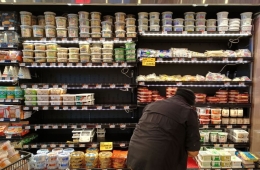
Image to aid understanding of the article. Photo by Reuters and Yonhap News Agency
View original imageThis trend of covering living expenses with debt is also reflected in official statistics. According to the “Q2 Household Debt and Credit Report” released by the Federal Reserve Bank of New York on August 11, outstanding credit card balances stood at $1.26 trillion (approximately 1,783 trillion won) at the end of June, an increase of $21 billion from the previous quarter. The proportion of credit card loans delinquent by 90 days or more reached 12.9%, nearly double the level seen in the third quarter of 2022.
Saloni Phirasat Vastani, Associate Professor at Emory University's Goizueta Business School, remarked that the rise in the proportion of people unable to make even the minimum payment is “a sign that a problem is developing.” She said, “If people who are able to get credit cards are struggling this much, those with lower incomes will find it even more difficult. We have now reached the tipping point where it is not just the price of one item that has gone up, but increases are spreading across the entire basket of goods, and people are starting to feel it.”
Mistrust toward corporations has also intensified. In the survey, 85% of respondents said that “companies are raising prices more than necessary, using inflation as an excuse,” and 89% reported that they regularly notice shrinkflation—packages getting smaller even while prices stay the same. Some 67% said their feelings toward brands they once liked have changed, and among them, 56% said they had completely stopped buying those brands. Forty-five percent of respondents said they believe the government is more responsible for inflation than corporations.
Alexandra Thompson (31), a librarian living in Tennessee, told the media, “My husband and I both work and earn $70,000 per year (about 9.9 million won), but we fall just short of being eligible for government assistance. Now that our credit card limits are maxed out, our family of three—including our nine-year-old son—only buys what we can afford with cash each week.” She added, “We have canceled all our subscription services and cut back to dining out only once or twice per month, but we are just barely breaking even. There is no joy in living like this.”
Hot Picks Today
 "I Invested KRW 10 Million, Only KRW 2 Million Is Left" ... 77% Plunge Sends Retail Investors Who Piled Into Samsung Electronics and SK hynix Leveraged ETFs Crying Out
- "There's a Drink Like This?"... Chinese Beverage With "Korean" in Its Name Rakes in 85 Million Won in Monthly Sales
- "No Need to Hire a Model"... The 25-Year-Old Woman Who Entered Social Media with a Face That Cost Just 1,500 Won [AI Content: The Bright and Dark Sides] 1
- "Samsung Electronics at 70,000 won, SK hynix at 200,000 won"... Why the gloomy outlook despite 'record-breaking earnings'?
- "The leggings are all see-through. It's so embarrassing to look at," complaints prompt Lululemon to fire development staff.
An Omnisend representative who conducted the survey noted, “What used to be a financial safety net reserved for emergencies has now become a regular part of life each month. If households end up borrowing money just to buy necessities and feel that their money holds less value, it’s only natural for trust in both their own finances and the companies that raised prices to be shaken.”
© The Asia Business Daily. All rights reserved. Unauthorized AI training and use prohibited.