Iran’s New Bargaining Chip: 'Hormuz'... U.S. Intelligence Says Military Seizure Cannot Guarantee Victory
A Stronger Bargaining Chip Than the Nuclear Program
Trump Faces Fewer Options
U.S. military intelligence authorities reportedly believe that Iran is prioritizing control of the Strait of Hormuz over its nuclear program. Analysis suggests that even if the U.S. military uses force to seize control of the strait, it would have to accept significant casualties and cannot be guaranteed victory. Iran is leveraging this potential military burden as a means of pressure, demanding that the United States lift sanctions and return frozen funds as conditions for reopening the strait.

According to NBC News on August 11 (local time), multiple U.S. officials familiar with the matter stated that U.S. military intelligence now assesses Iran’s strategic priority has shifted from its nuclear program to the Strait of Hormuz.
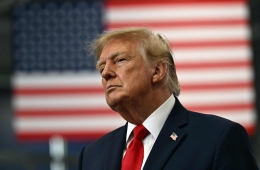
It is reported that U.S. military officials informed U.S. President Donald Trump that while it is possible to attempt to seize control of the Strait of Hormuz by force, success cannot be guaranteed. The evaluation also warned that such an operation would take considerable time and involve enormous costs and casualties.
If the U.S. undertakes an operation to gain control of the strait, it is anticipated that many U.S. soldiers could be injured or killed, and Iranian missile and drone attacks on U.S. naval vessels are also expected. NBC reported that these concerns are shared by both European and Gulf region countries and have been conveyed to the U.S. side.
Iran, for its part, is putting the Strait of Hormuz at the forefront as its main bargaining chip against the United States. Mohsen Rezaee, a former commander-in-chief of the Islamic Revolutionary Guard Corps who was recently appointed as Secretary of the Supreme National Security Council (SNSC), met with the Chinese ambassador to Iran on this day and warned that Iran will not open the Strait of Hormuz unless the United States ends the conflict and unfreezes Iranian funds.
Secretary Rezaee stated, "The United States is the source of instability in the Persian Gulf, the Strait of Hormuz, and the Gulf of Oman," adding, "The Strait of Hormuz will not be opened until the United States changes its stance and accepts Iran’s conditions."
He not only demanded the removal of U.S. sanctions and the release of frozen funds but also called for an end to wars in the region, including in Lebanon and the Gaza Strip, and for the fulfillment of other conditions delivered to the U.S. through mediators.
In particular, he drew a clear distinction between the plan Iran and Oman are negotiating to manage passage through the strait and the lifting of the blockade of the Strait of Hormuz, emphasizing that the two issues are separate. Even if an agreement between Iran and Oman is reached, if the United States does not accept Iran’s demands, Iran intends to maintain the blockade of the strait.
Two European officials also told NBC that Iran has effectively gained a stronger negotiating position by controlling the Strait of Hormuz and is now treating the strait as a stronger leverage point than its nuclear program.
For the United States, the more limited its military options become, the greater its negotiating burden will be. Attempting to seize the strait by force would require significant sacrifice, but if the U.S. accepts Iran’s demands or reduces military pressure, it may face criticism for effectively acknowledging Iran’s control over the strait while also failing to achieve its initial goal of Iranian denuclearization.
Hot Picks Today
 "Even New York Taxi Drivers Are Talking About the KOSPI; South Korean Market to Top 9,000 Again Within a Year"... 'Wall Street's Stock-Picking Ace' Names His Picks
- "Over 1 Trillion Won Poured Into 3x Semiconductor ETF"... But the No. 2 and No. 3 Picks Are Unexpected
- “Made 2 Billion Won in One Year in Prison,” PPP Lawmaker Retorts: “If You’re Jealous, Go There Yourself”
- Idol Member Posts Letter Saying "Suspending Activities Due to Pregnancy"... Turns Out She's AI?
- "Shall We Grab a Drink?" KRW 30,000 a Round... Young Adults: "Prices Make My Hands Shake; I Can't Drink Out"
Previously, the United States and Iran had agreed to address the reopening of the Strait of Hormuz and the lifting of the U.S. maritime blockade on Iran, followed by discussions on Iran’s denuclearization over a 60-day period. However, due to reciprocal displays of force, subsequent negotiations have made no progress.
© The Asia Business Daily. All rights reserved. Unauthorized AI training and use prohibited.