[52-Hour Workweek Dispute] President Lee Urges Ministers to Debate... Analyzing Remarks from Kim Jung-gwan and Kim Young-hoon

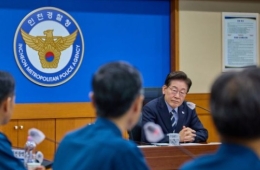
On the 11th, President Lee Jae-myung, at the Cabinet meeting held at the Government Complex Sejong, urged each ministry to engage in active discussions regarding government policies, stating, "When ministers debate and argue, the people do not quarrel." August 11, 2026, Yonhap News Agency
View original imageAs President Lee Jae-myung called on cabinet members to actively engage in debates over policy, the dispute between Minister of Trade, Industry and Energy Kim Junggwan and Minister of Employment and Labor Kim Younghoon regarding the 52-hour workweek system has returned to the spotlight. The two ministers have shown differing perspectives not only on the 52-hour workweek but also on how to utilize the achievements of the semiconductor and artificial intelligence (AI) industries. The contrast is becoming clear between Minister Kim Junggwan, who emphasizes deregulation and reinvestment to strengthen industrial competitiveness, and Minister Kim Younghoon, who highlights labor rights, social dialogue, and sharing performance outcomes.
President Lee: "Debate, Discussion, Coordination, and Conclusion—This is the Most Democratic"
On the 11th, at the Cabinet meeting held at the Government Complex Sejong, President Lee stated, "When ministers debate and argue, the people do not quarrel," urging the ministries to actively express and discuss differing opinions. He directly addressed the differing stances of the Ministry of Trade, Industry and Energy and the Ministry of Employment and Labor concerning exceptions to the 52-hour workweek, emphasizing, "Debate, discussion, coordination, and ultimately reaching a conclusion is the most democratic process."
President Lee added, "It is not desirable to treat ministries having differing views on current issues as a problem in itself," and emphasized, "To prevent conflict between businesses and workers, the Ministry of Industry and the Ministry of SMEs and Startups, representing businesses, and the Ministry of Employment and Labor, representing workers, should engage in intense debate over policy." This essentially acknowledges the differences between Ministers Kim Junggwan and Kim Younghoon as a normal part of coordinating government policy.
![[52-Hour Workweek Dispute] President Lee Urges Ministers to Debate... Analyzing Remarks from Kim Jung-gwan and Kim Young-hoon](http://www.asiae.co.kr/news/img_view.htm?img=2026081118212177186_1786440081.jpg)
The Starting Point of the '52-Hour Workweek Exception' Was the Ministry of Labor...Change in Stance After Labor Opposition
The most prominent divergence between the two ministers centers on the 52-hour workweek policy. Notably, the origin of the controversy was the Ministry of Employment and Labor itself.
During discussions on regulatory special exemptions for mega clusters, it is reported that the Ministry of Employment and Labor proposed to the National Assembly’s Climate, Energy, Environment and Labor Committee an exemption to the 52-hour system for research and development (R&D) and production personnel in high-tech industries such as semiconductors. Provided that employees consent, measures under consideration included eliminating work-hour limits for managers and R&D staff in the top 3% income bracket, substituting regular allowances for overtime, night, and holiday work pay—a so-called "white-collar exemption." Other considerations included extending the settlement period for the selective working hour system from one month to six months, and broadening the scope of dispatched labor permitted within special zones.
However, as labor groups strongly opposed the proposal, the mood changed. Minister Kim Younghoon has consistently stated that long working hours do not directly correlate with corporate competitiveness, expressing a negative view. He maintained a cautious stance toward introducing exceptions, remarking, "They say that, without the 52-hour workweek exception, the Special Semiconductor Act is like an anko-less bread, but companies are already making enormous profits." He stressed the need to seek alternatives through social dialogue with labor groups.
In contrast, Minister Kim Junggwan continues to emphasize the need for deregulation. He stated that "the will of young people who want to work should not be blocked by regulation," asserting that a more flexible working-hour system is needed for R&D personnel in high-tech sectors such as semiconductors and AI. His rationale is that, in a technological race against countries like China, the speed of innovation is crucial, and uniform working hour regulations should not hold back industrial competitiveness.
![[52-Hour Workweek Dispute] President Lee Urges Ministers to Debate... Analyzing Remarks from Kim Jung-gwan and Kim Young-hoon](http://www.asiae.co.kr/news/img_view.htm?img=2026081118213777187_1786440096.jpg)
Semiconductor Profit: 'Reinvestment' or 'Sharing'?
With the semiconductor boom triggering ongoing social debates over the redistribution of excess profits, both ministers drew attention by participating in related forums on consecutive days. On the 14th, at a forum titled "A New Path for Social Innovation in Line with AI Technological Advancements" held by the Ministry of Employment and Labor, Minister Kim Younghoon stated, "The astronomical achievements in AI represent the total amount of gains created by our entire society," and said, "We must move beyond the binary of investment versus distribution." He continued, "Now, we need a new social contract appropriate for the AI era. The government will carefully collect all the questions raised at this forum and, through expert discussions, compile them into a so-called 'Green Paper' to present to you all."
On the following day, the 15th, at a forum titled "Corporate Investment and the Future of Labor in the AI Era," Minister Kim Junggwan emphasized the need to turn corporate profits in the AI era into investments for the future. Using the biblical story of Joseph for illustration, he said, "Joseph stored grain during seven years of abundance to prepare for the seven lean years, but those who took prosperity for granted ended up having to kneel before Joseph and Egypt to beg for food when famine struck." He added, "If the windfall of one era does not become the competitiveness of the next, that wealth will never last," and further explained, "Whether we consume today’s profits as temporary windfalls or connect them to new AI investments will determine the future of South Korea’s industry and the country itself." He concluded, "Today’s profits must be reinvested into tomorrow’s semiconductor plants, AI data centers, and world-class research and talent development."

In front of the Samsung Electronics Suwon Plant in Yeongtong-gu, Suwon-si, Gyeonggi-do, members of the Samsung Electronics Labor Union Donghaeng (Donghaeng Labor Union) are shouting slogans in protest against performance bonus disparities and other issues. July 16, 2026. Photo by Yonhap News Agency
View original imageN% Performance Bonus: Both Ministers Voice Concerns
Both ministers agree that the current system for N% performance bonuses requires revision. Minister Kim Junggwan pointed out that such payments, if conflicting with the interests of company owners and investors, constitute an abuse of authority. He stated that discussions are underway with relevant ministries to make it mandatory to obtain approval from the board of directors or shareholders' meetings before granting large bonuses. Minister Kim Junggwan’s perspective is that decisions on the use of corporate profits fundamentally lie within the domain of shareholders and corporate governance, but the government should guide reinvestment for industrial competitiveness.
Hot Picks Today
 "Expensive, Smelly and Scary"... What's Happened to the "Honeymooners' Paradise" Tourists Have Abandoned?
- Women Who Say "A Husband's Annual Salary of 100 Million Won Is a Given"... Matchmaking CEO: "They Talk About It Like It's Nothing"
- "I Want to Eat Like Koreans..." Foreigners Who Once Opened Ramen Packs Now Keep Gochujang in Their Pantries
- [Tomorrow's Weather] Wednesday: 5-10 Degrees Lower Than Yesterday... Beware of Chilly Mornings and Big Day-Night Temperature Swings
- "I'll Give You 53.4 Billion Won to Keep Quiet"... Influencer Reveals Secret Deal; Musk Denies It
Minister Kim Younghoon, referring to the controversy over the 'N% performance bonus,' expressed the need for institutional reform and plans to outline the scope of such reforms within this month. Previously, President Lee had directed Minister Kim Younghoon to draft specific implementation rules on the matter, questioning whether "items like N% of operating profit as a performance bonus should even be subject to labor disputes."
© The Asia Business Daily. All rights reserved. Unauthorized AI training and use prohibited.