Cheongna Rising as an 'Airport Economic Zone'... Prime Office Cheongna Finance Center Draws Attention
Special Act on Airport Economic Zones to Take Effect in May 2027
Rising Expectations for Expansion of Incheon Airport Economic Zone
Cheongna’s First Prime Office, "Cheongna Finance Center"
Attracting Attention as a Key Business Facility Supporting the Airport Economic Zone

With just about a year left before the "Special Act on the Designation and Development of Airport Economic Zones" comes into effect, Incheon International Airport is expected to transform into a hub for high-tech industries and global business. In line with this, the western metropolitan real estate markets adjacent to the airport, such as Cheongna, where large-scale development projects are expected, are heating up.
The core of the Special Act on Airport Economic Zones is to foster new growth hubs by linking industries, logistics, tourism, leisure, advanced technology, and commercial functions centered around airports. Breaking away from the airport-operation–focused policies of the past, the act aims to integrate areas surrounding airports into one economic zone and establish a global business hub. The act is set to take effect in May 2027, and with less than a year left, anticipation continues to build.
The airport economic zone is expected to become a driving force for increasing future value in the local economy. According to Incheon International Airport Corporation, Incheon Airport’s annual revenue in 2030—including logistics and tourism—is projected at approximately 9.1 trillion won, with production inducement effects totaling 15.3 trillion won.
Globally, major airports have already contributed to enhancing national competitiveness through distinctive airport economic zones. For example, the Netherlands' Schiphol Airport and Singapore’s Changi Airport serve as international economic hubs through business, logistics, hotels, and advanced technologies centered around their airports. In Korea, as the airport economic zone centered on Incheon International Airport gains momentum, it is expected to have a significant impact not only on Yeongjong International City, where the airport is located, but also on surrounding areas.
Within this context, Cheongna International City is attracting attention as a representative business district supporting the airport economic zone. This is driven by ongoing development of the international business district, strengthening of financial and business functions, and acceleration of large-scale development projects.
To highlight a few examples, in May this year, Hana Financial Group completed its new headquarters, while projects such as Starfield Cheongna and Cheongna Medical Complex Town are also underway. These projects are considered key to enhancing Cheongna’s self-sustainability and attracting recognition for boosting its competitiveness as an international city.
Transportation infrastructure has also greatly improved. The opening of Cheongna Sky Bridge in January this year has reduced travel time to Incheon International Airport to about 20 minutes, strengthening the connection to the Yeongjong living sphere. Meanwhile, using Cheongna International City Station on the Airport Railroad enables access to Seoul Station in about 40 minutes. In the future, when the Seoul Metropolitan Subway Line 7 Cheongna extension opens, passengers will be able to reach Gangnam and other key areas without transferring.
Especially if the airport economic zone is created to encompass not only industrial and logistics functions but also international business and office functions, the role of nearby business districts will become even more important. Cheongna offers excellent accessibility to Incheon International Airport and strong transport networks connecting it to major parts of Seoul and the metropolitan area, making it an attractive business hub for companies. With the ongoing development of the international business district and related financial facilities, the foundation is being expanded to accommodate the work demands of both domestic and international companies and their employees who use the airport.
Amid these trends, the Cheongna Finance Center, the flagship office facility of Cheongna International Finance District, is also drawing attention. As the first prime office in Cheongna International City, the Cheongna Finance Center is located at 93-2, Cheongna-dong, Seo-gu, Incheon, and comprises twin towers with five basement levels and 22 floors above ground. Combining Towers I and II, the total floor area is approximately 100,000 square meters, more than three times the size of a typical prime office (about 30,000 square meters).
The interior stands out for its adoption of recent prime office trends. The lower podium levels are equipped with amenities such as cafes and restaurants, while the upper office spaces feature flexible modular layouts that can be adapted according to company size and type of business. In addition, a variety of community facilities—including common meeting rooms, conference spaces, cafeterias, lounges, and terrace gardens—have been included, providing a work environment able to meet diverse corporate needs related to the future airport economic zone.
Hot Picks Today
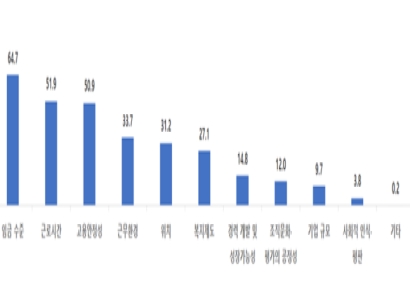 "Please Pay Me at Least 3 Million Won a Month": More Than Half of Young People Today Prioritize "Working Conditions" Over Company Size
- Selling Like Crazy Every Year... 30-Year-Old Hetbahn Takes on a New Challenge: Tastes Better Than "Mom's Home Cooking" [On-Site Report]
- He Left It in the Car and Forgot... "I Nearly Collapsed with Joy": Man Wins $1.48 Million Lottery
- Ran 18 km With 9-Year-Old Tied to Him at the Waist... "Man Banned From Competing for 3 Years"
- Beachgoer Finds 'Plastic' That Turns Out to Be Perfume Ingredient Worth More Than Twice as Much as Gold
An industry insider commented, “When the Special Act on Airport Economic Zones comes into force, the integration of high-tech industry, logistics, and international business functions around Incheon Airport will serve as a catalyst for new growth. In particular, areas like Cheongna—which combine excellent airport accessibility, the development of an international business district, expanded transportation networks, and large-scale projects—are likely to see sustained demand from companies seeking business space.”
© The Asia Business Daily. All rights reserved. Unauthorized AI training and use prohibited.