Jointly Owned Homes by Couples Also Face "Multi-Home Tax" Controversy... Na Kyungwon Criticizes: "Is This a Divorce Incentive Tax?"
Na Kyung-won Strongly Criticizes Government's Tax Reform Plan
As the government unveils its tax reform plan for next year, the tax implications for couples holding a single home under joint ownership—a method long considered one of the representative tax-saving strategies—are expected to change significantly. In some criteria for the comprehensive real estate holding tax, joint ownership between a couple will now be treated similarly to holding multiple properties, meaning their actual tax burden may vary greatly depending on whether they actually reside in the property.
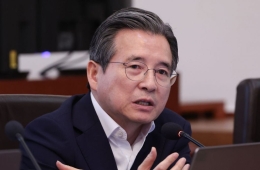
Especially for jointly owned homes where neither spouse resides, there is a growing backlash as these properties may face simultaneous disadvantages in both the basic deduction and the official market value ratio. On this issue, Assemblywoman Na Kyung-won from the People Power Party criticized the reform sharply, saying, "It seems as if the government is encouraging divorce."

On August 11, Assemblywoman Na posted on her social media account, "The government plans to tax couples with a jointly owned single home as if they were owners of multiple homes," questioning, "Are these taxes meant to incentivize divorce?"
She continued, "Vice Prime Minister for Economic Affairs Koo Yoon-cheol claims, 'That's not true. Individuals can choose whichever is more advantageous between individual taxation and the single-home owner exception,' but this is clear sophistry that deceives the public once again," citing the contents of the tax reform proposal as the basis for her remarks.
She explained, "According to the government's plan, beginning in 2028, the officially assessed property value used for multi-home owners and residences in regulated areas will rise to 80% of the market price." She went on, "If a couple with a jointly owned home does not apply for the exception, they cannot benefit from the single-home owner provision and will be fully subjected to the harsh 80% ratio."
She also pointed out, "Even if they do apply for the single-home owner exception, if they do not reside in the property, the basic deduction will shrink from 1.4 billion won to 900 million won," adding that this will result in a significant tax increase.
For these reasons, Assemblywoman Na demanded, "This goes beyond punitive taxation; it is a significant violation of citizens' constitutional property rights, making joint home ownership a shackle for couples—a makeshift tax bomb. The government should completely reconsider the real estate tax system," effectively calling for the plan to be withdrawn.

In fact, according to the government’s published tax reform plan, starting in 2028, the fair market value ratio used for the comprehensive real estate holding tax will be set at 70% for single-home owners with sole ownership rights and 80% for couples holding a single home under joint ownership. Particularly, if a couple with joint ownership resides in the property, each will remain eligible for a 900 million won deduction, but if the property is rented out, this deduction drops to 400 million won per person. As a result, analysts point out that couples with a jointly owned single home may be at a disadvantage compared to those who own a single home individually.
Koo Yoon-cheol: "Taxing all jointly owned homes as multi-home ownership? This is not true."
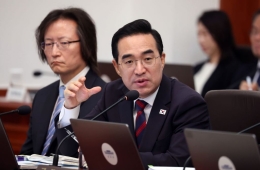
As controversy grew, Vice Prime Minister for Economic Affairs and Minister of Economy and Finance Koo Yoon-cheol stated on the previous day, "The claim that the government will tax couples holding a single home under joint ownership as multi-home owners is not true. In principle, the comprehensive real estate holding tax is levied on an individual basis, aggregating the officially assessed value of each individual's properties for taxation." For couples with joint ownership, the original principle is to calculate the tax individually for each spouse, but since 2021, it has been possible to choose the "sole-ownership single-home owner exception," explained Vice Prime Minister Koo.
Vice Prime Minister Koo elaborated, "Taxpayers can choose whichever option is more advantageous based on their circumstances. If you apply for the single-home owner exception, you may benefit from a more favorable tax deduction, but if a couple with a jointly owned single home opts for individual taxation, property values up to 1.8 billion won (approximately 2.6 billion won in market price) will be tax-exempt, and the tax base will be lower, so this option may also be more advantageous." He emphasized again, "The claim that the government treats jointly owned homes by couples as multi-home ownership is unequivocally false."
Hot Picks Today
 "Should Get at Least 45 Million Won Salary" "Can't Give Up on Large Companies"... Young People Say There Are No Places to Apply
- Unemployment Benefits to Drop from 1.98 Million to 1.76 Million Won per Month...Employment Insurance Premium Rate to Rise from 1.8% to 2%
- Packed Crowds with “It’s So Cheap!”... Japan Travel by UK Millennials & Gen Z Surges 25% in a Year
- "Only One Restroom Break per Semester During Class"…Controversy Over Chinese High School Regulations
- When "Cutting Down Reserved Tents" Brings Relief: Local Governments Take Action Against Escalating 'Reserved Tent' Problem
The public notice period for the government’s tax reform legislation runs until August 20. After this, it will be submitted to the vice ministers’ meeting on August 27, then considered at the Cabinet meeting on September 1, and finally presented to the National Assembly before September 3.
© The Asia Business Daily. All rights reserved. Unauthorized AI training and use prohibited.