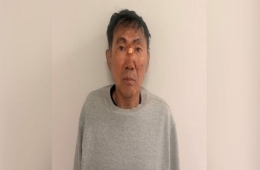
Kim Junggwan: "Maximum Price System Is a 'Breakwater for Livelihoods'... Now Is Not the Time to Ease Export Controls"
"Price Caps Alone Are Not Enough: Supply Must Also Be Protected"
"Exports Are Not Blocked—Permitted Up to Last Year’s Levels"
"Safe Passage Through Hormuz Not Guaranteed: Safeguards Cannot Be Lifted First"

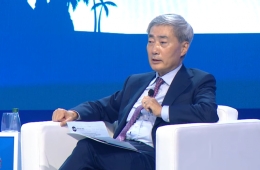
Kim Jungkwan, Minister of Trade, Industry and Energy, is attending a Kwanhun Debate on August 6 and participating in a Q&A session. Ministry of Trade, Industry and Energy
View original imageKim Jungkwan, Minister of Trade, Industry and Energy, has firmly rejected calls to ease export restrictions that have arisen following improvements in domestic petroleum supply conditions. While international oil prices and domestic supply have somewhat stabilized, the Minister stressed that the Middle East crisis is still ongoing, meaning that ensuring domestic supply of petroleum products for daily life and industrial activity must remain a priority.
On August 11, Minister Kim posted on his Facebook under the title, “The Middle East crisis is not over yet,” clarifying, “There is a big difference between saying the supply situation is improving and saying the crisis is over.” This statement came in response to recent improvements in the domestic crude oil supply situation and growing overseas requests for petroleum product supplies, which have led industry voices to call for a relaxation of export restrictions. They argue that, since the domestic price is capped by the maximum price system, increasing exports could help refinery companies offset their losses.
In response, Minister Kim emphasized that both the maximum price system and export controls must be applied together. He explained that, while the maximum price policy is a “breakwater to protect people's livelihoods” by reducing the burden on citizens amid a sharp rise in international oil prices, export controls are a mechanism to ensure domestic supply. “Protecting people’s lives cannot be done by only capping prices—the actual supply must also be secured,” he asserted. He further explained that with a cap on domestic prices, if overseas prices surge, refiners are incentivized to divert supply to more profitable export markets, which could then decrease domestic supply and threaten supply stability.

Kim Jung-kwan, Minister of Trade, Industry and Energy, visited a gas station in Seoul on May 19 to listen to the difficulties faced by gas stations following the implementation of the maximum price system. Ministry of Trade, Industry and Energy
View original imageThe Minister also stressed that the government has not implemented a full-scale export blockade. Taking into account the needs of foreign countries and companies dependent on Korean petroleum products, exports are permitted up to 100% of last year’s volume—the usual level. In fact, from March to June of this year, exports of gasoline, diesel, and kerosene declined by 21.4% compared to the same period last year, but export revenues actually increased by 45.4%. Total petroleum product export revenues, including jet fuel and base oils, rose by 50.9%. Based on these figures, Minister Kim explained, “Export controls are not intended to block corporate exports, but are rather a minimum safety device to secure sufficient domestic supply during emergencies.”
The main reason for maintaining these emergency measures, the Minister highlighted, is the continued instability in the Middle East. He pointed out that safe passage through the Strait of Hormuz cannot be guaranteed, and there are uncertainties remaining with alternate routes such as the Red Sea and Bab el-Mandeb Strait. Although cooperation between the government and private sector is gradually restoring crude supply and refinery operation rates, he cautioned that this should not be seen as the end of the crisis.
Hot Picks Today
 "I Ate It Often Because It Tasted Good"... This Eating Habit Linked to 40% Higher Odds of Asymptomatic Cerebrovascular Damage
- “Dad Just Gave It to Us as a Gift”... Scratched a Lottery Ticket at a Family Gathering and Hit a 1 Billion Won Jackpot
- Anthropic Used 21 Books by Korean Authors, Including Han Kang and Kim Youngha, for Unauthorized AI Training
- Woman in Her 70s Assaults Sister in Her 80s: “She Had an Affair with My Husband”
- "We've gone this far to save on lunch"... Where office workers are flocking instead of restaurants
Minister Kim stated, “Emergency measures should not be kept for longer than necessary,” but also cautioned, “Safety devices should not be removed before the risks have subsided.” He added that the government would closely monitor international oil prices, crude importation, domestic inventories, and refinery operation status, and would normalize policies once conditions are sufficiently stable. While admitting that “corporate profits and exports are important,” Kim reiterated, “in a crisis situation, people's livelihoods and stable domestic supply come first.” He concluded by promising, “Until the supply situation is stabilized, the government and businesses together will work to protect the everyday lives of our citizens.”
© The Asia Business Daily. All rights reserved. Unauthorized AI training and use prohibited.

!["Please, Just Take Them Off" - They Made It All the Way to Bed... Then Fecal Bacteria Struck [Deep Scroll]](https://cwcontent.asiae.co.kr/asiaresize/307/2026101610053063338_1792112730.png)